
10 Essential Soft Skills for Success in the Digital Age
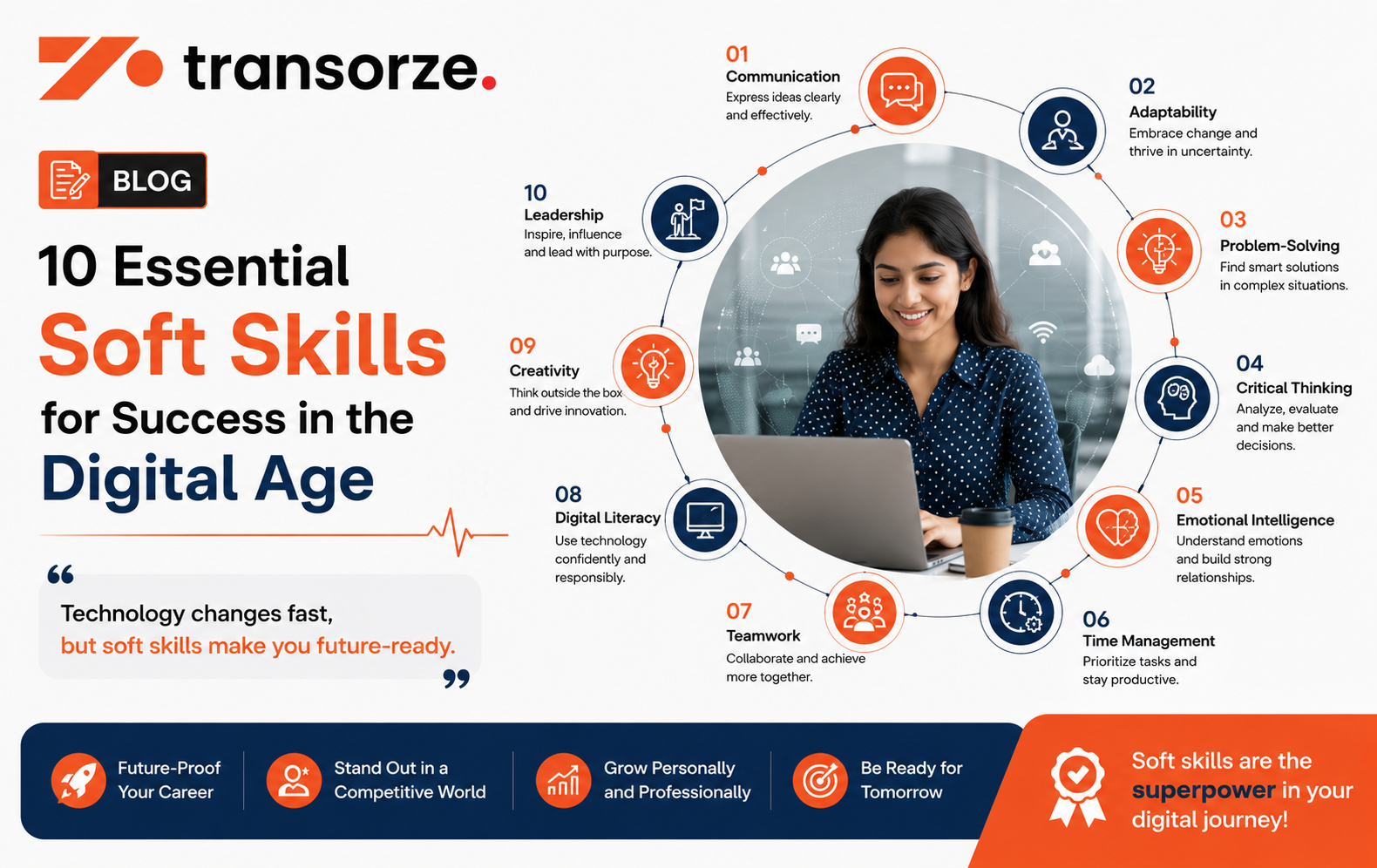
Technology continues to transform how we work, learn, communicate, and solve problems. While technical expertise remains important, employers increasingly recognize that technical skills alone are not enough. Organizations now seek professionals who can collaborate effectively, adapt to change, communicate clearly, and lead in fast-evolving environments.
This shift has made soft skills one of the most valuable assets in the modern workforce. Whether you are a student preparing for your first job, a working professional aiming for promotion, or an educator helping learners succeed, understanding the most important soft skills for the digital age can significantly improve career outcomes.
In this guide, we’ll explore the 10 essential soft skills for success in the digital age, why employers prioritize them, and how you can develop them to stay competitive in today’s job market.
Why Soft Skills Matter More Than Ever
The digital economy has created workplaces that are highly connected, collaborative, and technology-driven. Teams often work remotely, communicate across multiple channels, and collaborate with colleagues from different cultures and locations.
According to global workforce studies, employers consistently rank communication, adaptability, teamwork, and problem-solving among their most sought-after qualities. As automation handles repetitive tasks, human-centered skills become increasingly valuable because they cannot be easily replaced by technology.
Professionals who combine technical knowledge with strong soft skills are often better positioned for leadership opportunities, higher salaries, and long-term career growth.
1. Communication Skills
Communication remains the foundation of professional success. In digital workplaces, professionals must communicate effectively through emails, video meetings, presentations, messaging platforms, and collaborative tools.
Why It Matters
- Reduces misunderstandings
- Improves team productivity
- Strengthens professional relationships
- Enhances leadership effectiveness
How to Improve
- Practice active listening
- Write concise emails and reports
- Develop presentation skills
- Participate in group discussions
2. Adaptability
Technology evolves rapidly. New software, workflows, and business models emerge constantly. Adaptability enables professionals to embrace change rather than resist it.
Why It Matters
- Supports continuous learning
- Helps manage workplace transitions
- Increases career resilience
- Improves performance during organizational change
How to Improve
- Learn new tools regularly
- Stay updated on industry trends
- Seek feedback and adjust quickly
- Embrace new responsibilities
3. Critical Thinking
The ability to analyze information objectively and make informed decisions is crucial in data-driven workplaces.
Why It Matters
- Enhances decision-making
- Helps solve complex business problems
- Reduces costly mistakes
- Supports innovation
How to Improve
- Evaluate multiple perspectives
- Question assumptions
- Analyze data before making decisions
- Practice structured problem-solving
4. Emotional Intelligence
Emotional intelligence refers to understanding and managing your emotions while recognizing and responding appropriately to the emotions of others.
Why It Matters
- Improves teamwork
- Strengthens leadership capabilities
- Reduces workplace conflict
- Enhances customer interactions
How to Improve
- Develop self-awareness
- Practice empathy
- Manage stress effectively
- Improve conflict-resolution skills
5. Collaboration and Teamwork
Modern projects often require cross-functional collaboration between technical, operational, and business teams.
Why It Matters
- Increases productivity
- Encourages innovation
- Creates stronger workplace relationships
- Helps organizations achieve shared goals
How to Improve
- Respect diverse viewpoints
- Share knowledge openly
- Support team objectives
- Participate actively in group projects
6. Problem-Solving Skills
Organizations value professionals who can identify challenges and implement practical solutions.
Why It Matters
- Improves efficiency
- Drives innovation
- Reduces operational issues
- Demonstrates leadership potential
How to Improve
- Break problems into manageable steps
- Analyze root causes
- Test potential solutions
- Learn from outcomes
7. Time Management
Digital workplaces can create constant distractions. Effective time management helps professionals remain productive and focused.
Why It Matters
- Improves productivity
- Reduces stress
- Ensures project deadlines are met
- Supports work-life balance
How to Improve
- Prioritize important tasks
- Use productivity tools
- Create daily schedule
- Minimize distractions
8. Leadership Skills
Leadership is no longer limited to management positions. Organizations increasingly expect employees at all levels to demonstrate initiative and influence.
Why It Matters
- Builds trust and credibility
- Drives team performance
- Encourages innovation
- Creates advancement opportunities
How to Improve
- Take ownership of projects
- Mentor peers when possible
- Develop decision-making confidence
- Communicate vision clearly
9. Creativity and Innovation
Creativity helps professionals identify new opportunities, solve problems differently, and contribute fresh ideas.
Why It Matters
- Supports business growth
- Encourages innovation
- Improves competitive advantage
- Enhances customer experiences
How to Improve
- Explore different perspectives
- Participate in brainstorming sessions
- Stay curious
- Learn from other industries
10. Digital Collaboration Skills
As remote and hybrid work models become common, professionals must effectively collaborate using digital tools and platforms.
Why It Matters
- Improves virtual teamwork
- Enhances project coordination
- Supports remote work success
- Strengthens global collaboration
How to Improve
- Master workplace collaboration tools
- Maintain professional online communication
- Participate actively in virtual meetings
- Document work clearly
Industry Demand for Soft Skills in 2026 and Beyond
Employers across healthcare, IT, digital marketing, finance, business administration, logistics, and customer service sectors consistently prioritize soft skills alongside technical competencies.
Recruiters often report that technical skills may secure an interview, but communication, adaptability, leadership, and teamwork frequently determine hiring and promotion decisions.
As artificial intelligence and automation become more integrated into workplaces, uniquely human capabilities such as emotional intelligence, creativity, critical thinking, and relationship-building will become even more valuable.
How Soft Skills Accelerate Career Growth
Professionals with strong soft skills often experience:
- Faster promotions
- Better leadership opportunities
- Higher earning potential
- Stronger professional networks
- Greater job satisfaction
- Improved workplace influence
Whether you are entering the workforce or pursuing a career transition, investing in soft skills can provide long-term professional advantages
Developing Soft Skills Through Professional Education
While experience remains important, structured learning can accelerate skill development. Many professional training programs now integrate communication, leadership, teamwork, and workplace readiness modules alongside technical education.
Institutions such as Transorze support career-focused learning through both Online & Offline classes. Their professional education pathways are backed by credentials including NSDC Training Partner, AAPC Licensed, UGC Recognized, and NCVET Skill University affiliations, helping learners strengthen both technical and workplace competencies.
Practical Action Plan to Build Soft Skills
Week 1–2
Focus on communication and active listening.
Week 3–4
Practice time management and productivity techniques.
Month 2
Join collaborative projects and improve teamwork abilities.
Month 3
Develop leadership and problem-solving through real-world assignments.
Ongoing
Seek feedback, embrace continuous learning, and track personal growth.
Consistent practice is the key to transforming soft skills into lasting professional strengths.
Frequently Asked Questions
The most important soft skills include communication, adaptability, emotional intelligence, teamwork, critical thinking, leadership, creativity, time management, problem-solving, and digital collaboration. These skills help professionals work effectively in technology-driven environments.
Employers value soft skills because they improve collaboration, customer interactions, leadership effectiveness, and workplace productivity. Strong soft skills often differentiate top-performing employees from equally qualified candidates.
Yes. Soft skills can be developed through training, practice, mentorship, workplace experience, self-reflection, and continuous learning. Consistent effort leads to measurable improvement over time.
Communication is often considered the most important because it influences teamwork, leadership, presentations, negotiations, and professional relationships. However, a combination of multiple soft skills delivers the best results.
Soft skills such as communication, accountability, adaptability, and digital collaboration help remote employees remain productive, connected, and effective while working with distributed teams.
Absolutely. IT professionals, healthcare workers, digital marketers, developers, and analysts all need strong communication, teamwork, and problem-solving abilities to succeed in modern workplaces.
Students can build soft skills through internships, project-based learning, volunteer work, group assignments, presentations, networking activities, and professional training programs.
Conclusion
The future belongs to professionals who can combine technical expertise with strong interpersonal and workplace skills. Communication, adaptability, emotional intelligence, critical thinking, leadership, teamwork, creativity, problem-solving, time management, and digital collaboration are no longer optional—they are essential for career success.
By intentionally developing these competencies, you can improve employability, advance your career, and thrive in an increasingly digital world. Investing in soft skills today creates opportunities that extend far beyond any single job role or industry.
