
Logistics Courses After 12th: Start Your Career in Supply Chain and Logistics Management
Choosing the right career path after completing higher secondary education is an important decision. For students looking for a fast-growing industry with strong employment opportunities, logistics courses after 12th can provide an excellent foundation for a successful career.
The logistics and supply chain sector plays a vital role in global trade, e-commerce, manufacturing, retail, and transportation. As businesses continue to expand and supply chains become more complex, there is a growing demand for skilled logistics professionals who can manage the movement of goods efficiently.
Why Choose Logistics After 12th?
The logistics industry offers diverse career opportunities and practical learning experiences that can help students build industry-relevant skills early in their careers. By enrolling in a logistics course after 12th, students can gain knowledge of supply chain operations, warehousing, transportation management, inventory control, and international trade.
Key benefits include:
- Early entry into a growing industry
- Strong career growth opportunities
- Exposure to global business operations
- Industry-relevant skill development
- Opportunities across multiple sectors
- High demand for trained professionals
What Will You Learn in a Logistics Course?
A comprehensive logistics and supply chain management Training program typically covers:
- Fundamentals of logistics management
- Supply chain operations
- Inventory and warehouse management
- Transportation and distribution management
- Procurement and purchasing processes
- Shipping and freight operations
- Import and export documentation
- International trade concepts
- Customer relationship management
- Logistics technology and digital systems
These skills prepare students to meet industry requirements and contribute effectively to logistics operations.
Why the Logistics Industry Is Growing Rapidly
The rise of e-commerce, online retail, manufacturing expansion, and global trade has significantly increased the need for efficient logistics systems. Companies depend on logistics professionals to ensure products reach customers on time while maintaining operational efficiency.
Industries actively hiring logistics professionals include:
- E-commerce companies
- Manufacturing organizations
- Shipping and freight companies
- Warehousing and distribution firms
- Retail chains
- Third-party logistics providers
- Import-export businesses
This widespread demand creates strong employment opportunities for trained candidates.
Why Students Choose Transorze
Students often look for training programs that combine theoretical knowledge with practical industry exposure. A structured curriculum, experienced trainers, hands-on learning, certification guidance, and career support can help learners develop job-ready skills and confidently enter the logistics and supply chain industry.
Key advantages include:
- Industry-oriented curriculum
- Experienced trainers and mentors
- Practical case studies and project-based learning
- Career guidance and interview preparation
- Certification support
- Placement assistance
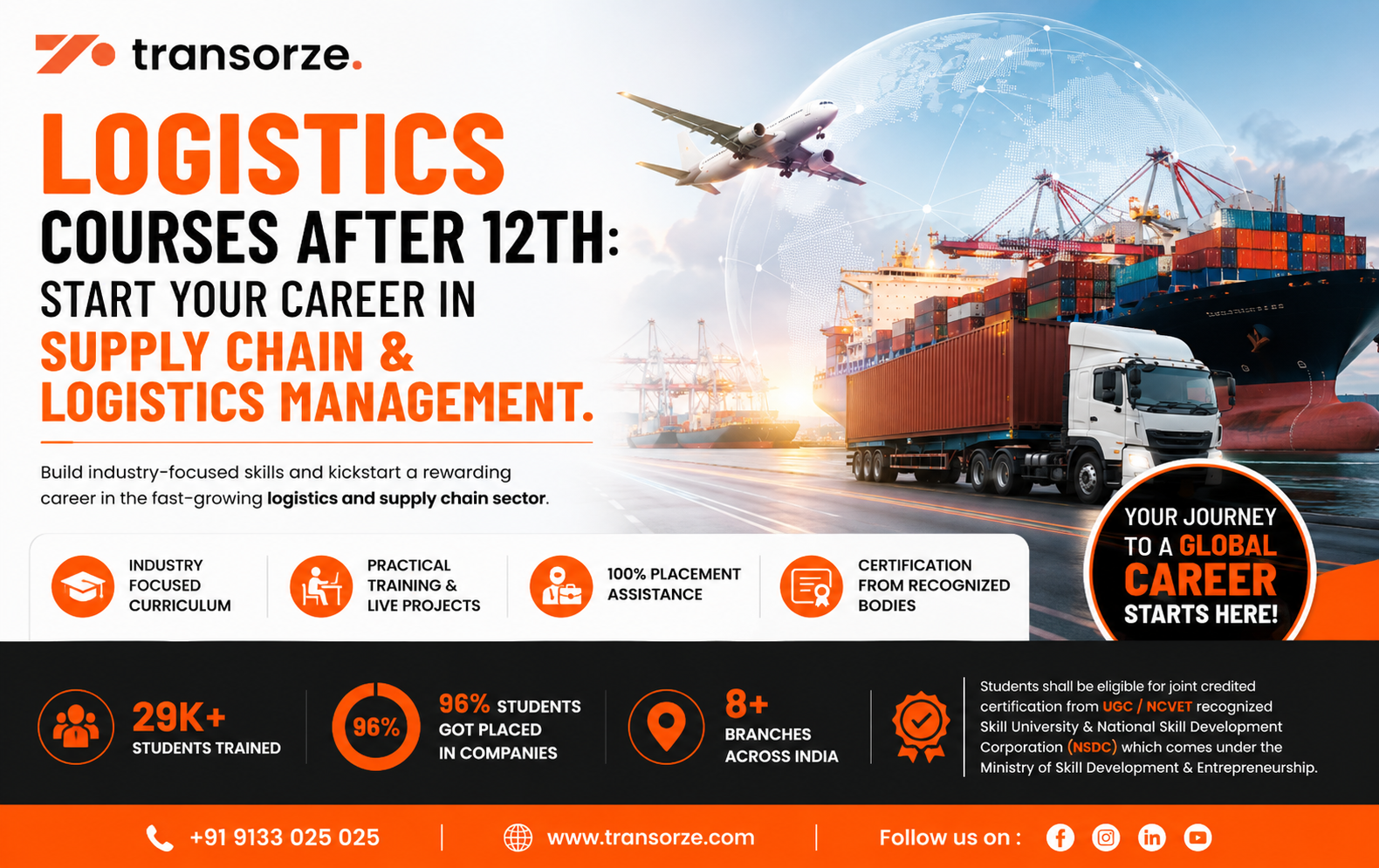
With 29,000+ students trained, 96% of students placed, and 8+ branches, Transorze has supported thousands of students in building successful careers across various industries.
Industry-Recognized Certification
Students shall be eligible for joint credited certification from UGC / NCVET recognized Skill University & National Skill Development Corporation (NSDC), which comes under the Ministry of Skill Development & Entrepreneurship.
This certification helps strengthen professional credibility and improves employability in the logistics and supply chain sector.
Career Opportunities After Completing Logistics Training
Students who complete logistics courses can pursue various roles, including:
- Logistics Executive
- Supply Chain Coordinator
- Warehouse Executive
- Inventory Controller
- Procurement Assistant
- Distribution Coordinator
- Shipping Executive
- Freight Operations Executive
- Import Export Coordinator
- Logistics Analyst
These roles offer opportunities for long-term career growth and advancement.
Who Can Enroll in Logistics Courses After 12th?
These courses are suitable for:
- Students who have completed 12th grade
- Commerce stream students
- Science stream students
- Arts stream students
- Freshers seeking industry-focused career paths
- Individuals interested in supply chain management
No prior logistics experience is typically required, making it an accessible option for beginners.
Build a Strong Foundation for Your Future
The logistics and supply chain industry continues to evolve with technology, automation, and global business expansion. Students who develop industry-relevant logistics skills early can position themselves for rewarding careers in a sector that remains essential to every economy.
With proper training, certification, and placement support, logistics courses after 12th can serve as a stepping stone toward a successful and future-ready profession.
Frequently Asked Questions
Industry-focused logistics and supply chain management courses that include practical training, certification, and placement support are among the best options for students after 12th.
Yes. Students from Science, Commerce, and Arts backgrounds can enroll in logistics and supply chain management courses after completing 12th grade.
Yes. Logistics offers strong job opportunities, career growth, and exposure to global business operations, making it an attractive career option for students.
Students can pursue roles such as Logistics Executive, Warehouse Coordinator, Inventory Controller, Shipping Executive, Supply Chain Assistant, and Procurement Executive.
Yes. Industry-recognized certifications help validate skills and improve employability across logistics and supply chain organizations.
Many professional training institutes provide placement assistance, interview preparation, and career guidance to help students secure employment.
No. Most logistics courses are designed for beginners and do not require previous industry experience.
Final Thought
The logistics industry is one of the fastest-growing sectors in the world, offering exciting career opportunities for students who want to enter the workforce with practical, job-oriented skills. By enrolling in a logistics course after 12th, students can gain valuable industry knowledge, recognized certification, and hands-on experience that employers actively seek. As global trade, e-commerce, and supply chain operations continue to expand, trained logistics professionals will remain in high demand, making this an excellent time to begin a rewarding and future-focused career journey.
