
The Future of Digital Marketing: Trends and Opportunities in 2026
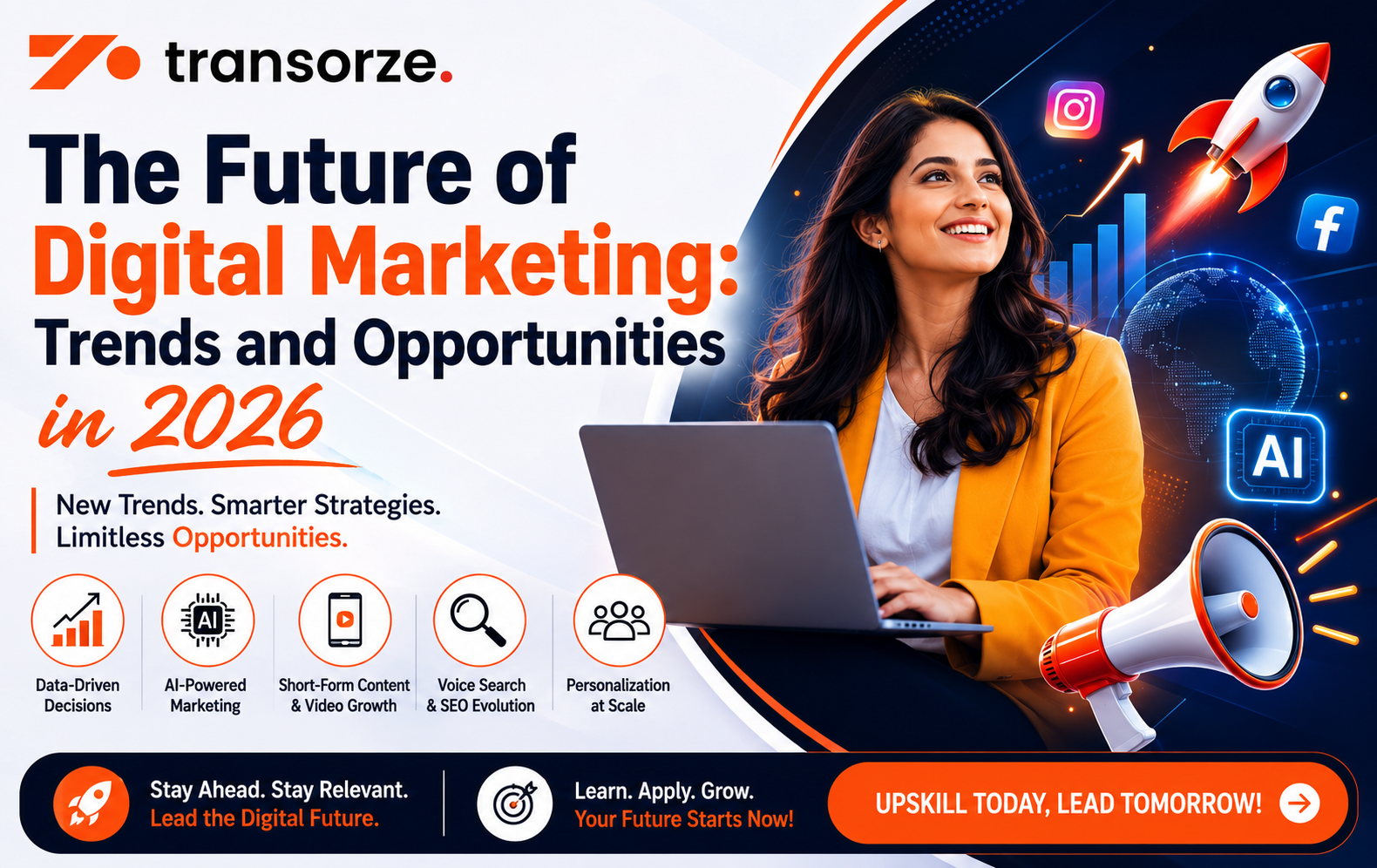
Digital marketing has evolved faster in the past five years than many industries do in decades. As we move into 2026, businesses are investing heavily in data-driven marketing, artificial intelligence, customer experience optimization, and omnichannel engagement. For marketing professionals, this transformation presents both challenges and exciting opportunities.
The future belongs to professionals who can combine creativity, analytics, technology, and strategic thinking. Whether you’re a fresh graduate, a marketing executive, a business owner, or a professional seeking career advancement, understanding The Future of Digital Marketing: Trends and Opportunities in 2026 can help you stay ahead of the competition and build a rewarding career.
Why Digital Marketing Remains One of the Fastest-Growing Career Fields
Businesses today depend on digital channels to reach customers, generate leads, and drive revenue. From search engines and social media to email campaigns and e-commerce platforms, every customer interaction leaves valuable data that marketers can use to improve results.
Several factors are driving demand for digital marketing professionals:
- Growing adoption of AI-powered marketing tools
- Expansion of e-commerce and online services
- Increased investment in performance marketing
- Rising demand for customer experience specialists
- Greater focus on marketing analytics and automation
- Expansion of mobile-first and video-first content strategies
Organizations across industries are actively seeking professionals who can understand consumer behavior, optimize digital campaigns, and deliver measurable business outcomes.
Top Digital Marketing Trends Shaping 2026
AI-Powered Marketing Becomes Mainstream
Artificial Intelligence is no longer a competitive advantage—it’s becoming a standard business requirement.
AI tools now assist marketers with:
- Content creation
- Keyword research
- Customer segmentation
- Campaign optimization
- Predictive analytics
- Chatbot automation
- Customer journey mapping
However, successful marketers will not be replaced by AI. Instead, professionals who know how to use AI effectively will outperform those who do not.
The demand for marketers who can combine AI tools with strategic thinking is expected to increase significantly in 2026.
Search Experience Optimization Replaces Traditional SEO
Search behavior is changing rapidly.
Users now discover information through:
- Search engines
- AI assistants
- Voice search
- Visual search
- Social media search
- AI-generated summaries
As a result, marketers must optimize content not only for traditional rankings but also for AI-generated responses and conversational search experiences.
Future SEO professionals will focus on:
- Topic authority
- Structured data
- Semantic search optimization
- User intent mapping
- Entity-based content strategies
- AI Overview visibility
This shift creates new opportunities for professionals skilled in advanced content strategy and technical SEO.
First-Party Data Becomes a Business Priority
Privacy regulations and changes in cookie tracking are transforming digital marketing.
Businesses are increasingly investing in:
- Customer data platforms
- CRM systems
- Email marketing
- Loyalty programs
- Consent-based data collection
Marketers who understand data privacy, customer analytics, and audience management will become highly valuable assets for organizations.
Video Marketing Dominates Customer Engagement
Video continues to outperform most content formats.
In 2026, businesses are prioritizing:
- Short-form video content
- Educational videos
- Product demonstrations
- Live streaming
- Interactive video experiences
- Personalized video campaigns
Professionals with video strategy, content planning, and performance measurement skills will find strong career opportunities across industries.
Marketing Automation Drives Efficiency
Companies want faster execution and better campaign performance.
Marketing automation tools help organizations:
- Nurture leads automatically
- Improve customer retention
- Personalize communications
- Reduce manual work
- Increase campaign scalability
Skills in platforms such as CRM systems, workflow automation, and campaign management are becoming increasingly important for modern marketers.
Customer Experience (CX) Becomes a Competitive Advantage
Today’s customers expect personalized and seamless experiences across every touchpoint.
Brands are investing in:
- Customer journey optimization
- Omnichannel marketing
- Personalization engines
- Customer success initiatives
- Behavioral analytics
Digital marketers who understand customer psychology and experience design will have strong career growth opportunities in 2026 and beyond.
Social Commerce Continues to Expand
Social media platforms are evolving into complete shopping ecosystems.
Consumers increasingly discover, evaluate, and purchase products without leaving social platforms.
This creates demand for specialists in:
- Social media advertising
- Influencer marketing
- Community management
- Conversion optimization
- Social commerce strategy
Businesses need professionals who can connect engagement metrics directly to revenue generation.
High-Demand Digital Marketing Career Opportunities in 2026
As digital transformation accelerates, several specialized roles are expected to see strong growth.
Digital Marketing Manager
Oversees campaign strategy, team coordination, budget management, and performance optimization.
SEO Specialist
Focuses on organic visibility, content optimization, technical SEO, and search experience enhancement.
Performance Marketing Analyst
Manages paid advertising campaigns and optimizes return on investment across platforms.
Marketing Automation Specialist
Designs automated customer journeys and lead nurturing systems.
Content Strategist
Develops content plans aligned with business goals, customer needs, and search intent.
Social Media Manager
Builds brand awareness, audience engagement, and conversion-focused social campaigns.
Data Analytics Specialist
Transforms marketing data into actionable insights that improve business performance.
Growth Marketing Manager
Uses experimentation, analytics, and customer insights to accelerate business growth.
Essential Skills for Future Digital Marketers
To remain competitive in 2026, professionals should develop expertise in the following areas:
Technical Skills
- Search Engine Optimization (SEO)
- Paid Advertising (PPC)
- Marketing Analytics
- Google Analytics
- Marketing Automation
- AI Tools and Prompt Engineering
- Email Marketing
- Conversion Rate Optimization
- Data Visualization
- CRM Management
Soft Skills
- Strategic Thinking
- Communication
- Creativity
- Problem Solving
- Customer Understanding
- Project Management
- Adaptability
The combination of technical and business skills will differentiate top-performing marketers from the rest.
How to Prepare for the Future of Digital Marketing
The most effective approach to career growth involves continuous learning and practical experience.
A structured development plan should include:
- Learning emerging digital marketing technologies.
- Building hands-on campaign experience.
- Developing analytical skills.
- Understanding AI-powered marketing workflows.
- Earning industry-recognized certifications.
- Creating a professional portfolio.
- Staying updated with industry trends.
Many professionals choose structured training programs to accelerate skill development. Institutions such as Transorze support career-focused learning through both Online & Offline classes, while offering recognized credentials including NSDC Training Partner, AAPC Licensed, UGC Recognized, and NCVET Skill University certifications that help learners build practical, industry-relevant expertise.
Why Certifications Matter in 2026
Employers increasingly value candidates who can demonstrate verified skills.
Professional certifications can help:
- Validate technical knowledge
- Improve employability
- Increase earning potential
- Strengthen professional credibility
- Support career transitions
- Demonstrate commitment to continuous learning
When combined with practical experience, certifications can significantly enhance career opportunities in digital marketing.
The Future Outlook for Digital Marketing Professionals
The future of digital marketing is not simply about learning new tools. It is about understanding how technology, data, creativity, and customer behavior intersect.
Professionals who embrace continuous learning, adapt to emerging technologies, and develop strategic business skills will be positioned for long-term success.
As organizations continue investing in digital transformation, the demand for skilled marketers is expected to remain strong across industries including healthcare, education, retail, finance, technology, logistics, and e-commerce. The opportunities in 2026 are substantial for those willing to evolve with the industry.
Frequently Asked Questions
The most significant digital marketing trends in 2026 include AI-powered marketing, search experience optimization, first-party data strategies, marketing automation, social commerce, video marketing, and customer experience personalization.
Yes. Digital marketing remains one of the fastest-growing career fields because businesses increasingly depend on digital channels for customer acquisition, engagement, and revenue generation.
The most in-demand skills include SEO, paid advertising, marketing analytics, AI-assisted content creation, conversion optimization, CRM management, marketing automation, and data analysis.
Yes. Certifications validate professional skills, strengthen resumes, improve employability, and demonstrate commitment to ongoing professional development.
Absolutely. Beginners can enter the field through structured training, practical projects, internships, freelance work, and recognized certification programs that build foundational skills.
AI is automating repetitive tasks such as content generation, audience segmentation, campaign optimization, and reporting. Marketers who learn to work alongside AI tools will gain a competitive advantage.
Future-proofing involves continuous learning, staying updated on emerging technologies, gaining hands-on experience, earning certifications, and developing both technical and strategic business skills.
Final Thoughts
The future of digital marketing in 2026 will be shaped by artificial intelligence, automation, data-driven decision-making, and evolving customer expectations. As businesses continue to invest in digital transformation, professionals who develop both technical expertise and strategic thinking will have access to diverse and rewarding career opportunities. By staying updated with emerging trends, gaining hands-on experience, and earning industry-recognized certifications, aspiring marketers can build a future-ready career in this dynamic and fast-growing field. For those looking to accelerate their journey, structured training programs from institutions like Transorze can provide the practical skills and industry exposure needed to succeed in the digital economy.
