
How Transorze’s Courses Prepare You for Global Healthcare Jobs
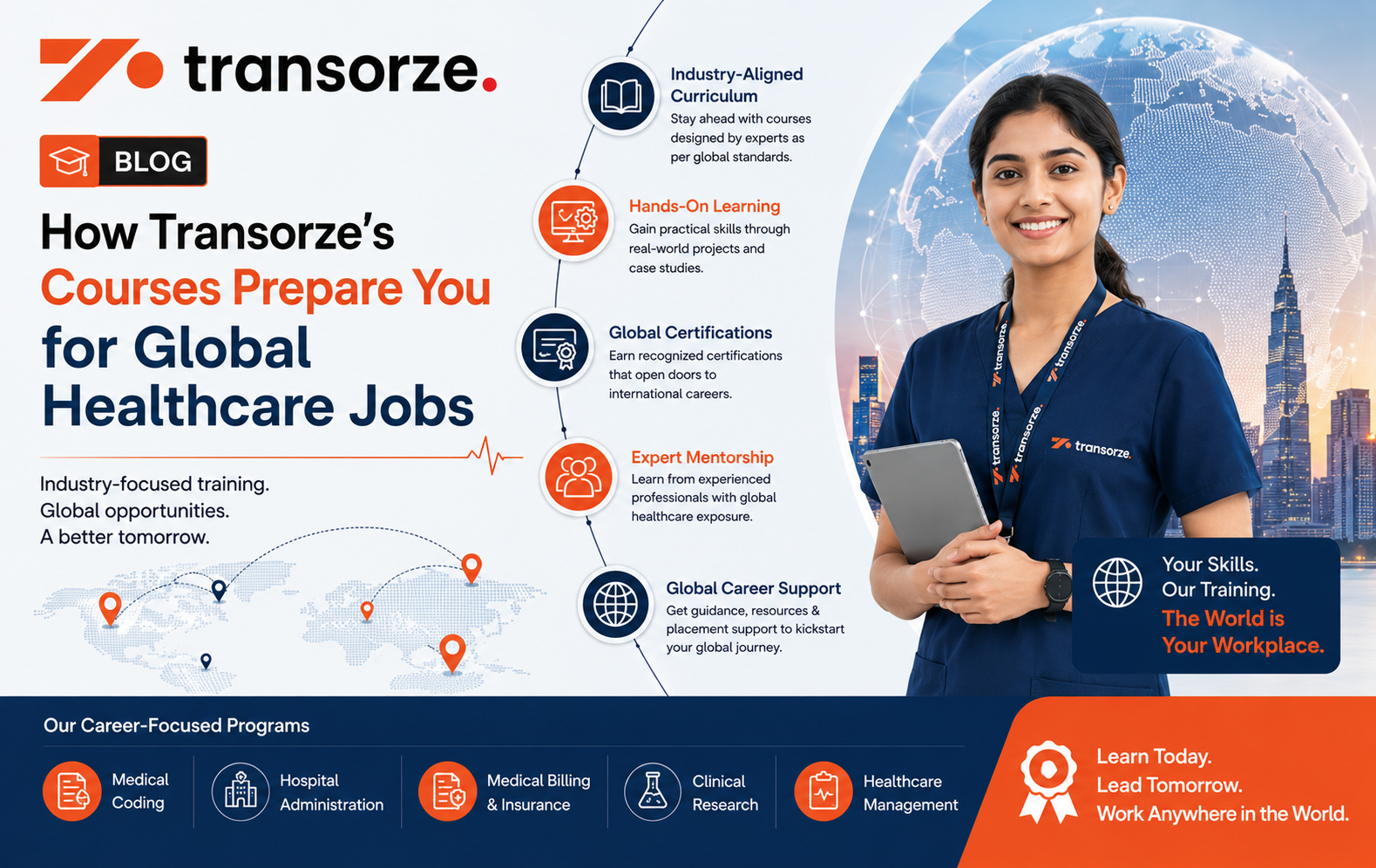
Healthcare has become one of the most dynamic and globally connected industries in the world. From medical coding and healthcare documentation to hospital administration and healthcare analytics, organizations across the United States, Canada, the United Kingdom, Australia, the Middle East, and other regions are actively seeking professionals with specialized healthcare skills.
As healthcare systems continue to digitize patient records, improve compliance standards, and expand remote healthcare services, employers increasingly value candidates who possess industry-specific knowledge, technical competencies, and recognized certifications. For students and working professionals looking to build an international healthcare career, the right training can make a significant difference.
This guide explains how Transorze’s Courses Prepare You for Global Healthcare Jobs by helping learners develop practical healthcare competencies, industry-recognized credentials, and job-ready skills that align with international workforce requirements.
Why Global Healthcare Careers Are Growing
The global healthcare industry faces a combination of challenges and opportunities:
- Aging populations are increasing healthcare demand.
- Electronic Health Records (EHR) adoption continues to expand.
- Healthcare providers require accurate medical documentation.
- Insurance and reimbursement systems depend on coding accuracy.
- Healthcare organizations seek professionals who understand compliance and quality standards.
- Remote healthcare support roles are becoming increasingly common.
These trends have created strong demand for trained professionals in healthcare administration, medical coding, healthcare documentation, billing, revenue cycle management, and healthcare operations.
Employers are no longer looking only for academic qualifications. They want candidates who can demonstrate practical skills, industry knowledge, and the ability to adapt to evolving healthcare technologies.
Essential Skills Needed for Global Healthcare Jobs
Professionals pursuing international healthcare careers typically need a combination of technical and professional competencies.
Medical Terminology Knowledge
Understanding anatomy, physiology, diseases, procedures, and pharmacology forms the foundation of many healthcare careers. Professionals who understand medical language can communicate effectively and perform their roles accurately.
Healthcare Documentation Skills
Accurate documentation supports patient care, compliance, reimbursement, and legal requirements. Healthcare employers highly value professionals who can maintain precise and compliant records.
Medical Coding and Classification Systems
Healthcare organizations rely on coding systems to process claims, track patient outcomes, and manage healthcare data. Knowledge of coding standards helps professionals contribute effectively to healthcare operations.
Healthcare Compliance Awareness
International healthcare organizations operate under strict regulatory requirements. Understanding privacy standards, documentation requirements, and compliance protocols is essential for career success.
Digital Healthcare Competencies
Modern healthcare environments depend heavily on technology. Professionals must be comfortable working with healthcare software, digital records, and healthcare information systems.
Communication and Professionalism
Healthcare roles often require collaboration across departments, healthcare providers, insurance companies, and patients. Strong communication skills remain critical regardless of specialization.
How Structured Training Builds Global Employability
Healthcare employers prefer candidates who can demonstrate practical readiness from day one. Structured training programs help bridge the gap between academic education and workplace expectations.
Effective healthcare training focuses on:
- Real-world healthcare workflows
- Industry terminology
- Documentation standards
- Coding accuracy
- Compliance requirements
- Problem-solving skills
- Practical case studies
- Industry certification preparation
This combination of knowledge and practical application improves employability and workplace confidence.
How Specialized Healthcare Education Supports International Career Goals
One of the most effective ways to prepare for global healthcare opportunities is through specialized professional training that aligns with international standards.
For example, Transorze offers both Online & Offline classes designed to help learners develop healthcare industry competencies through structured training pathways. The institution strengthens career readiness through certifications and affiliations including NSDC Training Partner, AAPC Licensed, UGC Recognized, and NCVET Skill University, helping students build credentials that support professional growth in competitive healthcare environments.
Career Opportunities After Healthcare Training
Healthcare-focused education can open pathways to various roles across healthcare systems, insurance organizations, hospitals, clinics, and healthcare technology companies.
Common career opportunities include:
Medical Coder
Medical coders convert healthcare documentation into standardized codes used for billing, reimbursement, and reporting purposes.
Healthcare Documentation Specialist
These professionals ensure clinical information is accurately documented and maintained according to healthcare standards.
Medical Billing Specialist
Billing professionals manage claims processing, reimbursement workflows, and insurance coordination.
Hospital Administration Professional
Administrative specialists support healthcare operations, resource management, patient services, and organizational efficiency.
Revenue Cycle Management Professional
Revenue cycle specialists help healthcare organizations optimize financial performance while maintaining compliance standards.
Healthcare Operations Coordinator
These professionals support day-to-day healthcare workflows, documentation processes, and organizational objectives.
Benefits of Industry-Recognized Certifications
Certifications play an important role in healthcare career advancement.
Employers often view certifications as evidence that candidates possess verified knowledge and commitment to professional standards.
Key advantages include:
- Enhanced credibility
- Improved job opportunities
- Better salary potential
- Increased employer confidence
- Greater career mobility
- Access to specialized healthcare roles
For professionals seeking international opportunities, certifications can help demonstrate competency across different healthcare markets.
Online and Offline Learning for Career Flexibility
Today’s learners require flexible education options.
Online learning offers:
- Flexible scheduling
- Location independence
- Self-paced study opportunities
- Convenient access to learning materials
Offline classroom learning provides:
- Direct instructor interaction
- Structured learning environments
- Peer collaboration
- Immediate feedback
A combination of both approaches allows learners to select the educational experience that best matches their goals and circumstances.
How Healthcare Skills Support Long-Term Career Growth
Healthcare remains one of the most resilient industries worldwide. As healthcare systems continue evolving, skilled professionals who understand documentation, coding, administration, compliance, and healthcare technology will remain in demand.
Continuous learning enables professionals to:
- Adapt to new regulations
- Stay current with technology
- Pursue leadership opportunities
- Expand into specialized healthcare roles
- Improve earning potential
- Increase international career mobility
Investing in healthcare education today can create opportunities for long-term professional growth and stability.
Steps to Prepare for a Global Healthcare Career
If you are considering a healthcare career, follow these practical steps:
1. Identify Your Career Path
Choose a specialization such as medical coding, healthcare documentation, hospital administration, or healthcare operations.
2. Build Industry Knowledge
Develop a strong understanding of healthcare systems, terminology, and workflows.
3. Complete Professional Training
Enroll in structured programs that emphasize practical application and industry standards.
4. Earn Relevant Certifications
Pursue certifications that are recognized by healthcare employers.
5. Develop Digital Skills
Become comfortable with healthcare technology platforms and documentation systems.
6. Continue Professional Development
Healthcare is constantly evolving, making ongoing learning essential for career success.
Frequently Asked Questions
The most valuable skills include medical terminology, healthcare documentation, medical coding, compliance awareness, healthcare technology proficiency, communication skills, and problem-solving abilities.
Yes. Training that follows international healthcare standards and includes recognized certifications can improve your eligibility for healthcare-related positions in global markets.
Medical coding remains in demand due to increasing healthcare digitization, insurance processing requirements, and the need for accurate clinical documentation across healthcare systems.
Certifications demonstrate professional competency, improve employer confidence, support career advancement, and may increase opportunities for higher-paying positions.
Yes. High-quality online programs can provide industry knowledge, practical exercises, certification preparation, and flexible learning options that support career development.
Potential roles include Medical Coder, Medical Billing Specialist, Healthcare Documentation Specialist, Hospital Administrator, Revenue Cycle Professional, and Healthcare Operations Coordinator.
Focus on specialized healthcare training, industry certifications, practical experience, digital healthcare skills, professional networking, and continuous learning.
Conclusion
Global healthcare employers are looking for professionals who combine technical expertise, healthcare knowledge, and practical workplace skills. As healthcare systems become increasingly digital and interconnected, specialized training and recognized certifications can significantly improve employability and career growth.
Understanding medical terminology, healthcare documentation, compliance standards, coding systems, and healthcare technology helps professionals meet the expectations of modern healthcare organizations. With structured education, practical training, and continuous professional development, learners can position themselves for rewarding healthcare careers in both local and international markets.
