
How to Choose the Right Digital Marketing Course for Your Career
Digital marketing has evolved from a specialized skill into one of the most sought-after career competencies across industries. From startups and e-commerce brands to healthcare organizations and multinational corporations, businesses increasingly rely on digital channels to reach customers, generate leads, and drive revenue. As a result, trained digital marketing professionals are in high demand.
However, with hundreds of certification programs, online classes, boot camps, and diploma courses available, many students and working professionals face a common challenge: How do you choose the right digital marketing course for your career?
The answer depends on your goals, current experience level, preferred learning format, and long-term career ambitions. This guide will help you evaluate digital marketing programs effectively and select a course that delivers practical skills, industry recognition, and career growth opportunities.
Why Choosing the Right Digital Marketing Course Matters
A digital marketing course is more than just a certificate. The right program can help you:
- Build job-ready skills
- Develop practical project experience
- Improve employability
- Transition into a new career
- Increase earning potential
- Stay relevant in a rapidly evolving industry
The wrong course, on the other hand, may provide outdated information, limited practical exposure, and little value to employers.
Because digital marketing continues to change with new technologies, AI-powered tools, search engine updates, and evolving consumer behavior, selecting a high-quality training program is critical for long-term success.
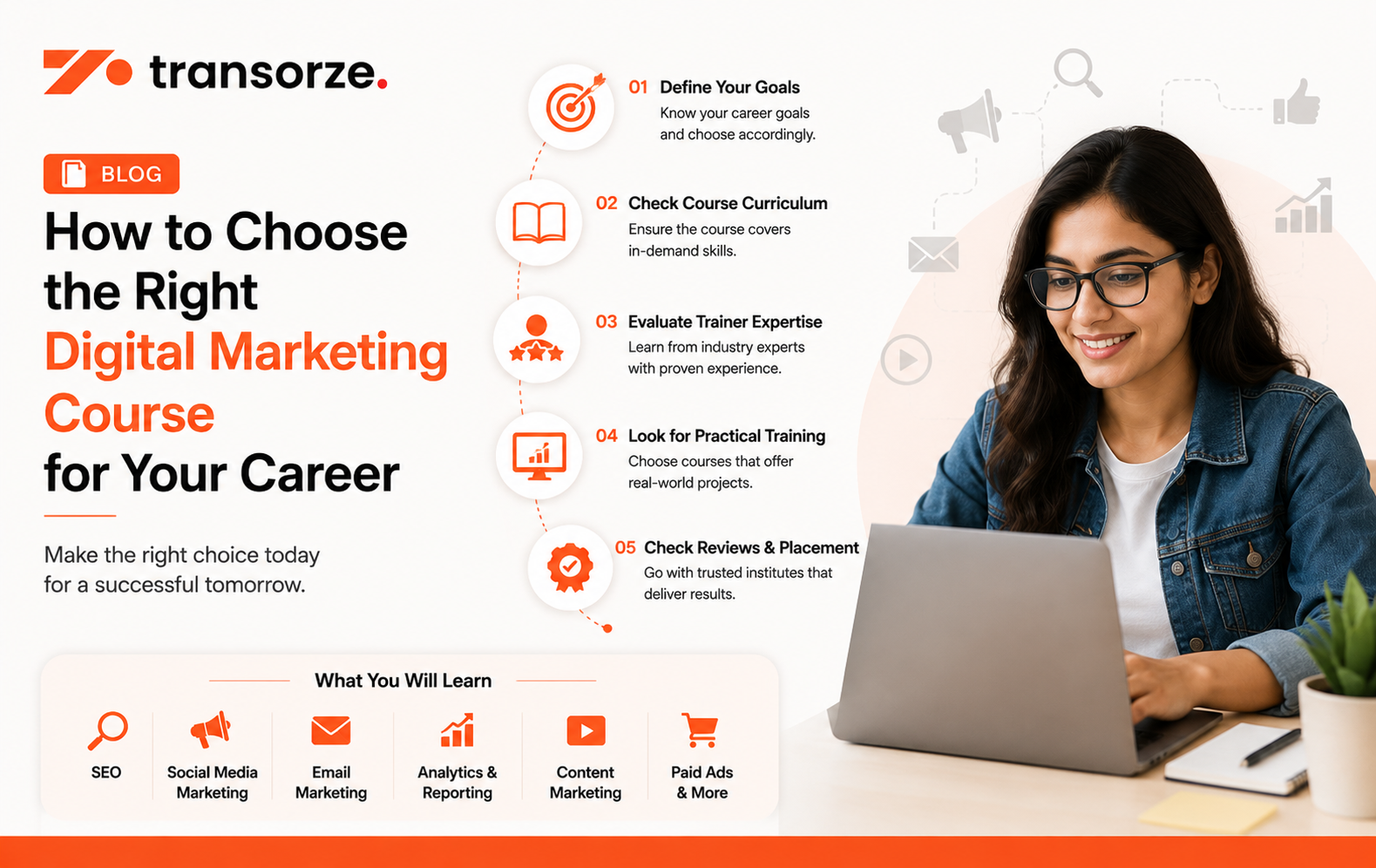
Understand Your Career Goals First
Before comparing courses, identify what you want to achieve.
Ask yourself:
- Are you a student seeking your first job?
- Are you a professional planning a career switch?
- Are you an entrepreneur looking to grow a business?
- Are you a freelancer seeking additional clients?
- Are you a marketing executive aiming for promotion?
Your goals will determine the type of course that best fits your needs.
For example:
Students and Fresh Graduates
Students often benefit from comprehensive digital marketing programs that cover multiple specializations, including SEO, social media marketing, Google Ads, content marketing, email marketing, analytics, and AI-powered marketing tools.
Working Professionals
Professionals may prefer advanced certifications focused on performance marketing, analytics, marketing automation, or strategic digital marketing leadership.
Business Owners
Entrepreneurs frequently seek practical programs that teach customer acquisition, lead generation, conversion optimization, and online brand building.
Evaluate the Course Curriculum Carefully
The curriculum is one of the most important indicators of course quality.
A strong digital marketing course should cover:
Search Engine Optimization (SEO)
Students should learn:
- Keyword research
- On-page optimization
- Technical SEO
- Link building
- Local SEO
- SEO reporting
Search Engine Marketing (SEM)
Key topics include:
- Google Ads
- PPC campaign management
- Budget optimization
- Conversion tracking
Social Media Marketing
Look for training in:
- Facebook advertising
- Instagram marketing
- LinkedIn marketing
- YouTube marketing
- Social media strategy
Content Marketing
Students should learn:
- Content planning
- Blog writing
- Content distribution
Web Analytics
Essential topics include:
- Google Analytics
- Data interpretation
- Campaign performance tracking
Email Marketing
Modern digital marketers must understand:
- Lead nurturing
- Email automation
- Campaign optimization
- Customer retention strategies
AI and Marketing Technology
As AI transforms marketing, modern courses should introduce:
- AI-assisted content creation
- Marketing automation
- Predictive analytics
- AI-powered advertising optimization
Look for Practical Training, Not Just Theory
Employers increasingly prioritize skills over certificates.
When evaluating a course, ask:
- Does it include live projects?
- Will I work on real campaigns?
- Are case studies included?
- Is there hands-on tool training?
- Will I build a professional portfolio?
Practical experience helps learners develop confidence while creating evidence of their capabilities for future employers.
The best digital marketing programs allow students to work on simulated or real-world campaigns, helping bridge the gap between learning and employment.
Check Industry Certifications and Accreditation
Industry-recognized certifications add credibility to your profile.
When researching training providers, look for institutions that maintain recognized educational partnerships and quality standards.
For example, professional training providers such as Transorze offer both Online & Offline classes and provide certifications backed by NSDC Training Partner, AAPC Licensed, UGC Recognized, and NCVET Skill University affiliations, helping learners build stronger professional credentials.
These certifications can enhance your resume and demonstrate commitment to continuous learning.
Assess Trainer Expertise
A course is only as valuable as the professionals delivering it.
Look for instructors who have:
- Industry experience
- Active project involvement
- Agency or corporate marketing backgrounds
- Current knowledge of digital marketing trends
- Experience with marketing tools and platforms
Experienced trainers often provide practical insights that go beyond textbook knowledge.
Consider Placement Support and Career Services
Many students choose digital marketing training to improve career prospects.
Before enrolling, evaluate:
- Placement assistance
- Resume preparation support
- Interview coaching
- Internship opportunities
- Portfolio development guidance
- Career counseling
Strong career support services can significantly improve job placement outcomes.
Understand Current Industry Demand
Digital marketing continues to be one of the fastest-growing career fields worldwide.
Several factors drive demand:
Rapid Digital Transformation
Organizations across sectors continue expanding their online presence.
E-Commerce Growth
Online shopping growth creates increasing demand for performance marketers, SEO specialists, content strategists, and advertising professionals.
Data-Driven Marketing
Companies increasingly rely on analytics and measurable ROI, creating opportunities for professionals skilled in campaign optimization and reporting.
AI Adoption
Businesses need marketers who understand both traditional marketing principles and modern AI-enhanced tools.
As digital channels become central to business growth strategies, demand for qualified digital marketing professionals remains strong across industries.
Digital Marketing Career Opportunities
A comprehensive digital marketing course can open doors to various career paths.
Popular roles include:
- Digital Marketing Executive
- SEO Specialist
- PPC Analyst
- Social Media Manager
- Content Marketing Specialist
- Performance Marketing Executive
- Marketing Automation Specialist
- Email Marketing Executive
- Web Analytics Analyst
- Digital Marketing Manager
As experience grows, professionals can progress into leadership positions managing teams, campaigns, and strategic initiatives.
Salary Expectations in Digital Marketing
Compensation varies by location, specialization, and experience.
Typical career progression may include:
Entry-Level Professionals
Fresh graduates and beginners often start in junior marketing roles focused on campaign execution and reporting.
Mid-Level Specialists
Professionals with several years of experience often move into specialized positions such as SEO strategist, paid advertising specialist, or marketing analyst.
Senior Professionals
Experienced marketers may advance into management, consulting, or digital strategy leadership positions with significantly higher earning potential.
Specialized expertise in analytics, performance marketing, marketing automation, and AI-driven marketing can further increase salary prospects.
Online vs Offline Digital Marketing Courses
Many learners wonder which format is better.
Online Learning Advantages
- Flexible schedules
- Learn from anywhere
- Access to recorded sessions
- Suitable for working professionals
Offline Learning Advantages
- Classroom interaction
- Immediate instructor feedback
- Structured learning environment
- Enhanced networking opportunities
The ideal choice depends on your schedule, learning style, and professional commitments.
Frequently Asked Questions
Choose a course based on your career goals, curriculum quality, practical training opportunities, certifications, instructor expertise, and placement support. Prioritize programs that include real-world projects and industry-recognized credentials.
Yes. Businesses continue investing heavily in digital channels, creating strong demand for professionals skilled in SEO, social media marketing, paid advertising, analytics, content marketing, and marketing automation.
A comprehensive course should cover SEO, Google Ads, social media marketing, content marketing, email marketing, web analytics, conversion optimization, marketing automation, and AI-driven marketing tools.
Absolutely. Many programs are designed specifically for students, fresh graduates, entrepreneurs, and career changers with no prior marketing experience.
Yes. Recognized certifications combined with practical project experience can improve employability, strengthen resumes, and help candidates stand out during recruitment.
Graduates can pursue roles such as Digital Marketing Executive, SEO Specialist, PPC Analyst, Social Media Manager, Content Marketing Specialist, Marketing Analyst, Performance Marketing Executive, and Digital Marketing Manager.
The best option depends on your learning preferences and schedule. Online courses offer flexibility, while offline programs provide classroom interaction, networking opportunities, and structured learning experiences.
Final Thoughts
Choosing the right digital marketing course can significantly influence your professional future. The best programs combine industry-relevant curriculum, practical training, recognized certifications, experienced instructors, and career support services.
Whether you are a student entering the workforce, a professional planning a career transition, or a business owner seeking growth skills, investing in structured digital marketing education can accelerate your career development and open new opportunities.
Take time to evaluate your options carefully, focus on long-term value rather than short-term cost, and choose a learning path that aligns with your professional goals. With the right training and consistent practice, digital marketing can become one of the most rewarding and future-ready career choices available today.
