
Top 5 Digital Marketing Strategies for 2026 Success
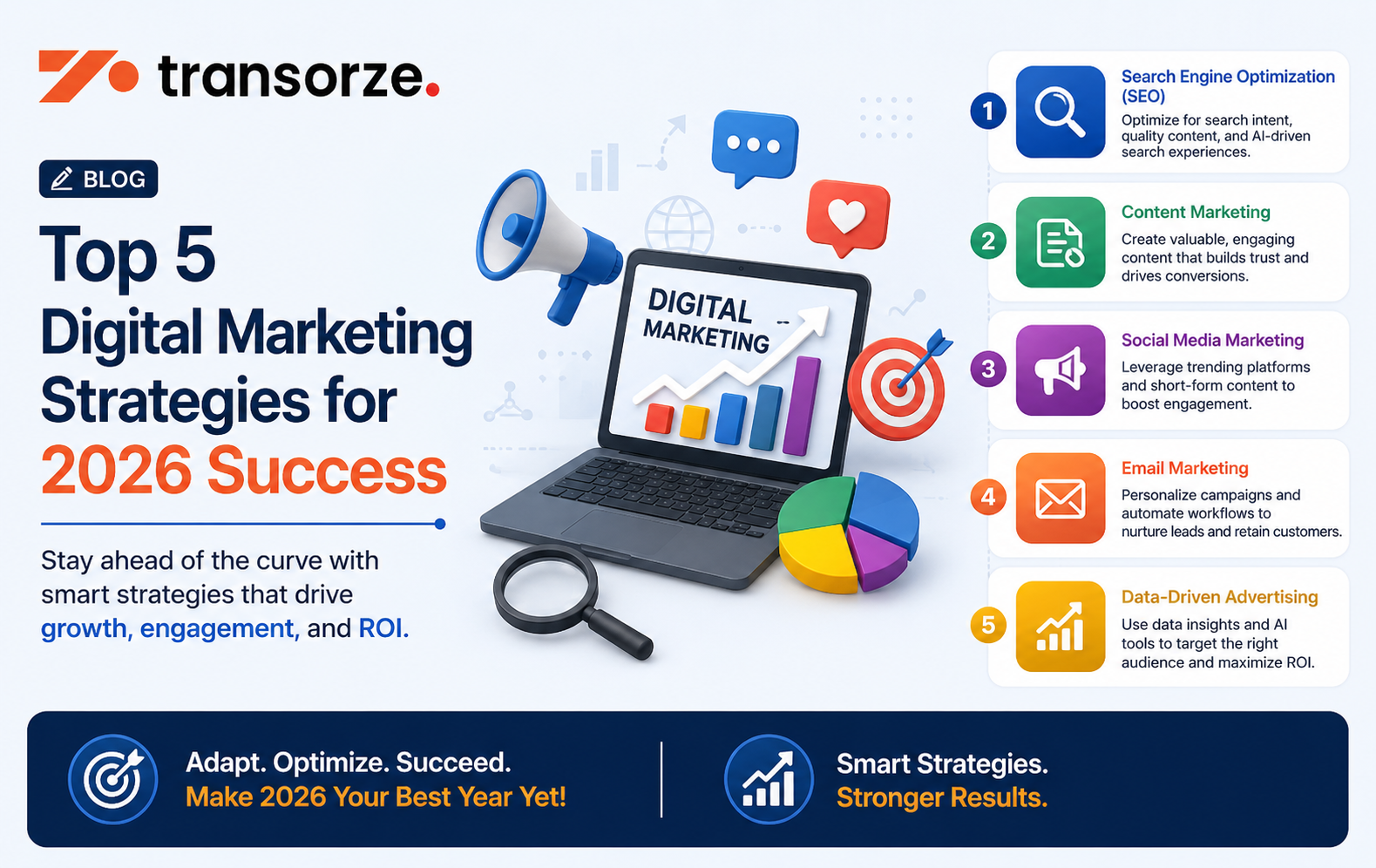
Digital marketing is evolving faster than ever. The strategies that generated leads and sales a few years ago are no longer enough to stay competitive. As artificial intelligence, automation, privacy regulations, and changing consumer behavior reshape the digital landscape, professionals and businesses must adapt quickly.
Whether you’re a student exploring career opportunities, a marketing executive looking to upgrade your skills, or a business owner seeking better results, understanding the most effective digital marketing strategies for 2026 can help you stay ahead of the competition.
In this guide, I’ll walk through the five most important digital marketing strategies for 2026 success, explain why certified digital marketing professionals are increasingly in demand, and show how structured training can accelerate career growth and earning potential.
Why Digital Marketing Skills Matter More Than Ever in 2026
The digital economy continues to expand across industries. Organizations of every size now rely on online channels to attract customers, build brand awareness, generate leads, and drive revenue.
As businesses increase their investment in digital channels, they need professionals who understand:
- Search Engine Optimization (SEO)
- Paid Advertising
- Content Marketing
- Social Media Strategy
- Marketing Automation
- Analytics and Data Interpretation
- AI-Powered Marketing Tools
- Conversion Rate Optimization
Companies are no longer looking for marketers who simply post content online. They want professionals who can create measurable business outcomes through data-driven strategies.
This shift is creating significant opportunities for certified digital marketing specialists who possess practical, industry-relevant skills.
1. AI-Powered Personalization and Predictive Marketing
Artificial intelligence is no longer a competitive advantage—it is becoming a necessity.
In 2026, successful marketers will use AI to create highly personalized customer experiences across multiple channels. Instead of sending identical messages to everyone, brands will leverage AI tools to understand user behavior, predict purchasing intent, and deliver customized content.
Key Applications
- Personalized email campaigns
- Predictive lead scoring
- Customer behavior analysis
- Dynamic website content
- AI-driven advertising optimization
- Automated customer journeys
Why It Matters
Consumers increasingly expect relevant and personalized experiences. Businesses that deliver targeted content at the right time can improve engagement, conversion rates, and customer loyalty.
Professionals who understand both AI tools and marketing fundamentals will have a significant advantage in the job market
2. Search Everywhere Optimization (SEO Beyond Google)
Search behavior is changing dramatically.
Consumers now search for information across multiple platforms, including:
- YouTube
- Voice Assistants
- AI Search Platforms
- Industry Directories
As a result, SEO in 2026 extends far beyond traditional website optimization.
Essential Focus Areas
AI Overview Optimization
Content must be structured clearly so AI systems can understand and reference it.
Video SEO
Video content continues to dominate engagement and search visibility.
Voice Search Optimization
Natural language queries require conversational content structures.
Local SEO
Businesses must maintain strong visibility across local search results and map listings.
Why It Matters
Brands that optimize for multiple search environments gain more visibility, traffic, and customer trust.
Digital marketers who understand modern search ecosystems become highly valuable assets to employers.
3. Short-Form Video and Interactive Content Marketing
Consumer attention spans continue to shrink while competition for engagement increases.
Short-form videos remain one of the most effective content formats for:
- Brand awareness
- Product education
- Lead generation
- Community building
- Customer retention
Effective Formats for 2026
- Educational reels
- Behind-the-scenes content
- Live sessions
- Interactive polls
- Product demonstrations
- User-generated content
- Micro-learning videos
Why It Matters
People engage more readily with visual and interactive content than static text alone.
Organizations increasingly seek marketing professionals who can plan, produce, and optimize multimedia campaigns across platforms.
4. First-Party Data and Privacy-Focused Marketing
Data privacy regulations continue to evolve globally.
At the same time, third-party cookies are becoming less reliable, forcing businesses to rethink how they collect and use customer information.
Successful Strategies Include
- Building email subscriber databases
- Customer loyalty programs
- CRM-based marketing
- Consent-driven data collection
- Personalized customer journeys
- Secure data management practices
Why It Matters
Organizations that prioritize transparency and trust are more likely to retain customers and comply with evolving regulations.
Marketers who understand ethical data collection and privacy-focused strategies will remain in high demand.
5. Marketing Automation and Full-Funnel Optimization
Automation is transforming how marketing teams operate.
Businesses increasingly use automation to streamline repetitive tasks while improving customer experiences.
Automation Areas Growing in Importance
- Lead nurturing
- Email marketing
- Customer onboarding
- Retargeting campaigns
- Chatbot engagement
- Workflow management
- Performance reporting
Why It Matters
Automation allows businesses to scale efficiently while maintaining personalization.
Professionals who can build and manage automated marketing systems often command higher salaries because they directly contribute to operational efficiency and revenue growth.
Why Certification Matters in Digital Marketing Careers
The digital marketing industry values practical expertise. While theoretical knowledge is important, employers increasingly prioritize candidates who can demonstrate real-world capabilities.
Professional certifications help validate:
- Technical proficiency
- Industry knowledge
- Platform expertise
- Campaign management skills
- Analytical capabilities
Certified professionals often gain advantages during hiring, promotions, and freelance opportunities because their skills have been independently verified.
How Structured Training Accelerates Career Growth
Many aspiring marketers attempt to learn entirely through free online resources. While self-learning can be valuable, structured training often shortens the learning curve and provides a more comprehensive understanding of industry practices.
A quality training program typically offers:
- Industry-aligned curriculum
- Practical assignments
- Real-world project experience
- Mentorship support
- Portfolio development
- Placement assistance
- Professional certification pathways
For professionals seeking comprehensive skill development, Transorze offers both Online & Offline classes for technical education and professional training, supported by credentials including NSDC Training Partner, AAPC Licensed, UGC Recognized, and NCVET Skill University affiliations, helping learners gain industry-relevant expertise and career-focused certifications.
Skills Employers Want in Digital Marketing Professionals
Recruiters increasingly seek candidates who combine technical expertise with business understanding.
The most valuable competencies include:
Analytical Thinking
The ability to interpret campaign data and make strategic decisions.
SEO Expertise
Understanding search visibility, content optimization, and ranking factors.
Paid Advertising Skills
Managing campaigns across Google Ads and social platforms.
Content Strategy
Creating content that attracts, engages, and converts audiences.
Marketing Automation
Building scalable systems that improve efficiency and customer experience.
AI Tool Proficiency
Using AI responsibly to enhance productivity and campaign performance.
Communication Skills
Translating marketing insights into actionable business recommendations.
Career Opportunities in Digital Marketing
The demand for digital marketing professionals continues to grow across industries.
Popular career paths include:
- Digital Marketing Executive
- SEO Specialist
- Content Marketing Strategist
- Social Media Manager
- Performance Marketing Analyst
- PPC Specialist
- Marketing Automation Specialist
- Email Marketing Manager
- Growth Marketing Manager
- Digital Marketing Consultant
- Freelance Digital Marketer
Many professionals also leverage digital marketing skills to launch agencies, consulting businesses, or online ventures.
Earning Potential for Certified Digital Marketing Professionals
Earning potential depends on experience, specialization, certifications, and geographic location.
Professionals with expertise in:
- SEO
- Performance Marketing
- Marketing Automation
- Analytics
- AI-Powered Marketing
- Conversion Optimization
often earn significantly more than generalist marketers because these skills directly impact business revenue.
As organizations continue investing in digital transformation, demand for highly skilled specialists is expected to remain strong through 2026 and beyond.
Practical Next Steps for Career Growth
If you’re considering a career in digital marketing or planning to advance your existing role, focus on the following:
- Learn modern marketing fundamentals.
- Develop expertise in SEO and analytics.
- Gain hands-on experience with marketing tools.
- Build a portfolio of practical projects.
- Earn recognized certifications.
- Stay updated on AI and automation trends.
- Participate in industry communities and networking opportunities.
- Pursue structured training that combines theory with real-world application.
The professionals who continuously learn and adapt will be best positioned for long-term success in the rapidly evolving digital marketing landscape.
Frequently Asked Questions
The most important digital marketing strategies for 2026 include AI-powered personalization, search everywhere optimization, short-form video marketing, privacy-focused data strategies, and marketing automation.
Yes. Digital marketing remains one of the fastest-growing career fields because businesses across industries depend on online channels for customer acquisition, engagement, and revenue generation.
While certification is not always mandatory, it significantly improves credibility, validates skills, and can enhance employment opportunities and career progression.
SEO, performance marketing, content strategy, analytics, marketing automation, AI-powered marketing, and paid advertising are among the most sought-after skills.
Yes. Online learning provides flexibility and accessibility, while many learners also benefit from offline classroom training and practical project-based instruction.
Income varies based on specialization, experience, certifications, and location. Professionals with expertise in SEO, automation, analytics, and performance marketing often command higher salaries.
Virtually every sector hires digital marketers, including healthcare, education, technology, e-commerce, finance, real estate, manufacturing, hospitality, and consulting.
Conclusion
The top digital marketing strategies for 2026 success center around AI-powered personalization, search everywhere optimization, short-form content, privacy-first marketing, and automation-driven growth.
For professionals, these trends represent more than marketing tactics—they create valuable career opportunities. Organizations increasingly seek certified specialists who can implement these strategies effectively and deliver measurable results.
Investing in structured training, practical experience, and industry-recognized certifications can help accelerate career advancement, improve earning potential, and create long-term opportunities in one of the world’s fastest-growing professions.
