
Medical Transcription Means: A Complete Guide to Understanding This Essential Healthcare Career
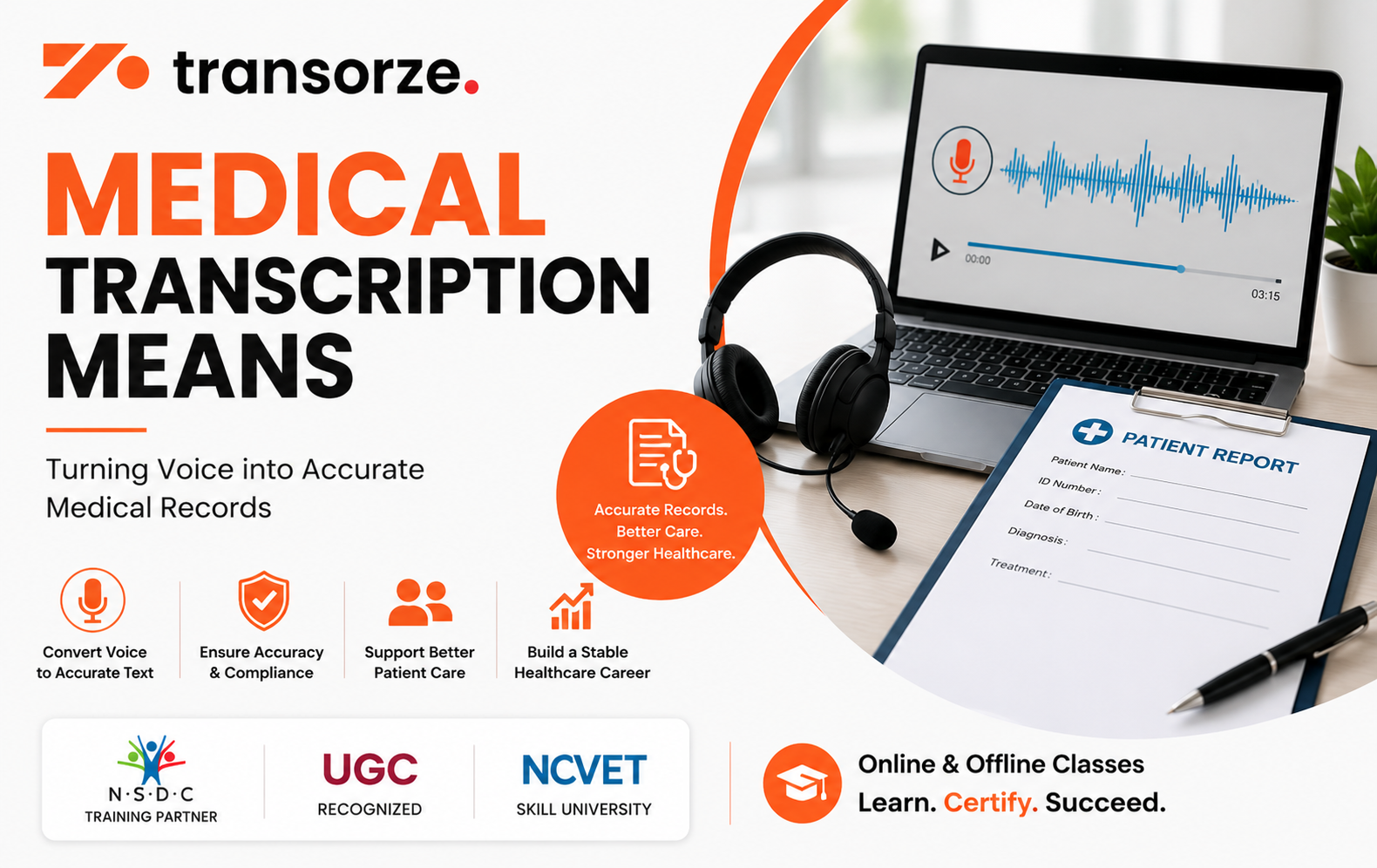
When people search for “medical transcription means,” they are usually looking for a simple explanation of what medical transcription is, how it works, and whether it is still a good career option in today’s healthcare industry. The short answer is that medical transcription is the process of converting doctors’ voice recordings into accurate written medical documents that become part of a patient’s permanent health record.
Although healthcare has become increasingly digital, medical transcription remains an essential part of clinical documentation. Accurate medical records help doctors provide better patient care, support insurance claims, ensure legal compliance, and maintain organized healthcare systems.
Whether you’re considering a career in healthcare or simply want to understand the profession, this guide explains everything you need to know about medical transcription in clear, easy-to-understand language.
Medical Transcription Means
Medical transcription means listening to voice recordings created by doctors and other healthcare professionals and converting them into accurate written medical reports.
These reports may include:
- Patient history
- Physical examination notes
- Consultation reports
- Discharge summaries
- Operative reports
- Laboratory reports
- Diagnostic imaging reports
- Referral letters
Medical transcription professionals ensure that every report is complete, properly formatted, grammatically correct, and medically accurate before becoming part of the patient’s medical record.
What Is Medical Transcription?
Medical transcription is a specialized healthcare documentation process where spoken medical information is converted into written documents.
Healthcare providers often dictate patient information using digital recording devices or speech recognition software. A medical transcription professional carefully listens to these recordings, edits them when necessary, verifies medical terminology, and prepares a final report.
Unlike ordinary typing, medical transcription requires an understanding of:
- Human anatomy
- Medical terminology
- Diseases and disorders
- Diagnostic procedures
- Medications
- Laboratory tests
- Medical abbreviations
- Healthcare documentation standards
The goal is to create precise medical records that accurately reflect the healthcare provider’s observations and treatment decisions.
Why Is Medical Transcription Important?
Every healthcare organization depends on accurate patient documentation. Medical transcription helps maintain reliable records that support patient care and hospital operations.
Some of its key benefits include:
Better Patient Care
Doctors rely on detailed medical records to understand a patient’s medical history, previous treatments, allergies, medications, and ongoing conditions.
Well-prepared documentation reduces confusion and improves continuity of care.
Improved Communication
Healthcare involves collaboration between physicians, nurses, specialists, laboratories, and insurance providers.
Clear documentation allows everyone involved in patient care to access the same information quickly and accurately.
Insurance and Billing Support
Insurance companies often require detailed medical documentation before approving claims.
Accurate transcription helps ensure that medical records contain the information needed for billing and reimbursement.
Legal Documentation
Medical records also serve as legal documents.
Properly transcribed reports help hospitals and healthcare professionals maintain compliance with healthcare regulations while providing documented evidence of patient care.
How Does Medical Transcription Work?
Medical transcription follows a structured workflow designed to produce accurate clinical documentation.
Step 1: Voice Dictation
A physician examines a patient and records notes using a digital recorder or voice recognition system.
Step 2: Audio Review
The medical transcription professional listens carefully to the recording, paying close attention to pronunciation, medical terminology, and context.
Step 3: Document Preparation
The spoken information is converted into a structured medical report using appropriate formatting and healthcare documentation standards.
Step 4: Editing and Proofreading
Every report is reviewed for:
- Grammar
- Spelling
- Medical terminology
- Formatting
- Completeness
- Consistency
Any obvious errors or inconsistencies are corrected before the report is finalized.
Step 5: Final Submission
The completed report becomes part of the patient’s electronic health record (EHR), making it accessible to authorized healthcare professionals whenever needed.
Types of Medical Reports Created
Medical transcription professionals prepare many different types of healthcare documents.
Some of the most common include:
- Admission notes
- Discharge summaries
- Consultation reports
- Surgical reports
- Emergency department reports
- Radiology reports
- Pathology reports
- Clinic notes
- Progress notes
- Referral letters
- Follow-up reports
Each report follows a specific format depending on the medical specialty and healthcare facility.
Skills Required for Medical Transcription
Medical transcription is a profession that combines healthcare knowledge with strong language and technical skills.
Important skills include:
Medical Terminology
Understanding medical vocabulary is one of the most important requirements.
Professionals regularly encounter complex anatomical terms, diseases, procedures, medications, and abbreviations.
Excellent Listening Skills
Doctors often dictate reports quickly or with different accents.
Medical transcriptionists must carefully interpret every recording without missing important details.
Fast and Accurate Typing
Although speech recognition software is increasingly used, typing speed and accuracy remain valuable skills for editing and correcting reports efficiently.
Grammar and English Proficiency
Medical documents must be professionally written.
Strong grammar, punctuation, spelling, and sentence structure ensure reports are easy to understand.
Attention to Detail
Even a small mistake in medication names, dosage, patient information, or diagnoses can create serious documentation errors.
Accuracy is therefore one of the defining qualities of successful medical transcription professionals.
Medical Transcription and Technology
Technology has changed the way healthcare documentation is created.
Many hospitals now use speech recognition software to generate initial drafts of medical reports. However, these systems are not perfect.
Background noise, pronunciation differences, complex medical terminology, and similar-sounding words can introduce errors.
Medical transcription professionals play an important role by reviewing, correcting, and refining these computer-generated reports to ensure they meet healthcare quality standards.
Artificial intelligence has improved documentation efficiency, but human expertise remains essential for maintaining accuracy, context, and patient safety.
Is Medical Transcription Still a Good Career?
Yes. While technology has transformed documentation workflows, trained professionals continue to be needed for quality assurance, editing, medical language expertise, and accurate healthcare documentation.
Healthcare organizations value individuals who understand both medical science and documentation standards, making medical transcription an attractive career for people interested in the healthcare industry without pursuing clinical roles.
Career Opportunities in Medical Transcription
Medical transcription training offers a variety of career opportunities in the healthcare documentation field. As healthcare services continue to expand worldwide, the demand for accurate medical records remains consistent. Skilled professionals can work in hospitals, clinics, diagnostic centers, medical transcription companies, insurance firms, healthcare BPOs, and even from home in remote roles.
Some common job positions include:
- Medical Transcriptionist
- Medical Documentation Specialist
- Medical Scribe
- Quality Analyst (Medical Transcription)
- Medical Editor
- Clinical Documentation Specialist
- Healthcare Documentation Executive
- Medical Records Coordinator
With experience and additional training, professionals can move into supervisory, quality assurance, or training roles.
How to Become a Medical Transcription Professional
Starting a career in medical transcription does not necessarily require a medical degree. However, specialized training is essential to understand healthcare documentation and industry standards.
A typical learning path includes:
Learn Medical Terminology
Students begin by understanding anatomy, physiology, diseases, diagnostic procedures, medications, and commonly used medical abbreviations.
Develop English Language Skills
Clear grammar, punctuation, spelling, and comprehension are essential because medical reports must be professionally written.
Improve Listening and Typing Skills
Medical transcription professionals need to accurately understand voice recordings while maintaining good typing speed and accuracy.
Practice with Real Medical Reports
Practical exercises using sample dictations help learners become familiar with different medical specialties and documentation formats.
Gain Industry Certification
Training from a recognized institution adds credibility and improves employability by demonstrating that students have learned current healthcare documentation practices.
Choosing the Right Medical Transcription Training Institute
When comparing training providers, consider factors beyond course fees. A quality institute should offer:
- Industry-focused curriculum
- Practical transcription exercises
- Experienced trainers
- Flexible learning options
- Placement assistance
- Updated healthcare documentation practices
- Recognized certifications
Institutes such as Transorze provide Online & Offline classes with training supported by NSDC Training Partner, UGC Recognized, and NCVET Skill University certifications, helping students build practical skills that align with current healthcare industry expectations.
Medical Transcription Salary and Career Growth
Salary varies depending on several factors, including:
- Experience
- Skill level
- Accuracy
- Productivity
- Employer
- Geographic location
- Specialization
Entry-level professionals gain experience by working on different medical specialties, while experienced transcriptionists often move into editing, quality assurance, documentation auditing, or team leadership positions.
Continuous learning and familiarity with evolving healthcare technologies can improve long-term career prospects.
The Future of Medical Transcription
Many people wonder whether artificial intelligence will completely replace medical transcription.
The reality is that AI has changed the workflow rather than eliminating the profession.
Today’s documentation process often combines:
- Speech recognition software
- Artificial intelligence
- Electronic Health Records (EHR)
- Human editing
- Medical language expertise
Healthcare providers continue to require professionals who can verify terminology, identify errors, understand clinical context, and ensure documentation accuracy.
As digital healthcare expands, professionals who can work alongside modern technologies are likely to remain valuable.
Why Location Still Matters When Looking for Training
Many prospective students search for terms such as:
- Medical transcription course near me
- Medical transcription training near me
- Medical transcription institute near me
- Healthcare documentation classes near me
Choosing a training institute near your location can make classroom learning, practical sessions, and placement assistance more accessible. At the same time, institutes that offer online learning provide flexibility for students who cannot attend in person.
When evaluating a local training program provider, check:
- Classroom facilities
- Trainer experience
- Student reviews
- Batch timings
- Placement support
- Industry-recognized certifications
This helps ensure that you receive practical, career-oriented training regardless of where you study.
Final Thought
Understanding what medical transcription means is the first step toward exploring one of healthcare’s most important non-clinical professions. Medical transcription is much more than typing—it involves converting spoken medical information into accurate, organized, and legally compliant patient records that support quality healthcare.
As healthcare continues to embrace digital technologies, the role of skilled documentation professionals is evolving rather than disappearing. Those who combine medical knowledge, language proficiency, attention to detail, and familiarity with modern documentation tools will continue to play an important role in hospitals, clinics, insurance companies, and healthcare organizations.
Whether you are exploring career options, planning additional skills, or seeking a healthcare profession that doesn’t involve direct patient care, medical transcription offers a structured pathway into the growing healthcare documentation industry.
Recommended Reads
- Medical Transcriptionist Classes: Your Complete Guide to Training, Skills, and Career Opportunities
- Medical Transcription Online Training: A Complete Guide to Building a Healthcare Career
- Medical Transcription Jobs Work From Home: Career Guide, Skills & Opportunities
- Medical Transcription Online Job: A Coplete Guide to Starting Your Career from Home
Frequently Asked Questions
Medical transcription means converting doctors’ voice recordings into accurate written medical reports that become part of a patient’s permanent medical record.
Yes. While speech recognition and AI assist with documentation, trained professionals are still needed to edit, verify, and ensure the accuracy of medical records.
Most employers prefer candidates who have completed specialized medical transcription training and understand medical terminology, anatomy, English grammar, and healthcare documentation.
Yes. Transorze offer online as well as classroom-based medical transcription programs, allowing students to learn according to their schedules.
Key skills include medical terminology, listening ability, typing speed, English language proficiency, attention to detail, computer skills, and knowledge of healthcare documentation.
No. AI assists with creating draft reports, but trained professionals are still required to review, edit, and verify medical documents for accuracy and compliance.
Medical transcription professionals can work in hospitals, clinics, healthcare BPOs, insurance companies, diagnostic centers, medical documentation firms, and remote work environments.
