
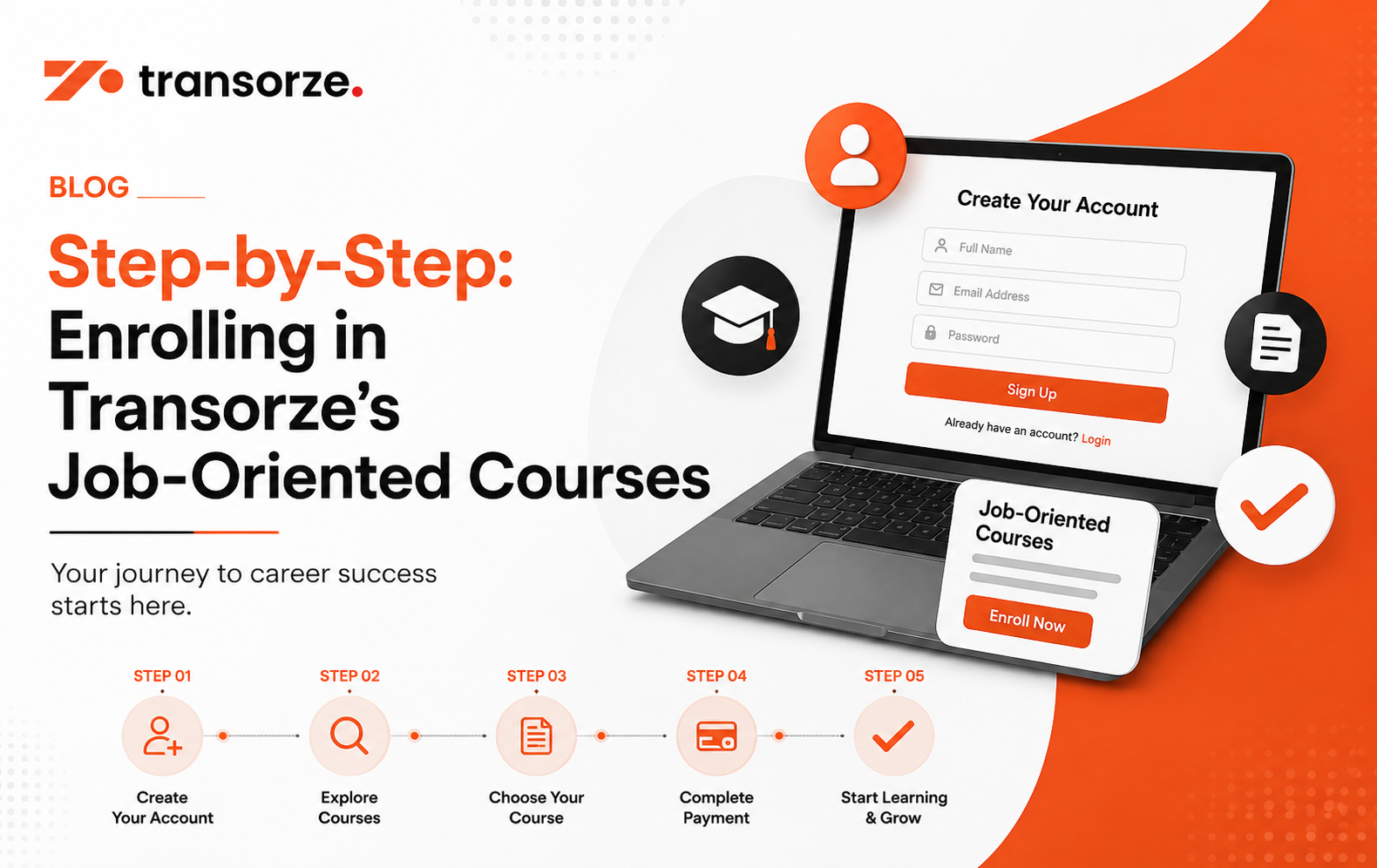
Step-by-Step: Enrolling in Transorze’s Job-Oriented Courses
Why Job-Oriented Education Matters Today
The job market is evolving rapidly, and employers increasingly seek professionals who can contribute from day one. Traditional academic qualifications remain valuable, but specialized, industry-focused training often gives candidates a competitive advantage when applying for healthcare, medical coding, healthcare documentation, hospital administration, and allied healthcare roles.
For students, graduates, and working professionals looking to build a future-ready career, enrolling in a job-oriented course can be one of the most practical decisions they make. These programs are designed to bridge the gap between theoretical knowledge and real-world industry requirements.
If you’re considering professional training that leads to employment opportunities in India and abroad, understanding the enrollment process is the first step toward achieving your career goals.
Step-by-Step: Enrolling in Transorze’s Job-Oriented Courses
Enrolling in a professional training program is easier when you know exactly what to expect. Here’s a simple step-by-step guide to help you get started.
Step 1: Identify Your Career Goal
Before selecting a course, determine where you want your career to go.
Ask yourself:
- Do I want to work in medical coding?
- Am I interested in healthcare documentation?
- Would hospital administration suit my strengths?
- Do I want opportunities in international healthcare industries?
Having a clear goal helps you choose the right training pathway and maximize your return on investment.
Step 2: Explore Available Job-Oriented Programs
Research courses that align with your career objectives and industry demand.
Popular healthcare-focused options include:
- Medical Coding
- Healthcare Documentation
- Hospital Administration
- Medical Scribing
- Revenue Cycle Management
- Healthcare Analytics
- Logistics and Supply Chain Management for healthcare sectors
Look for programs that include practical training, real-world case studies, and certification preparation.
Step 3: Verify Accreditation and Industry Recognition
One of the most important enrollment considerations is the credibility of the training provider.
Choose institutions that offer recognized certifications and maintain strong industry partnerships. Professional learners often prioritize programs backed by:
These credentials enhance employer confidence and strengthen candidate profiles during recruitment.
Step 4: Choose Your Preferred Learning Format
Flexibility plays a major role in successful learning.
Today, many professionals balance studies with work or family commitments. That’s why quality training providers offer both Online & Offline classes, allowing learners to choose a format that suits their schedule and learning style.
Online learning offers convenience and accessibility, while classroom learning provides structured guidance and direct interaction with trainers.
Step 5: Attend a Career Counseling Session
Career counseling can help you:
- Understand course outcomes
- Evaluate industry demand
- Assess your strengths and interests
- Learn about placement opportunities
- Create a long-term career roadmap
Many successful professionals credit career guidance as a key factor in selecting the right training program.
Step 6: Complete the Admission Process
Once you’ve selected a course, the enrollment process typically includes:
- Application submission
- Educational qualification verification
- Counseling or screening discussion
- Fee payment
- Batch allocation
- Orientation session
This process ensures students are placed in the most suitable learning environment.
Step 7: Begin Skill Development and Certification Preparation
Enrollment is only the beginning.
The most successful learners actively participate in:
- Practical exercises
- Industry projects
- Assessments
- Certification preparation
- Communication skill development
- Interview readiness programs
Consistent engagement significantly improves employability outcomes.
How Job-Oriented Courses Prepare You for Global Healthcare Jobs
The global healthcare industry continues to experience strong demand for skilled support professionals. Healthcare providers increasingly rely on trained specialists who can manage documentation, coding, administration, and compliance functions efficiently.
Professional training programs help learners develop competencies such as:
Medical Terminology Expertise
Understanding healthcare language is essential for accurate documentation and coding.
Clinical Documentation Skills
Professionals learn how to review, interpret, and organize healthcare records according to industry standards.
Coding and Compliance Knowledge
Medical coding specialists require detailed knowledge of coding systems, regulations, and payer requirements.
Healthcare Communication
Strong communication skills improve collaboration between healthcare providers, insurers, and patients.
Technology Proficiency
Modern healthcare organizations rely on electronic health records, healthcare software platforms, and digital documentation systems.
These competencies are valued by employers across multiple healthcare markets
Industry Demand for Skilled Healthcare Professionals
Healthcare remains one of the world’s fastest-growing employment sectors.
Several factors contribute to rising demand:
- Aging populations
- Expansion of healthcare services
- Growth in medical insurance systems
- Increased emphasis on healthcare documentation
- Digital transformation initiatives
- Rising need for accurate medical coding and compliance
As healthcare systems become more data-driven, employers increasingly seek professionals who possess specialized technical skills alongside industry knowledge.
Career Opportunities After Completing Job-Oriented Training
Graduates can pursue diverse career paths depending on their specialization.
Medical Coding Specialist
Responsible for translating clinical information into standardized medical codes for billing and reporting.
Healthcare Documentation Specialist
Supports healthcare providers through accurate clinical documentation and record management.
Medical Scribe
Assists physicians by documenting patient encounters and maintaining healthcare records.
Hospital Administration Executive
Coordinates operational and administrative activities within healthcare organizations.
Revenue Cycle Management Professional
Supports healthcare financial processes, insurance claims, and reimbursement systems.
These roles offer opportunities for career growth, specialization, and international employment exposure.
Career Advancement Potential
Job-oriented training does more than help learners secure their first position.
It also creates pathways toward:
- Senior specialist roles
- Team leadership positions
- Quality auditing functions
- Training and mentoring responsibilities
- Healthcare operations management
- International healthcare careers
Professionals who continuously update their skills often experience stronger long-term career progression and higher earning potential.
Practical Next Steps for Aspiring Professionals
If you’re ready to build a healthcare-focused career, consider the following action plan:
Assess Your Current Skills
Identify knowledge gaps and determine which specialization best matches your interests.
Research Industry Requirements
Review job descriptions and employer expectations in your preferred field.
Select a Recognized Training Program
Choose a provider that offers practical training, certification support, and industry-relevant curriculum.
Commit to Continuous Learning
Healthcare industries evolve constantly. Ongoing professional development is essential for sustained success.
Build Professional Confidence
Participate in projects, assessments, internships, and interview preparation opportunities whenever possible.
Why Professional Training Makes a Difference
The transition from education to employment becomes smoother when learners acquire practical, industry-relevant skills. Specialized programs help students understand employer expectations, develop technical competencies, and gain confidence before entering the workforce.
Among institutions supporting this approach, Transorze offers both Online & Offline classes and delivers industry-aligned training supported by NSDC Training Partner, AAPC Licensed, UGC Recognized, and NCVET Skill University credentials, helping learners prepare for healthcare careers in competitive global markets.
Conclusion
Choosing the right job-oriented course can significantly influence your professional future. By following a structured enrollment process, selecting industry-recognized programs, and actively developing practical skills, you can position yourself for rewarding opportunities in healthcare and related sectors.
Whether you’re a student beginning your career journey or a working professional seeking advancement, the right training program can help transform ambition into measurable career success
Frequently Asked Questions
Most enrollment processes involve career counseling, course selection, application submission, document verification, fee payment, and batch allocation. Many institutions also provide orientation sessions before classes begin.
Yes. Industry-focused programs teach practical skills such as medical terminology, healthcare documentation, coding standards, compliance requirements, and healthcare technology usage that are valued by employers worldwide.
Yes. Quality online programs provide structured learning, practical assignments, certification preparation, and career support similar to classroom-based programs when delivered by recognized training providers.
Look for recognized affiliations and certifications such as NSDC partnerships, AAPC licensing, UGC recognition, and skill university collaborations that enhance credibility and employer acceptance.
Popular options include Medical Coding Specialist, Healthcare Documentation Specialist, Medical Scribe, Hospital Administration Executive, Revenue Cycle Management Professional, and healthcare support roles.
Yes. Many programs are specifically designed for graduates seeking industry-ready skills and practical knowledge that improve employability.
Professional training helps learners build specialized expertise, earn recognized certifications, improve job readiness, qualify for advanced roles, and pursue leadership opportunities over time.
