
Sepsis Coding Guidelines: A Complete Guide to ICD-10-CM Documentation and Accurate Reimbursement
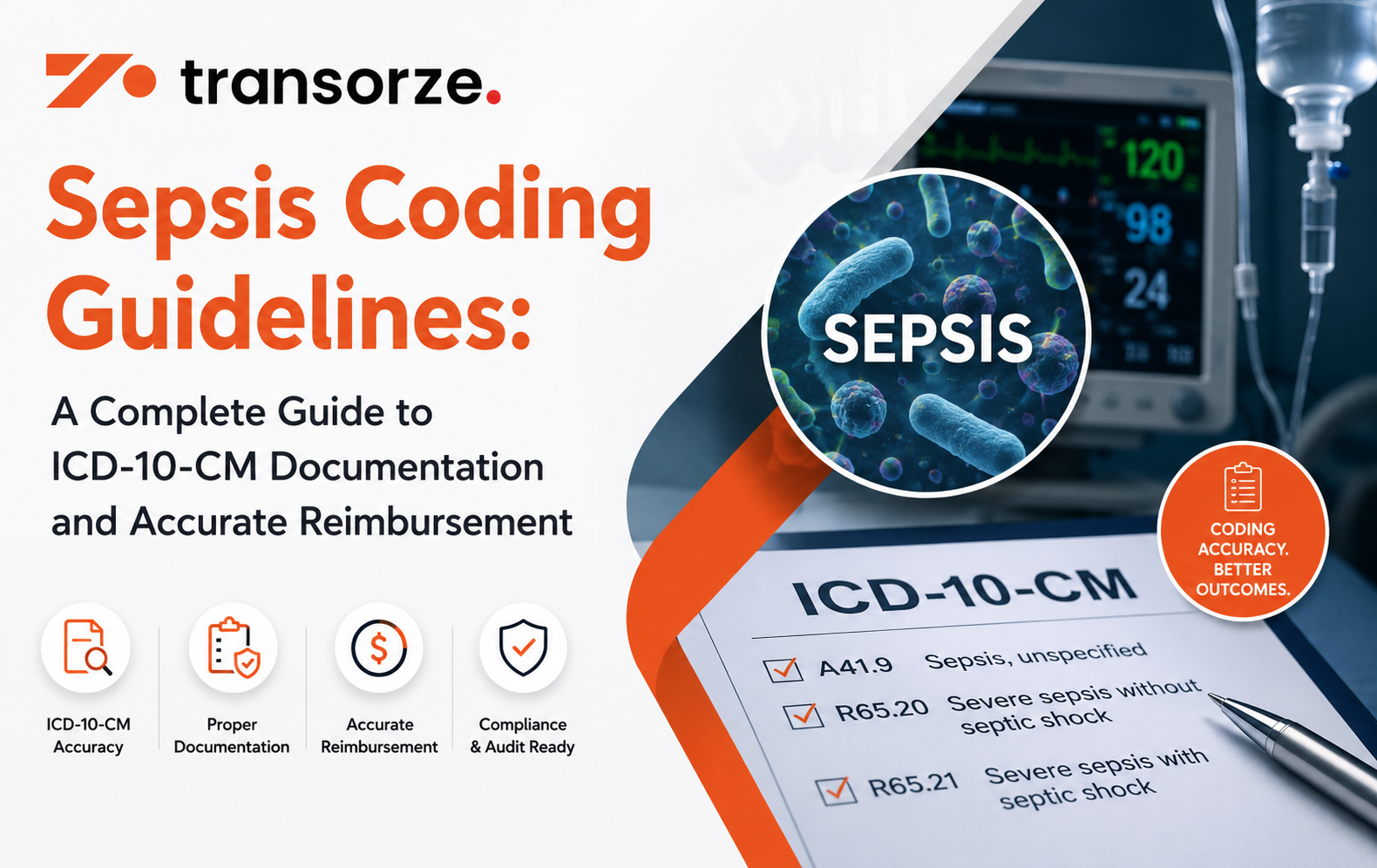
Sepsis is one of the trickiest conditions to code correctly, and honestly, it’s one of the topics that trips up even experienced coders. One missed word in a physician’s note, one skipped “with” or “due to,” and a claim can bounce back, get denied, or worse, get flagged in an audit. If you’re studying medical coding or already working in the field, understanding sepsis documentation and its ICD-10-CM codes isn’t optional. It’s core knowledge you’ll be tested on and use almost every week on the job.
This guide walks through what sepsis actually is, why it happens, how it’s classified, which ICD-10-CM codes apply, and the most common mistakes coders make. We’ll also work through a real coding example so you can see the logic in action.
What Is Sepsis?
Sepsis is a life-threatening organ dysfunction caused by a dysregulated host response to infection. In plain terms, the body’s immune system overreacts to an infection and starts attacking its own tissues and organs instead of just fighting the invading bacteria or virus.
Left untreated, sepsis can lead to tissue damage, organ failure, and death. That’s exactly why early recognition and treatment save lives, and why accurate documentation and coding matter so much. A coder who understands the clinical picture is far better equipped to assign the right code the first time.
Common Causes of Sepsis
Sepsis doesn’t appear out of nowhere; it’s almost always the body’s response to an underlying infection. The most frequent sources include:
- Bacterial infections (the most common cause)
- Viral infections
- Fungal infections
- Urinary tract infections
- Pneumonia
- Skin and soft tissue infections
- Intra-abdominal infections
- Bloodstream infections
- Post-operative infections
Because sepsis is always secondary to an infection, coders need to identify and code the underlying infection alongside the sepsis code itself. This “code the cause first” logic runs through almost every sepsis coding scenario.
Clinical Features Coders Should Recognize
Understanding the clinical signs helps coders make sense of physician documentation and query appropriately when something doesn’t add up. Typical clinical features include:
- Fever or hypothermia
- Tachycardia
- Tachypnea
- Hypotension
- Altered mental status
- Leukocytosis or leukopenia
- Elevated lactic acid
- Signs of infection
- Organ dysfunction
If sepsis isn’t caught and treated early, it can progress through a dangerous chain: septic shock, organ failure, multi-organ dysfunction, and death. This progression is exactly why the severity classification (covered below) matters so much for both clinical care and coding accuracy.
Documentation Essentials
Good coding starts with good documentation, and sepsis is a textbook example of why. Before you can even open your code book, the medical record needs to answer:
- Type/source of infection
- Date/time of onset
- Signs and symptoms
- Vital signs and lab results
- Organ dysfunction details
- Treatments provided (antibiotics, fluids, etc.)
- Response to treatment
- Associated conditions (such as diabetes, CKD, or CHF)
- Whether septic shock is present
Clear and complete documentation leads to accurate coding and appropriate reimbursement. If any of these elements are missing, a query to the physician is usually the right next step, rather than guessing.
Important Abbreviations to Know
Medical coding is full of shorthand, and sepsis-related charts are no exception. Here are the abbreviations you’ll run into constantly:
Abbreviation | Meaning |
|---|---|
SIRS | Systemic Inflammatory Response Syndrome |
SOFA | Sequential Organ Failure Assessment |
MODS | Multiple Organ Dysfunction Syndrome |
AKI | Acute Kidney Injury |
ARDS | Acute Respiratory Distress Syndrome |
UTI | Urinary Tract Infection |
CABG | Coronary Artery Bypass Graft |
CHF | Congestive Heart Failure |
COPD | Chronic Obstructive Pulmonary Disease |
DM | Diabetes Mellitus |
HTN | Hypertension |
BP | Blood Pressure |
WBC | White Blood Cell |
ICD-10-CM Codes for Sepsis (Quick Reference)
The A40–A41 code range covers most sepsis diagnoses:
Code | Description |
|---|---|
A40.0 | Streptococcal sepsis, unspecified |
A40.9 | Sepsis due to other streptococcus |
A41.02 | Sepsis due to staphylococcus |
A41.3 | Sepsis due to Haemophilus influenzae |
A41.4 | Other sepsis |
A41.50 | Sepsis, unspecified organism |
A41.9 | Sepsis without organism specified |
A41.9 | Sepsis, other specified sepsis |
A41.9 | Sepsis with septic shock |
Severe Sepsis / Septic Shock Codes (R65.2 / R65.21)
Code | Description |
|---|---|
R65.20 | Severe sepsis without septic shock |
R65.21 | Severe sepsis with septic shock |
Whenever severe sepsis or septic shock is documented, these R65 codes are added in addition to the underlying infection code — they never stand alone. And a rule worth memorizing for exams and real coding alike: always code the sepsis first, then any associated organ dysfunction codes.
Associated Organ Dysfunction Examples
Code | Description |
|---|---|
J96.01 | Acute respiratory failure with hypoxia |
N17.9 | Acute kidney injury, unspecified |
I95.9 | Hypotension, unspecified |
G93.41 | Metabolic encephalopathy |
Sepsis Severity Classification
Sepsis exists on a spectrum, and where a patient falls on that spectrum directly affects which codes you’ll use:
- Sepsis – Infection plus life-threatening organ dysfunction (the baseline definition)
- Severe Sepsis – Sepsis with organ dysfunction, hypoperfusion, or hypotension
- Septic Shock – Sepsis with persistent hypotension requiring vasopressors, despite adequate fluid resuscitation
A Worked Coding Example
Let’s put the theory into practice with a realistic clinical scenario.
Clinical scenario: A 45-year-old male is admitted with pneumonia, fever, hypotension, and acute kidney injury. He is diagnosed with severe sepsis with septic shock.
ICD-10-CM codes:
- A41.2 – Sepsis with septic shock, unspecified organism
- J18.9 – Pneumonia, unspecified organism
- N17.9 – Acute kidney injury, unspecified
- I95.9 – Hypotension, unspecified
Sequencing logic: Code sepsis first, then the infection, then organ dysfunction codes. This order isn’t arbitrary. It reflects clinical priority and is exactly what payers and auditors expect to see.
Common Coding Mistakes to Avoid
Even seasoned coders slip up on sepsis charts. The most frequent errors are:
- Not identifying and coding the underlying infection
- Coding organ dysfunction before sepsis
- Using R65.20 / R65.21 without linking it to a sepsis code
- Not documenting the presence of septic shock
- Missing acute organ failure codes
- Sequencing codes incorrectly
Coding Tips That Make a Difference
- Always code sepsis first
- Identify and code the source of infection
- Look for organ dysfunction and code specific sites
- Link R65.20 (severe sepsis) and R65.21 (septic shock) only when documented
- Use POA (present on admission) indicators as per coding guidelines
- Query the provider for missing specificity
Specificity plus correct sequencing equals accurate coding and better reimbursement. It really is that simple to state, even if it takes practice to execute consistently.
Sepsis Documentation Checklist
Before finalizing a sepsis claim, confirm the chart includes:
- Confirmed or suspected infection
- Evidence of organ dysfunction
- Vital signs (BP, HR, RR, temp)
- Lab results (WBC, lactate, cultures, etc.)
- Treatments (antibiotics, IV fluids, vasopressors)
- Response to treatment
- Septic shock documentation (if applicable)
Exam and Study Pearls (AAPC / AHIMA)
If you’re preparing for a CPC, CCS, or similar certification exam, these are the points examiners love to test:
- Sepsis is a codeable condition even when not formally “confirmed” as a definitive diagnosis, as long as it’s documented by the provider
- Always query for the specificity of organism, site of infection, and associated conditions
- Code sepsis first, followed by the infection, and then organ dysfunction codes
- Documentation drives coding. If it’s not documented, it’s not codeable
- Know your guidelines: ICD-10-CM Official Guidelines, Section I.C. and Section II
STUDENTS SUCCESS STORIES
Recommended Reads
- Where Can I Find Medical Coding Training Programs Recognized by Healthcare Employers?
- Master Medical Coding: Top Courses in Kerala for 2026
- CPC Medical Coding Salary in 2026: Complete Guide for Beginners & Professionals
- Certified Coding Specialist Exam Fees: Complete Cost Breakdown & Preparation Guide (2026)
- CPC Training in Kerala: Complete Guide to Certification, Fees, and Career Opportunities
Frequently Asked Questions
There’s no single universal code. The correct code depends on the organism identified. A41.9 is used for sepsis without a specified organism, while A40 and A41 codes cover specific bacterial causes such as streptococcus or staphylococcus.
Yes. Severe sepsis requires an additional code from the R65.2 category (R65.20 for severe sepsis without septic shock, R65.21 for severe sepsis with septic shock), reported alongside the sepsis code, never on its own.
Sepsis is sequenced first, followed by the code for the underlying infection (such as pneumonia or a urinary tract infection), and then any codes for organ dysfunction.
Yes. If the physician documents sepsis as a diagnosis, it’s codeable even without a positive blood culture, since coding follows physician documentation, not lab confirmation alone.
Septic shock represents a more severe stage where the patient has persistent hypotension requiring vasopressor support despite fluid resuscitation. It’s coded with R65.21, in addition to the sepsis and infection codes.
Because incomplete documentation is the single biggest reason sepsis claims get denied or downgraded. Missing details on organ dysfunction, organism, or septic shock status can change the entire code set and the reimbursement outcome.
Building Real Coding Skills, Not Just Memorizing Codes
Reading a code chart is one thing; applying it confidently to a messy, real-world physician note is another. That’s the gap that trips up most self-taught learners, and it’s exactly why structured, mentor-led practice matters so much when you’re preparing for a coding career or a CPC/CCS certification.
If you’re serious about mastering topics like sepsis coding, organ dysfunction sequencing, and ICD-10-CM guideline application, it helps to train under people who code for a living. Transorze offers hands-on, instructor-led online classes in medical coding that walk through real clinical scenarios just like the one above, so you build the judgment to code confidently, not just the ability to look up a chart.
