
Medical Coding Classes: Duration, Curriculum, and Certification Path

OUR BRANCH ADDRESS

Phone:+91 949 583 3319

Website:www.transorze.com 

SEND A MESSAGE

If you’re comparing medical coding classes, the question you actually want answered is simple: how long will this take, what will I learn, and will it get me a job? Here’s the direct answer, then the detail behind it.

Most medical coding classes run anywhere from 6 weeks for a fast-track CPC exam-prep batch to 6 months for a full diploma-level program that includes anatomy, medical terminology, ICD-10-CM, CPT, and HCPCS Level II coding with hands-on case practice. The right duration for you depends on whether you’re starting from a healthcare/life-sciences background or from zero, and whether you’re aiming for entry-level certification or a more comprehensive diploma that employers weight more heavily. 

Below, we’ve broken this down by format, curriculum stage, and what actually happens once you’re certified — because duration on its own doesn’t tell you much without knowing what’s inside those weeks.

What Do Medical Coding Classes Actually Cover?

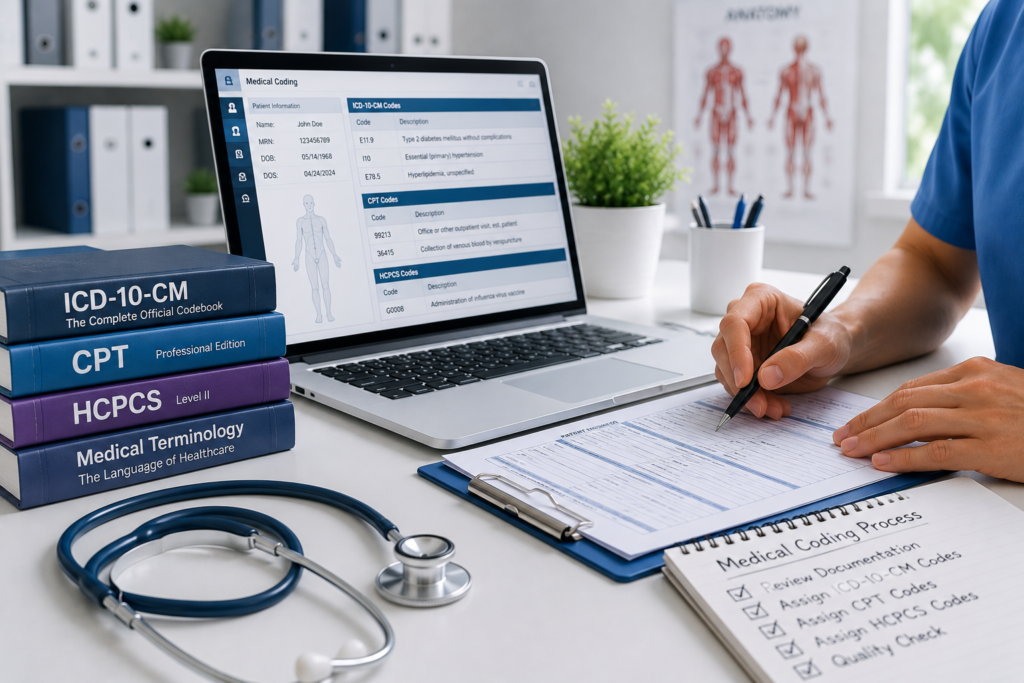
Medical coding is the process of translating physician documentation — diagnoses, procedures, treatments — into standardized alphanumeric codes (ICD-10-CM, CPT, HCPCS) that hospitals, clinics, and insurance companies use for billing, insurance claims, and medical records. A structured medical coding class typically moves through four stages:

  • Foundations: Medical terminology, human anatomy and physiology, and an introduction to the US healthcare system (since most coding output ultimately supports US healthcare billing).
  • Coding systems: ICD-10-CM for diagnosis coding, CPT for procedures, and HCPCS Level II for supplies and services not covered by CPT.
  • Specialty coding practice: Real chart-based exercises across specialties like cardiology, orthopedics, radiology, and emergency medicine, so you’re not just memorizing codes but applying coding guidelines to real documentation.
  • Certification exam preparation: Timed practice exams and guideline drills aligned to the CPC (Certified Professional Coder) exam format, since certification is what most employers actually screen for.

A class that skips straight to code memorization without the anatomy and terminology foundation tends to produce coders who struggle once they’re on the floor handling real charts — so when you’re evaluating options, ask what’s actually taught in the first few weeks, not just how long the course runs.

How Long Should a Good Medical Coding Class Take?

There’s no single right answer, but here’s how to think about it:

If you already have a healthcare, nursing, life-sciences, or pharmacy background, you likely already know anatomy and medical terminology. A condensed program focused on coding systems and exam prep can be significantly shorter than a program built for complete beginners.

If you’re starting fresh — a commerce, arts, or general science graduate with no clinical background — a longer program that properly builds the anatomy and terminology foundation first will serve you better long-term, even though it takes more weeks upfront. Rushing this stage is the single most common reason candidates fail the CPC exam or struggle in their first coding job.

If your goal is a diploma-level credential rather than just certification, expect a longer timeline, since diploma programs typically add healthcare documentation standards, compliance (HIPAA), and broader health information management content on top of core coding.

A good rule of thumb: be skeptical of any program promising job-ready certification in under 4 weeks with zero prior background — that’s rarely enough time to build the anatomy and guideline fluency the CPC exam actually tests.

Classroom, Online, or Hybrid: Which Format Fits You?

This matters as much as duration. Online medical coding classes are available, and for many learners — especially those balancing a job, managing family responsibilities, or living outside a city with an in-person training center — online is genuinely the better fit, not a compromise. A well-run online medical coding class should still include:

  • Live instructor-led sessions (not just pre-recorded video), so you can ask questions on guideline nuances in real time
  • Access to practice charts and case studies you can work through at your own pace
  • Doubt-clearing sessions and mock exams before you sit the actual certification test

Classroom-based training, on the other hand, tends to suit learners who want structured daily accountability, direct instructor access, and peer study groups — which some people find keeps them more consistent through a multi-month program.

Transorze runs both classroom batches across its training centers and live online medical coding classes, so you can choose based on your schedule and learning style rather than your pin code.

What Certification Should You Be Working Toward?

Most employers in medical coding and billing look for the CPC (Certified Professional Coder) credential, issued by AAPC, as the baseline qualification. Some roles — particularly in hospital inpatient coding — may also value the CIC (Certified Inpatient Coder) or CCS (Certified Coding Specialist) credentials. A structured class should map its syllabus directly to the certification body’s exam blueprint, not just teach coding in general, so your study time is actually pointed at passing the exam on the first attempt.

Good programs also build in mock exams under timed conditions, since the real CPC exam is time-pressured and open-book — knowing where to find something in your code books quickly is its own skill that needs practice, separate from just knowing the coding rules.

What Happens After Certification: Career Paths

Certified medical coders typically move into roles such as:

  • Medical Coder / Coding Specialist at hospitals, clinics, or medical billing companies
  • Medical Billing and Coding Associate handling claims and reimbursement
  • Coding Auditor or Compliance Reviewer (usually after gaining experience)
  • Remote/Work-from-home coding roles, since a significant share of coding work for US healthcare clients is done remotely from India

Placement support — resume preparation, interview readiness, and connections to hiring partners — is something worth asking about directly when comparing institutes, since certification alone doesn’t guarantee a job; how well the training center supports your transition into the workforce matters just as much.

Why Training Quality Matters More Than Just Duration

It’s tempting to pick a class based purely on “which one is fastest” or “which one is cheapest,” but the more useful comparison points are: Is the trainer faculty experienced in live US healthcare coding, not just theory? Does the program include real chart practice, not just slides? Is there structured exam preparation and mock testing? Is there placement support after certification, not just a certificate handover?

Transorze has been training students in medical coding, medical billing, and related healthcare documentation programs since 2010, with both classroom centers across Kerala and Tamil Nadu and live online batches for learners anywhere. The emphasis is on hands-on, practical coding practice alongside exam preparation — because the goal isn’t just passing a test, it’s being ready to code real charts accurately from day one on the job.

Why Many Students Choose Transorze

Many aspiring healthcare professionals choose Transorze because it combines quality education with industry-focused training. Students can choose Online & Offline classes based on their learning preferences while benefiting from programs supported by NSDC Training Partner, AAPC Licensed, UGC Recognized, and NCVET Skill University affiliations. This combination helps learners build practical skills, gain recognized credentials, and prepare confidently for careers in medical coding and billing.

NSDC, NCVET, UGC LOGO

Classes Available Near You — Or Fully Online

Whether you’re based in Trivandrum, Kollam, Kochi, Kottayam, Thrissur, Pathanamthitta, Nagercoil, Coimbatore, or Calicut, in-person medical coding classes are available at Transorze training centers in these locations. If you’re elsewhere in India, across the Gulf, or simply prefer studying from home, the same curriculum is available through live online medical coding classes — so location is no longer a barrier to getting certified.

STUDENT SUCCESS STORIES

Frequently Asked Questions

Most medical coding classes take between 6 weeks and 6 months, depending on whether you’re pursuing fast-track certification prep or a full diploma-level program that includes anatomy, medical terminology, and multiple coding systems. Candidates with a healthcare background typically complete certification-focused classes faster than complete beginners.

Yes. Online medical coding classes are widely available and include live instructor-led sessions, practice charts, and mock certification exams — the same curriculum depth as classroom training, delivered remotely. This makes certification accessible regardless of your location.

No. Medical coding classes are designed to teach medical terminology, human anatomy, and coding systems from the ground up, so students from commerce, science, nursing, or life-sciences backgrounds can all enroll. A prior healthcare background can shorten your learning curve but isn’t required.

Most medical coding classes prepare students for the CPC (Certified Professional Coder) exam issued by AAPC, which is the most widely recognized entry-level credential for medical coders. Some programs also cover pathways toward inpatient coding credentials like CIC or CCS.

Medical coding focuses on translating clinical documentation into standardized codes (ICD-10-CM, CPT, HCPCS), while medical billing focuses on using those codes to generate and follow up on insurance claims. Many training programs, including combined medical coding and billing training, teach both together since the two functions work closely in real healthcare revenue cycles.

Fees vary depending on course duration, format (online vs. classroom), and whether the program includes exam vouchers or placement support. It’s worth requesting a detailed fee breakdown directly from the institute rather than comparing headline prices alone, since inclusions differ significantly between programs.

Medical coding is considered a strong entry point into the healthcare BPO and health information management industry, with demand driven by US healthcare outsourcing, remote work availability, and a clear certification-to-career pathway. Career growth typically moves from coder to auditor, compliance reviewer, or team lead roles with experience.

Before enrolling, check whether the class includes hands-on chart practice (not just theory), whether faculty have real coding experience, whether the syllabus is mapped to an actual certification exam blueprint, and whether the institute offers placement support after certification.

popup banner image

Start Your Dream Career with Industry-Recognized Training

Get your FREE Course Brochure