
Comparing B.Voc and Traditional Degrees: Which is Better for Your Career?
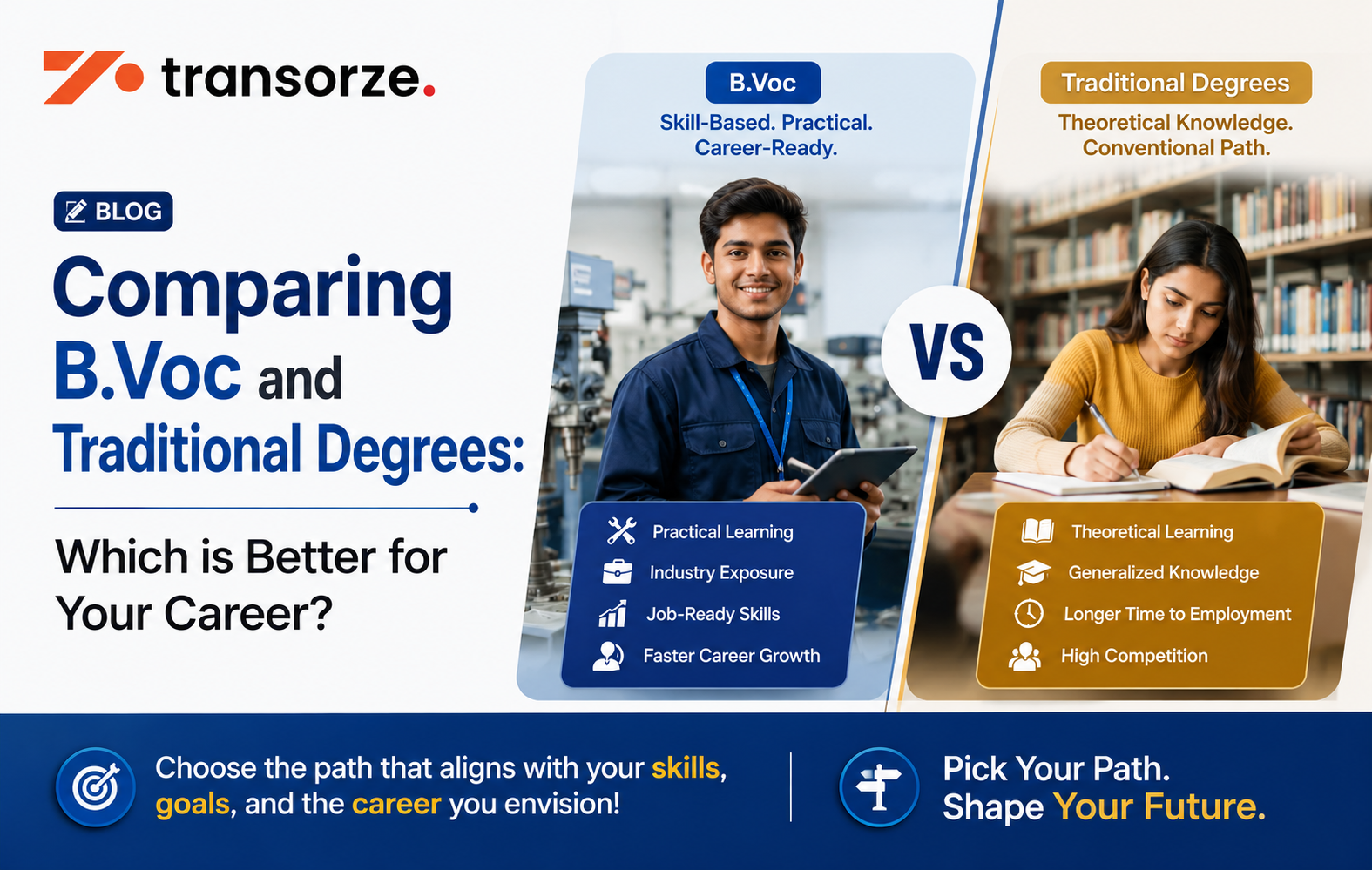
Choosing the right educational pathway is one of the most important decisions for your future career. Many students find themselves comparing a traditional bachelor’s degree with a Bachelor of Vocation (B.Voc) program. While both qualifications are recognized and valuable, they are designed to achieve different career outcomes.
The question is no longer simply about earning a degree. Employers increasingly prioritize practical skills, job readiness, industry exposure, and adaptability. As industries evolve rapidly through technology, automation, healthcare innovation, digital transformation, and logistics modernization, educational programs must prepare graduates for real-world demands.
If you are evaluating your options, understanding the differences between B.Voc and traditional degrees can help you make an informed decision that aligns with your career goals, learning style, and employment expectations.
What Is a B.Voc Degree?
A Bachelor of Vocation (B.Voc) is a skill-oriented undergraduate degree designed to bridge the gap between academic learning and industry requirements. Unlike conventional degree programs that focus heavily on theoretical concepts, B.Voc courses integrate practical training, hands-on projects, internships, and industry-relevant competencies.
The objective is simple: prepare students to become employable professionals from day one.
Popular B.Voc specializations include:
- AI Enabled Digital Marketing
- Hospital Administration
- Healthcare Information and Science
- Logistics and Supply Chain Management
- Game Development
- Data Analytics
- Software Development
- Healthcare Management
- Digital Media Technologies
The curriculum is continuously aligned with current industry needs, making graduates more adaptable to workplace expectations.
Key Differences Between B.Voc and Traditional Degrees
Factor | B.Voc Degree | Traditional Degree |
Learning Approach | Skill-focused and practical | Theory-focused |
Industry Exposure | High | Moderate |
Internships | Integrated into curriculum | Often optional |
Job Readiness | Immediate | May require additional training |
Curriculum Updates | Frequently updated | Slower revision cycles |
Employability Focus | Strong | Varies by discipline |
Professional Certifications | Commonly included | Less common |
Industry Projects | Extensive | Limited |
Career Entry | Faster workforce transition | Often requires specialization |
For students seeking direct entry into industry, B.Voc programs often provide a clearer pathway to employment.
Why Industry Demand Is Shifting Toward Skill-Based Education
Employers today face a significant skills gap. Organizations need professionals who can contribute immediately rather than spending months learning job-specific processes after hiring.
Several factors are driving demand for B.Voc graduates:
Digital Transformation
Businesses across every sector require employees with digital skills, technical knowledge, and practical problem-solving abilities.
Healthcare Expansion
Healthcare systems increasingly need trained professionals in administration, information management, coding, and healthcare operations.
Logistics Growth
Global supply chains have become more sophisticated, increasing demand for specialists who understand inventory management, transportation systems, procurement, and analytics.
Technology-Driven Workplaces
From artificial intelligence to cloud computing and gaming technologies, employers seek candidates with hands-on experience rather than purely theoretical knowledge.
This trend has made vocationally trained graduates highly attractive to recruiters.
Skills Developed Through B.Voc Programs
One of the strongest advantages of B.Voc education is its focus on workplace competencies.
Students typically develop:
Technical Skills
- Digital marketing tools
- Healthcare information systems
- Supply chain software
- Game development platforms
- Data analysis tools
- Business applications
Professional Skills
- Communication
- Team collaboration
- Project management
- Client interaction
- Problem-solving
Industry-Specific Competencies
Students gain practical knowledge directly related to their chosen field, reducing the gap between education and employment.
Employability: Which Degree Creates Better Job Opportunities?
The answer depends on your career objective.
Choose B.Voc If:
- You want faster entry into the workforce.
- You prefer practical learning.
- You want industry exposure during studies.
- You are pursuing a specialized technical field.
- You value professional certifications.
Choose a Traditional Degree If:
- You plan to pursue research or academia.
- You intend to complete advanced postgraduate education.
- Your profession requires extensive theoretical expertise.
- You want broader academic flexibility.
For many students, the strongest advantage of B.Voc programs is employability. Graduates often possess portfolios, project experience, internships, and practical skills that employers can evaluate immediately.
Salary Expectations: B.Voc vs Traditional Degrees
Salary outcomes vary significantly based on industry, location, specialization, and individual performance.
Entry-Level Opportunities
B.Voc graduates often enter specialized positions such as:
- Digital Marketing Executive
- Medical Coding Professional
- Healthcare Administrator
- Logistics Coordinator
- Game Developer
- Business Operations Associate
Because these roles are directly aligned with industry requirements, graduates may begin earning sooner and gain practical experience earlier.
Long-Term Growth
Traditional degree holders may initially pursue broader roles but often require additional certifications, postgraduate qualifications, or specialized training before reaching advanced positions.
Meanwhile, B.Voc graduates who continuously upgrade their skills can experience strong salary growth through specialization and industry expertise.
The most important factor influencing earnings today is not the degree title alone but the combination of skills, experience, certifications, and adaptability.
Can B.Voc Graduates Pursue Higher Education?
Yes.
One common misconception is that B.Voc limits academic progression. In reality, graduates can pursue:
- MBA programs
- Master’s degrees
- Professional certifications
- Industry-specific advanced training
- Specialized postgraduate diplomas
This flexibility allows students to combine practical experience with higher education later in their careers.
The Role of Professional Certifications in Career Success
Modern employers increasingly value certifications that validate specific competencies.
When selecting an educational institution, students should evaluate:
- Industry partnerships
- Certification opportunities
- Internship support
- Placement assistance
- Faculty expertise
- Curriculum relevance
For example, institutions such as Transorze strengthen career readiness through Online & Offline classes and recognized credentials including NSDC Training Partner, AAPC Licensed, UGC Recognized, and NCVET Skill University certifications, helping learners build both academic qualifications and practical industry credibility.
How to Decide Between a B.Voc and a Traditional Degree
Ask yourself the following questions:
What Is My Career Goal?
If you want a specific professional role quickly, B.Voc may be ideal.
How Do I Learn Best?
Students who enjoy practical application often thrive in vocational programs.
Do I Want Early Industry Exposure?
B.Voc programs typically include internships and project-based learning.
Am I Planning Advanced Academic Research?
Traditional degrees may provide stronger preparation for research-intensive careers.
Which Industries Interest Me?
Fields such as digital marketing, healthcare administration, logistics, and game development increasingly reward specialized skills and practical experience
Future Outlook for B.Voc Graduates
The future of employment increasingly favors professionals who can demonstrate measurable competencies.
Employers are focusing on:
- Skills-based hiring
- Project experience
- Industry certifications
- Practical problem-solving
- Technology proficiency
As a result, B.Voc graduates are well-positioned to benefit from changing recruitment trends.
The most successful professionals will combine technical expertise, continuous learning, industry exposure, and professional certifications regardless of whether they begin with a B.Voc or a traditional degree.
Frequently Asked Questions
Neither is universally better. B.Voc degrees emphasize practical skills and job readiness, while traditional degrees focus on theoretical knowledge and academic foundations. The right choice depends on your career goals.
Yes. B.Voc degrees are recognized undergraduate qualifications and are increasingly valued by employers seeking industry-ready professionals with practical skills and workplace experience.
Yes. B.Voc graduates can pursue master’s degrees, MBA programs, postgraduate diplomas, and professional certifications depending on eligibility requirements.
B.Voc programs often provide stronger immediate placement opportunities because they include practical training, internships, and industry-focused curricula aligned with employer requirements.
Popular high-growth areas include AI Enabled Digital Marketing, Healthcare Information and Science, Hospital Administration, Logistics and Supply Chain Management, Data Analytics, and Game Development.
Yes. As organizations increasingly adopt skills-based hiring practices, professionals with practical expertise, certifications, and industry experience are expected to remain highly competitive.
Evaluate your career objectives, preferred learning style, desired industry, employability goals, and long-term education plans. Choose the pathway that best aligns with your professional aspirations.
Conclusion
When comparing B.Voc and traditional degrees, there is no universal winner. The better choice depends on your personal career goals, learning preferences, and industry aspirations.
If your priority is immediate employability, practical skills, industry exposure, and career-focused education, a B.Voc program offers significant advantages.
If your ambitions involve research, academia, extensive theoretical study, or highly specialized postgraduate pathways, a traditional degree may be more suitable.
The best educational investment is one that aligns with your future career vision while providing opportunities for continuous skill development and professional growth.
