
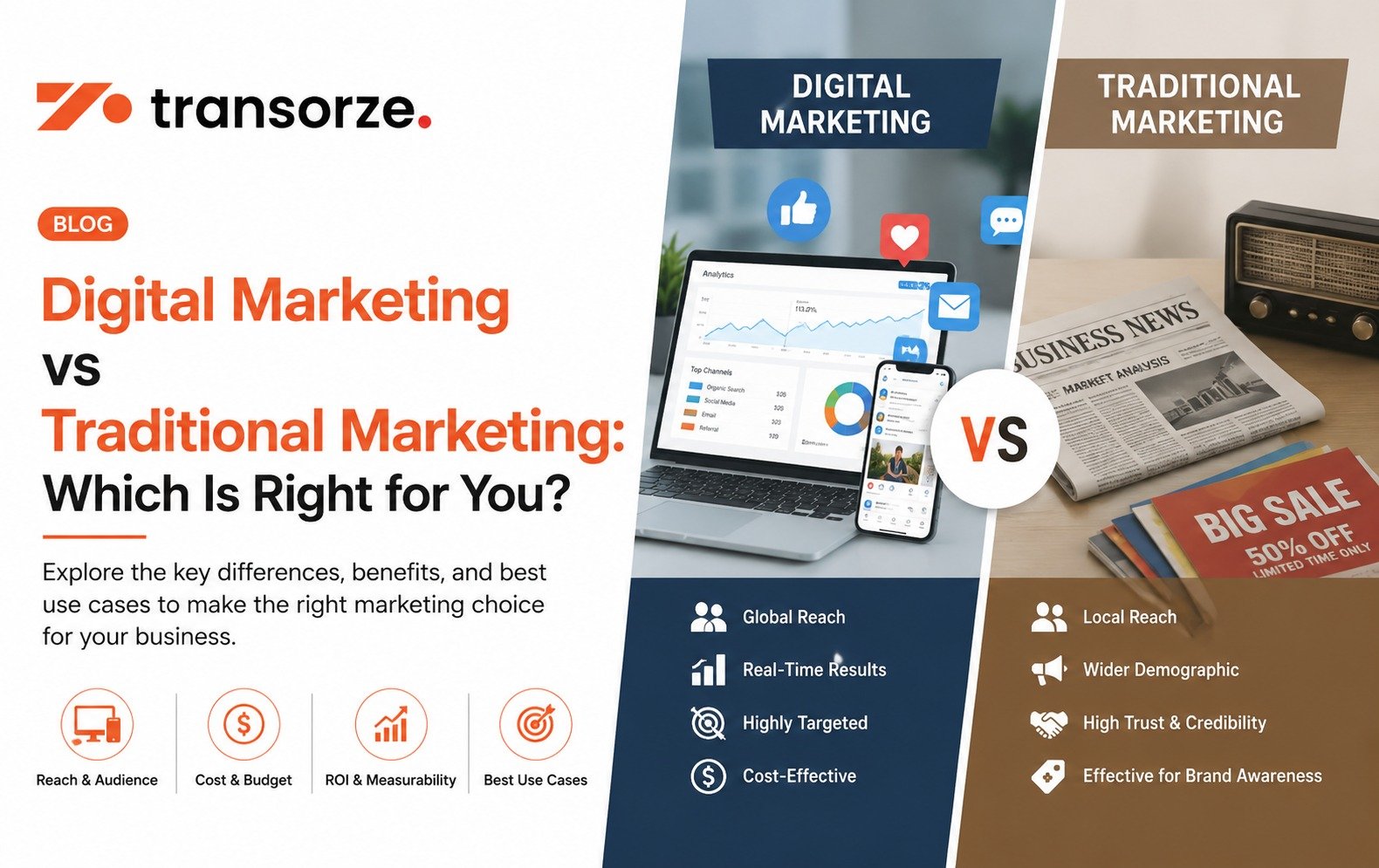
Digital Marketing vs Traditional Marketing: Which Is Right for You?
Marketing has evolved dramatically over the last two decades. Businesses today can reach customers through search engines, social media, websites, television, newspapers, radio, billboards, direct mail, and many other channels. As a result, aspiring marketing professionals often ask one important question:
Digital Marketing vs Traditional Marketing: Which Is Right for You?
The answer depends on your business goals, target audience, budget, career aspirations, and willingness to adapt to changing consumer behavior. While traditional marketing continues to play a role in brand awareness and local outreach, digital marketing has become the dominant force behind measurable customer acquisition, engagement, and business growth.
In this guide, we’ll explore the differences between digital and traditional marketing, compare their advantages and limitations, examine career opportunities, and explain how professional training and certifications can help you build a successful marketing career.
What Is Traditional Marketing?
Traditional marketing refers to promotional activities conducted through offline channels. These methods have been used for decades and remain effective for specific audiences and industries.
Common traditional marketing channels include:
- Television advertisements
- Radio commercials
- Newspaper advertising
- Magazine advertisements
- Billboards and outdoor advertising
- Direct mail campaigns
- Flyers and brochures
- Event sponsorships
Traditional marketing focuses on reaching broad audiences through mass communication channels. It is particularly effective when targeting local communities or demographics that consume offline media regularly.
Advantages of Traditional Marketing
Strong Local Visibility
Billboards, newspapers, and local radio stations can help businesses establish a presence within a specific geographic area.
High Brand Recognition
Television and print advertising can create strong brand awareness and credibility.
Tangible Marketing Materials
Physical brochures, catalogs, and flyers provide customers with something they can keep and review later.
Broad Audience Reach
Traditional media can reach large audiences simultaneously, particularly during major events or peak viewing hours.
Limitations of Traditional Marketing
- Higher advertising costs
- Difficult performance tracking
- Limited audience targeting
- Slower campaign optimization
- Reduced engagement opportunities
What Is Digital Marketing?
Digital marketing involves promoting products, services, or brands through online channels and digital technologies.
Popular digital marketing channels include:
- Search Engine Optimization (SEO)
- Search Engine Marketing (SEM)
- Pay-Per-Click Advertising (PPC)
- Social Media Marketing
- Content Marketing
- Email Marketing
- Affiliate Marketing
- Video Marketing
- Mobile Marketing
- Marketing Automation
Digital marketing enables businesses to connect with highly targeted audiences while measuring campaign performance in real time.
Advantages of Digital Marketing
Precise Audience Targeting
Businesses can target customers based on:
- Age
- Gender
- Location
- Interests
- Search behavior
- Purchase history
Cost-Effective Campaigns
Digital campaigns often require lower budgets compared to television or print advertising.
Real-Time Analytics
Marketers can track:
- Website traffic
- Click-through rates
- Conversion rates
- Customer engagement
- Return on investment (ROI)
Faster Optimization
Campaigns can be adjusted immediately based on performance data.
Global Reach
Businesses can reach customers worldwide without maintaining physical locations
Limitations of Digital Marketing
- Requires continuous learning
- High competition in some industries
- Dependence on technology platforms
- Algorithm changes can impact results
Digital Marketing vs Traditional Marketing: Key Differences
Factor | Digital Marketing | Traditional Marketing |
Cost | Lower entry cost | Often expensive |
Targeting | Highly specific | Broad audience |
Analytics | Real-time tracking | Limited measurement |
Reach | Global | Usually regional or national |
Engagement | Two-way communication | Mostly one-way communication |
Flexibility | Easy optimization | Difficult to modify campaigns |
Speed | Immediate launch | Longer production timelines |
ROI Tracking | Highly measurable | More difficult to measure |
For most modern businesses, digital marketing offers greater flexibility, better targeting, and stronger ROI measurement. However, many successful organizations combine both approaches to create integrated marketing strategies.
When Should You Choose Traditional Marketing?
Traditional marketing remains valuable when:
- Targeting older demographics
- Building local brand awareness
- Advertising in rural markets
- Promoting community events
- Supporting large-scale brand campaigns
Examples include hospitals, educational institutions, retail stores, and local service businesses that rely heavily on regional audiences.
When Should You Choose Digital Marketing?
Digital marketing is ideal when:
- Generating online leads
- Increasing website traffic
- Growing e-commerce sales
- Building social media communities
- Launching targeted advertising campaigns
- Measuring marketing ROI accurately
Businesses seeking scalable growth increasingly prioritize digital channels because of their measurable outcomes and customer insights.
Why Digital Marketing Skills Are in High Demand
Organizations across industries are investing heavily in digital transformation. As customer journeys move online, companies require professionals who can:
- Drive website traffic
- Generate qualified leads
- Improve search rankings
- Manage social media campaigns
- Analyze customer data
- Increase conversion rates
From startups to multinational corporations, the demand for skilled digital marketers continues to grow.
Employers increasingly seek professionals who understand both marketing fundamentals and modern digital tools. Individuals who combine strategic thinking with technical expertise often enjoy stronger career prospects and higher earning potential.
Career Opportunities in Digital Marketing
Digital marketing offers diverse career paths suitable for both beginners and experienced professionals.
Popular roles include:
- Digital Marketing Executive
- SEO Specialist
- PPC Specialist
- Content Marketing Strategist
- Social Media Manager
- Email Marketing Specialist
- Marketing Analyst
- Growth Marketing Manager
- Digital Marketing Consultant
- Marketing Automation Specialist
As organizations continue investing in customer acquisition and online branding, opportunities for trained professionals are expanding across sectors.
How Professional Training Accelerates Marketing Careers
While self-learning resources are widely available, structured training provides a more efficient and comprehensive learning path.
Professional training helps learners:
Build Industry-Relevant Skills
Students gain practical knowledge in:
- SEO
- Google Ads
- Social Media Advertising
- Analytics
- Content Strategy
- Email Marketing
- Marketing Automation
Learn Through Real-World Projects
Hands-on experience helps professionals understand how campaigns perform in actual business environments.
Develop Strategic Thinking
Successful marketers need more than technical skills. They must understand customer behavior, market research, branding, and business objectives.
Improve Employability
Employers often prefer candidates who have completed structured training and demonstrated competency through projects and assessments.
The Role of Certifications in Marketing Success
Certifications can significantly strengthen a marketing professional’s profile.
Benefits include:
- Validation of technical expertise
- Improved credibility with employers
- Greater confidence during interviews
- Enhanced career advancement opportunities
- Increased earning potential
Many organizations use certifications as indicators of professional commitment and job readiness.
Candidates who continuously update their skills through recognized certifications often remain more competitive in a rapidly evolving industry
Online vs Offline Learning for Marketing Professionals
Today’s learners have access to both online and classroom-based training.
Benefits of Online Learning
- Flexible scheduling
- Learn from anywhere
- Self-paced study options
- Access to recorded sessions
- Suitable for working professionals
Benefits of Offline Learning
- Face-to-face interaction
- Immediate instructor feedback
- Collaborative learning environment
- Enhanced networking opportunities
- Structured classroom experience
For aspiring marketers seeking professional development, institutions such as Transorze provide Online & Offline classes and offer recognized certifications including NSDC Training Partner, AAPC Licensed, UGC Recognized, and NCVET Skill University, helping learners build industry-relevant competencies through structured training programs.
Skills Employers Look for in Marketing Professionals
Modern employers seek a combination of technical, analytical, and communication skills.
Key competencies include:
Technical Skills
- SEO
- PPC Advertising
- Social Media Marketing
- Google Analytics
- Marketing Automation
- Content Management Systems
Analytical Skills
- Data Interpretation
- Campaign Performance Analysis
- Customer Insights
- ROI Measurement
Communication Skills
- Content Creation
- Copywriting
- Presentation Skills
- Stakeholder Communication
Strategic Skills
- Market Research
- Brand Positioning
- Customer Journey Mapping
- Competitive Analysis
Professionals who develop these capabilities often position themselves for faster career progression.
Earning Potential in Marketing Careers
Marketing salaries vary based on experience, specialization, certifications, and geographic location.
Professionals with expertise in high-demand areas such as:
- SEO
- Paid Advertising
- Marketing Analytics
- Growth Marketing
- Marketing Automation
often command higher compensation than general marketing professionals.
Continuous learning and certification can contribute significantly to long-term earning growth by enabling professionals to take on more specialized and strategic responsibilities.
How to Choose the Right Marketing Career Path
If you’re considering a career in marketing, follow these steps:
Step 1: Understand Your Interests
Do you enjoy:
- Creativity and content?
- Data and analytics?
- Advertising and strategy?
- Customer engagement?
Your interests can guide specialization choices.
Step 2: Learn Core Marketing Fundamentals
Build a strong understanding of:
- Consumer behavior
- Branding
- Marketing strategy
- Campaign planning
Step 3: Develop Digital Skills
Master key tools and platforms used in modern marketing.
Step 4: Gain Practical Experience
Work on projects, internships, or freelance assignments.
Step 5: Pursue Professional Certifications
Certifications can validate skills and improve employment opportunities.
Step 6: Continue Learning
Marketing evolves constantly. Staying current is essential for long-term success.
Final Verdict: Digital Marketing vs Traditional Marketing
So, which is right for you?
Traditional marketing remains valuable for local visibility, mass awareness, and certain demographic segments. However, digital marketing offers greater targeting precision, measurable results, lower costs, and stronger scalability.
For businesses, the ideal solution is often an integrated approach that combines both digital and traditional strategies.
For professionals building a marketing career, digital marketing skills increasingly provide the strongest opportunities for growth, specialization, and long-term employability. Investing in structured training, practical experience, and recognized certifications can create a competitive advantage in today’s evolving marketing landscape
Frequently Asked Questions
Digital marketing uses online channels such as search engines, social media, email, and websites, while traditional marketing uses offline channels like television, radio, newspapers, and billboards. Digital marketing offers better targeting and measurable results.
Yes. Businesses continue increasing investments in online advertising, analytics, automation, and customer acquisition, creating strong demand for skilled digital marketing professionals.
Certification is not always mandatory, but it can improve credibility, demonstrate competency, and enhance employment opportunities, especially for entry-level candidates.
Specializations such as SEO, paid advertising, marketing analytics, growth marketing, and marketing automation often offer strong salary growth due to high industry demand.
Yes. Online learning provides flexibility and access to industry-relevant training, making it an excellent option for students, working professionals, and career changers.
Employers commonly seek expertise in SEO, social media marketing, PPC advertising, analytics, content marketing, communication, and strategic planning.
With structured training, hands-on projects, and certification preparation, many learners can develop job-ready skills within a few months, depending on the depth of specialization and learning commitment.
Conclusion
Both digital marketing and traditional marketing have their unique strengths, and the right choice depends on your goals, audience, and business strategy. While traditional marketing remains effective for local outreach and brand awareness, digital marketing offers unmatched targeting, real-time analytics, cost efficiency, and scalability. As businesses increasingly embrace digital transformation, professionals with modern marketing skills are positioned for greater career opportunities and long-term growth. By investing in structured training, practical experience, and industry-recognized certifications, aspiring marketers can build a strong foundation for success. With its comprehensive curriculum, hands-on learning approach, flexible Online & Offline classes, and recognized certifications, Transorze helps learners develop job-ready digital marketing skills and confidently prepare for the evolving demands of the marketing industry.
