
Diploma in Hospital Administration: Course Details, Scope, and Career Opportunities
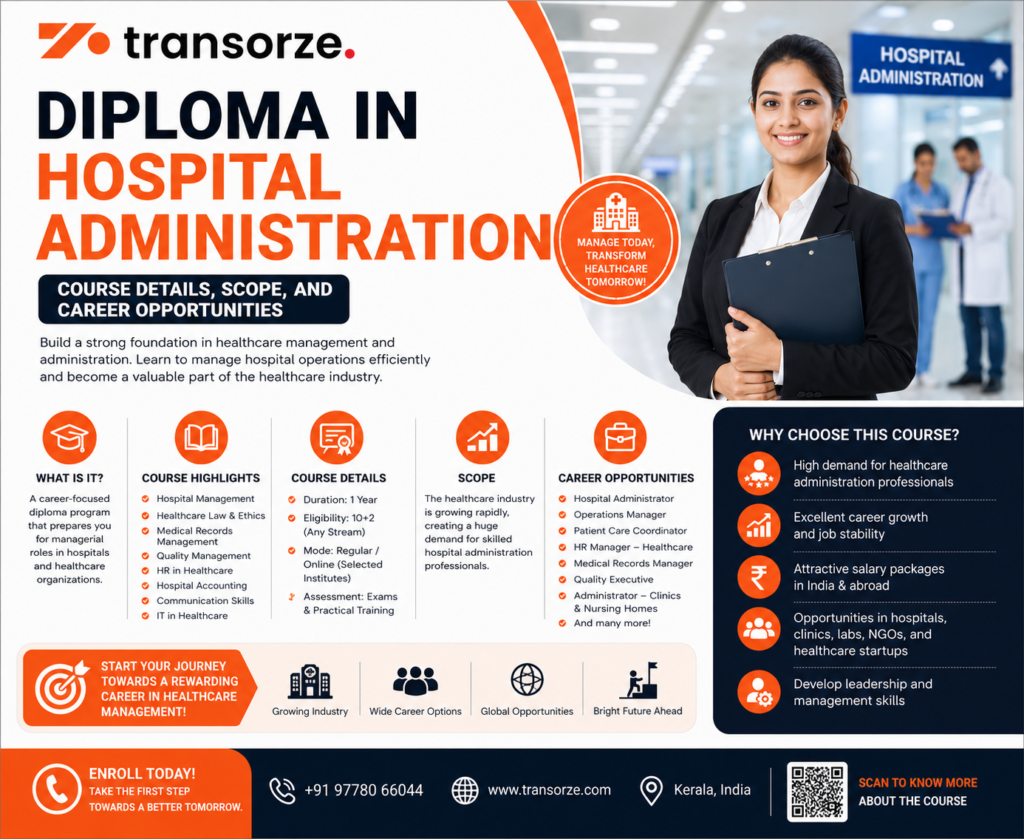
Healthcare is evolving rapidly, and hospitals today require skilled professionals who can manage operations efficiently while ensuring quality patient care. This growing demand has made a diploma in hospital administration one of the most sought-after career-oriented programs in the healthcare sector.
Whether you are a recent graduate, healthcare professional, or someone looking to enter the medical management field, a hospital administration diploma course can open doors to rewarding opportunities in hospitals, clinics, healthcare organizations, and medical institutions worldwide.
In this guide, we’ll explore everything you need to know about a diploma in hospital administration, including course structure, eligibility, career scope, and industry relevance
What Is a Diploma in Hospital Administration?
A diploma in hospital administration is a specialized healthcare management program designed to train students in the administrative, operational, and managerial aspects of healthcare facilities.
Unlike clinical medical programs, this course focuses on the business and organizational side of healthcare. Students learn how hospitals function, how patient services are coordinated, and how healthcare systems maintain efficiency and compliance.
A well-structured hospital administration training program typically covers:
- Hospital operations management
- Healthcare communication
- Medical terminology
- Patient relationship management
- Healthcare laws and ethics
- Human resource management
- Quality assurance in healthcare
- Financial and records management
Programs such as the International Diploma in Hospital Administration help learners build practical industry knowledge aligned with modern healthcare standards.
Why Choose a Hospital Administration Diploma Course?
The healthcare sector is expanding globally, increasing the need for professionals who can manage hospital systems effectively. A diploma program offers a faster and more practical route into healthcare management compared to traditional degree pathways.
Key Benefits of Pursuing the Course
- Growing Industry Demand
Hospitals, diagnostic centers, insurance companies, and healthcare startups require trained administrators to manage daily operations and improve patient experiences.
- Career-Focused Learning
The curriculum is designed to provide job-ready skills that are directly applicable in healthcare environments.
- Diverse Career Opportunities
Graduates can work in:
- Hospitals
- Multi-specialty clinics
- Medical tourism companies
- Healthcare BPOs
- Insurance firms
- Rehabilitation centers
- International Career Scope
An international diploma in hospital administration can improve opportunities in global healthcare systems where professional administration skills are highly valued.
Diploma in Hospital Administration: Course Curriculum
The curriculum may vary slightly between institutions, but most programs include core healthcare management subjects that prepare students for administrative roles.
Common Subjects Covered
Hospital Operations Management
Students learn how hospitals function operationally, including workflow coordination, departmental management, and patient service systems.
Medical Terminology
Understanding healthcare language helps administrators communicate effectively with doctors, nurses, and patients.
Healthcare Communication
Strong communication skills are essential for handling patient relations, staff coordination, and crisis management.
Healthcare Laws and Ethics
This module introduces students to legal compliance, confidentiality, patient rights, and healthcare ethics.
Financial and Records Management
Students gain knowledge in billing systems, documentation, insurance processes, and healthcare accounting basics.
Human Resource Management
Managing healthcare staff efficiently is crucial for maintaining operational quality and patient satisfaction.
Learners interested in expanding their healthcare expertise may also explore related healthcare management certification programs such as Healthcare Management Certification courses.
Eligibility Criteria for a Diploma in Hospital Administration
Eligibility requirements are generally straightforward, making the program accessible to a wide range of students.
Typical Eligibility Includes:
- Completion of higher secondary education (Plus Two or equivalent)
- Graduates from any discipline may also apply
- Basic communication and computer skills are beneficial
Some institutes may also welcome healthcare professionals seeking administrative specialization.
Duration of the Program
The duration of a diploma in hospital administration usually ranges from:
- 6 months to 1 year for diploma programs
- 1 year or more for advanced international certifications
Many institutions also provide flexible learning formats, including classroom, hybrid, and online training options.
Career Opportunities After Completing the Course
One of the biggest advantages of pursuing a hospital administration diploma course is the wide range of career opportunities available after completion.
Popular Job Roles
- Hospital Administrator
- Healthcare Coordinator
- Patient Relations Executive
- Medical Office Manager
- Healthcare Operations Executive
- Insurance Coordinator
- Front Office Manager in Hospitals
Healthcare management professionals are increasingly valued because they help hospitals improve efficiency, reduce operational issues, and enhance patient satisfaction.
Students looking to understand long-term career growth in the healthcare sector can explore resources on Hospital Administration Career Pathways for deeper insights into industry roles and advancement opportunities.
Skills You Gain Through Hospital Administration Training
A diploma program helps students build practical and managerial skills needed in modern healthcare organizations.
Important Skills Developed
- Leadership and team management
- Organizational planning
- Patient communication
- Problem-solving abilities
- Healthcare documentation management
- Time and workflow management
- Professional ethics and compliance awareness
These skills are essential in today’s healthcare environment, where efficient administration directly impacts patient care quality.
Why the Healthcare Industry Needs Hospital Administrators
Healthcare systems are becoming more complex due to advancements in medical technology, digital health records, insurance processes, and patient expectations.
Hospital administrators help ensure:
- Smooth coordination between departments
- Effective patient scheduling and support
- Proper maintenance of healthcare records
- Regulatory compliance
- Efficient resource utilization
This makes trained healthcare administrators indispensable in both private and public healthcare institutions.
Institutes like Transorze focus on industry-oriented training that combines practical healthcare knowledge with management skills to prepare students for real-world healthcare environments.
Choosing the Right Diploma in Hospital Administration Program
Before enrolling in a program, it is important to evaluate several factors.
What to Look For
Industry-Relevant Curriculum
Choose a program that includes updated healthcare management practices and practical exposure.
Experienced Trainers
Faculty with healthcare industry experience can provide valuable real-world insights.
Placement Support
Career guidance and placement assistance can improve employment opportunities after course completion.
Certification Value
An internationally recognized certification may improve career mobility and job prospects.
Students interested in specialized healthcare training may also benefit from exploring Healthcare Training Programs that complement hospital administration expertise.
FAQ
Yes. The healthcare industry continues to expand, creating strong demand for trained hospital administration professionals.
Most diploma programs range from 6 months to 1 year, depending on the curriculum and certification level.
Students who have completed higher secondary education or graduates from any stream can generally apply.
Many programs include case studies, project work, and practical healthcare management exposure.
Graduates can work as hospital administrators, healthcare coordinators, patient relationship executives, and medical office managers.
Yes. An international diploma in hospital administration can improve career opportunities in global healthcare organizations.
For learners seeking advanced specialization, Advanced Hospital Management Courses may offer additional career growth opportunities.
Final Thoughts
A diploma in hospital administration is an excellent choice for individuals who want to build a career in the healthcare industry without pursuing a clinical role. The program equips students with operational, managerial, and communication skills needed to manage healthcare institutions effectively.
As healthcare systems continue to grow, trained administrators will play a critical role in improving hospital efficiency and patient experiences. Choosing a well-structured program from a trusted training provider like Transorze can help students gain industry-relevant expertise and prepare for long-term career success in healthcare management.
