
Logistics Courses Means: Complete Guide to Logistics Education and Career Opportunities
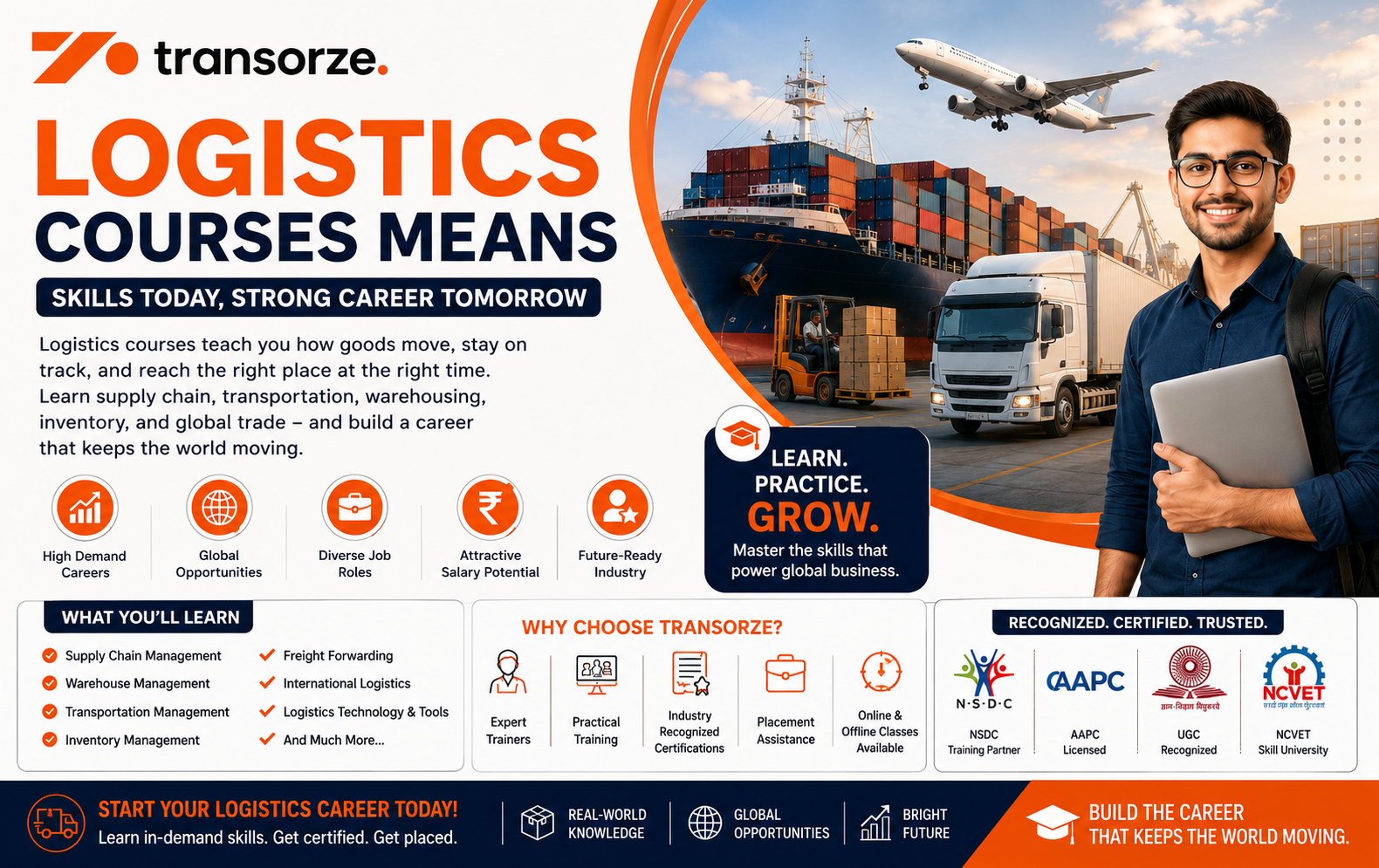
If you’ve ever searched for “logistics courses means”, you’re probably wondering what logistics courses actually are, what you will learn, and whether they can help you build a successful career.
Logistics is one of the fastest-growing sectors in the world, supporting industries such as manufacturing, e-commerce, retail, healthcare, aviation, and international trade. Every product that reaches a customer—from groceries and medicines to electronics and automobiles—passes through a logistics network.
As global trade continues to expand and online shopping becomes more common, companies are actively seeking skilled logistics professionals who can manage supply chains, transportation, warehousing, inventory, and distribution efficiently.
This guide explains the meaning of logistics courses, their benefits, career opportunities, required skills, and why logistics education has become an attractive career choice for students and working professionals alike.
What Does Logistics Courses Mean?
A logistics course is a specialized training program that teaches students how goods, materials, and products move from manufacturers to consumers.
These courses focus on the planning, implementation, management, and optimization of supply chain operations.
In simple terms, logistics courses teach you how businesses:
- Store products efficiently
- Manage inventory
- Coordinate transportation
- Handle shipping operations
- Track deliveries
- Improve supply chain performance
- Reduce operational costs
- Ensure customer satisfaction
Logistics courses combine business management, technology, operations, and transportation knowledge to prepare students for real-world supply chain roles.
Why Are Logistics Courses Important?
Modern businesses rely heavily on efficient logistics systems. Without proper logistics management, companies face delays, increased costs, inventory shortages, and customer dissatisfaction.
Logistics professionals help organizations:
Improve Operational Efficiency
Efficient logistics ensures products move smoothly across the supply chain while minimizing delays and wastage.
Reduce Business Costs
Proper inventory and transportation management can significantly reduce operational expenses.
Enhance Customer Experience
Fast and accurate deliveries improve customer satisfaction and brand reputation.
Support Global Trade
International logistics enables businesses to import and export goods across countries and continents.
Enable E-Commerce Growth
Online shopping depends on strong logistics networks for warehousing, order processing, and last-mile delivery.
What Will You Learn in a Logistics Course?
Most logistics programs cover a combination of theoretical knowledge and practical industry skills.
Supply Chain Management
Learn how products move through the entire supply chain—from suppliers to manufacturers, distributors, retailers, and consumers.
Warehouse Management
Understand warehouse operations, storage systems, inventory control, and order fulfillment processes.
Transportation Management
Study road, rail, air, and sea transportation systems used in domestic and international logistics.
Inventory Management
Learn techniques for maintaining optimal stock levels and reducing inventory-related costs.
Freight Forwarding
Gain knowledge about shipping documentation, customs clearance, cargo handling, and international trade procedures.
Procurement and Purchasing
Understand how organizations source raw materials and manage supplier relationships.
Logistics Technology
Explore modern software tools used for:
- Inventory tracking
- Route optimization
- Warehouse automation
- Supply chain analytics
- Enterprise resource planning (ERP)
International Logistics
Learn global shipping regulations, import-export procedures, and international supply chain operations.
Who Should Join Logistics Courses?
Logistics courses are suitable for:
Students After 12th Grade
Students looking for career-focused education can enter the logistics industry through certification, diploma, or degree programs.
Graduates
Graduates from commerce, business, engineering, economics, or other disciplines can enhance their employability with logistics training.
Working Professionals
Professionals seeking career growth or a transition into supply chain management can benefit from logistics certifications.
Entrepreneurs
Business owners can gain valuable knowledge about inventory management, procurement, and distribution systems.
Types of Logistics Courses Available
There are several learning pathways depending on career goals and educational background.
Certificate Courses
Short-term programs focusing on essential logistics and supply chain concepts.
Duration:
- 3 to 6 months
Best For:
- Beginners
- Freshers
- Career changers
Diploma Courses
More comprehensive training covering logistics operations and management.
Duration:
- 6 months to 1 year
Best For:
- Students seeking industry-specific skills
Advanced Logistics Programs
Specialized programs focusing on international logistics, shipping, freight forwarding, and supply chain management.
Best For:
- Professionals aiming for managerial roles
Degree Programs
Bachelor’s and master’s programs in logistics and supply chain management training offer extensive academic and practical knowledge.
Skills You Gain from Logistics Courses
Employers value logistics professionals who possess both technical and managerial skills.
Key skills include:
Analytical Thinking
Evaluate logistics data and identify process improvements.
Problem Solving
Address supply chain disruptions and operational challenges.
Communication Skills
Coordinate effectively with suppliers, transport providers, customers, and internal teams.
Planning and Organization
Manage inventory, shipments, schedules, and resources efficiently.
Technology Proficiency
Use logistics software and digital tracking systems.
Leadership Skills
Manage teams, operations, and logistics projects successfully.
Career Opportunities After Completing Logistics Courses
The logistics industry offers diverse career opportunities across multiple sectors.
Popular job roles include:
Logistics Coordinator
Coordinates transportation schedules, deliveries, and inventory movement.
Warehouse Executive
Manages warehouse operations, stock control, and order fulfillment.
Supply Chain Analyst
Analyzes logistics performance and recommends operational improvements.
Inventory Controller
Monitors inventory levels and ensures product availability.
Freight Forwarding Executive
Handles cargo movement, shipping documentation, and customs procedures.
Procurement Executive
Manages purchasing activities and supplier relationships.
Logistics Manager
Oversees logistics operations and strategic supply chain planning.
Supply Chain Manager
Leads end-to-end supply chain functions within an organization.
Industries That Hire Logistics Professionals
Logistics expertise is in demand across many industries, including:
- E-commerce
- Retail
- Manufacturing
- Healthcare
- Pharmaceuticals
- Shipping and Maritime
- Aviation
- Automotive
- Food and Beverage
- Import and Export Businesses
This broad industry demand creates excellent long-term career stability.
Salary Potential in Logistics Careers
Salary varies depending on location, experience, certifications, and job role.
Typical career progression may include:
| Career Stage | Typical Role |
|---|---|
| Entry Level | Logistics Coordinator |
| Mid-Level | Supply Chain Executive |
| Senior Level | Logistics Manager |
| Leadership | Supply Chain Director |
As professionals gain experience and industry certifications, salary growth opportunities increase significantly.
Why Choose a Professional Logistics Training Institute?
Choosing the right training provider can make a major difference in career outcomes.
A quality logistics Training institute should offer:
- Industry-focused curriculum
- Practical training
- Placement assistance
- Experienced trainers
- Updated logistics software exposure
- Flexible learning options
- Industry-recognized certifications
At Transorze, students can choose from both Online & Offline classes, allowing flexibility while gaining industry-relevant skills. The institution is recognized through credentials such as NSDC Training Partner, UGC Recognized, and NCVET Skill University, helping learners build confidence and credibility for today’s competitive job market.
Future Scope of Logistics Courses
The future of logistics is being transformed by:
- Artificial Intelligence (AI)
- Warehouse Automation
- Robotics
- Internet of Things (IoT)
- Big Data Analytics
- E-Commerce Expansion
- Global Supply Chain Digitization
As businesses adopt advanced logistics technologies, demand for skilled professionals continues to rise.
This makes logistics education a future-ready investment for students and professionals seeking stable, high-growth careers.
Frequently Asked Questions
Logistics courses are educational programs that teach the management of transportation, warehousing, inventory, supply chains, and distribution processes involved in moving goods efficiently.
Students after 12th grade, graduates, working professionals, and business owners can all pursue logistics courses based on their career goals.
Yes. Logistics is a rapidly growing industry with opportunities in e-commerce, manufacturing, healthcare, shipping, retail, and international trade.
Common roles include Logistics Coordinator, Warehouse Executive, Inventory Controller, Freight Forwarding Executive, Supply Chain Analyst, and Logistics Manager.
Yes. Many institutes offer both online and offline logistics training programs, allowing learners to choose a flexible learning format.
Depending on the program type, logistics courses can range from a few months for certificate programs to several years for degree programs.
Absolutely. Growing global trade, e-commerce expansion, and technological advancements continue to increase demand for skilled logistics professionals.
Final Thoughts
Understanding what logistics courses mean is the first step toward exploring a career in one of the world’s most essential industries.
Logistics courses provide practical knowledge in supply chain management, transportation, warehousing, inventory control, and international trade. Whether you’re a student, graduate, working professional, or entrepreneur, logistics training can open doors to rewarding opportunities across multiple industries.
With global trade expanding and supply chains becoming increasingly sophisticated, qualified logistics professionals are expected to remain in high demand for years to come. Investing in logistics education today can help you build a strong foundation for a successful and future-proof career.
