
Medical Billing and Coding Course: Your Gateway to a Healthcare Career
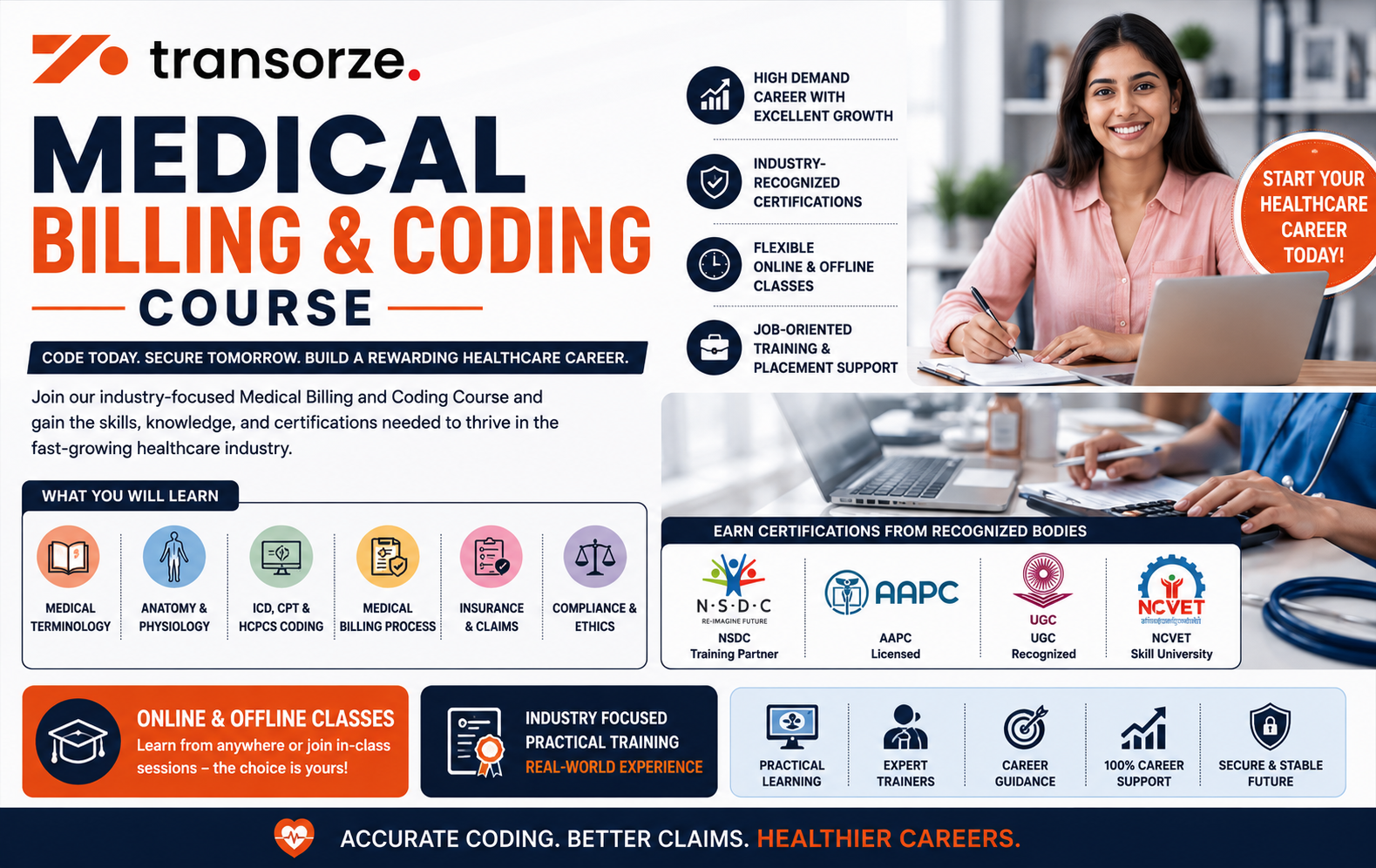
Healthcare is one of the fastest-growing industries worldwide, creating a strong demand for skilled professionals who can manage patient records, insurance claims, and healthcare documentation accurately. A Medical Billing and Coding Course provides the knowledge and practical skills needed to enter this rewarding field and build a long-term career in healthcare administration.
Whether you are a recent graduate, a working professional looking for a career change, or someone interested in the healthcare sector, medical billing and coding can open doors to stable employment, career growth, and global opportunities.
What Is a Medical Billing and Coding Course?
A Medical Billing and Coding Course is a specialized training program that teaches students how to convert medical diagnoses, procedures, treatments, and services into standardized codes used by healthcare providers, insurance companies, and government agencies.
Medical coding focuses on assigning accurate codes to healthcare services, while medical billing involves preparing and submitting claims for reimbursement. Together, these functions play a critical role in the healthcare revenue cycle.
Students learn how healthcare documentation is translated into billable records while ensuring compliance with industry regulations and insurance requirements.
Why Choose a Career in Medical Billing and Coding?
The healthcare industry depends on accurate coding and billing processes to ensure smooth operations and timely reimbursements. As healthcare services continue to expand, the need for trained billing and coding professionals continues to grow.
High Demand Across Healthcare Organizations
Medical billing and coding professionals are needed in:
- Hospitals
- Clinics
- Multi-specialty healthcare centers
- Insurance companies
- Medical billing companies
- Healthcare BPOs
- Telehealth organizations
Career Stability
Healthcare remains an essential industry, creating consistent demand for qualified professionals regardless of economic conditions.
Opportunities for Career Growth
With experience and certifications, professionals can advance into roles such as:
- Medical Coder
- Medical Biller
- Coding Auditor
- Revenue Cycle Specialist
- Healthcare Documentation Specialist
- Compliance Analyst
- Coding Quality Analyst
Global Employment Opportunities
Medical coding standards are widely used across international healthcare systems, creating opportunities to work with healthcare organizations around the world.
What Will You Learn in a Medical Billing and Coding Course?
A comprehensive training program combines theoretical concepts with practical applications.
Medical Terminology
Students learn:
- Medical prefixes and suffixes
- Clinical terminology
- Disease classifications
- Diagnostic procedures
- Healthcare abbreviations
A strong understanding of medical language helps improve coding accuracy.
Anatomy and Physiology
Understanding body systems is essential for assigning correct medical codes.
Topics typically include:
- Cardiovascular system
- Respiratory system
- Digestive system
- Musculoskeletal system
- Nervous system
- Reproductive system
ICD Coding
Students learn International Classification of Diseases (ICD) coding systems used for diagnoses and medical conditions.
CPT Coding
Current Procedural Terminology (CPT) coding is used to document procedures and services provided by healthcare professionals.
HCPCS Coding
Healthcare Common Procedure Coding System (HCPCS) coding helps document supplies, equipment, and non-physician services.
Medical Billing Processes
Students gain practical knowledge of:
- Insurance verification
- Claim preparation
- Claim submission
- Payment posting
- Denial management
- Revenue cycle management
Compliance and Healthcare Regulations
Training includes essential compliance standards and ethical healthcare documentation practices.
Skills Developed Through Medical Billing and Coding Training
A quality Medical Billing and Coding training helps learners develop valuable workplace skills.
Attention to Detail
Accurate coding and billing are essential for proper reimbursement and compliance.
Analytical Thinking
Professionals must review medical records carefully and select appropriate codes.
Communication Skills
Billing specialists frequently communicate with healthcare providers, insurers, and patients.
Technical Proficiency
Students learn healthcare software, electronic health records (EHR), and billing platforms used by modern healthcare organizations.
Problem-Solving
Resolving claim denials and reimbursement issues requires critical thinking and analytical skills.
Online & Offline Classes for Flexible Learning
Every student has unique learning needs and schedules. The best training programs provide both Online & Offline classes to ensure accessibility and convenience.
Benefits of Online Classes
- Learn from anywhere
- Flexible scheduling options
- Recorded learning sessions
- Reduced travel expenses
- Suitable for working professionals
Benefits of Offline Classes
- Classroom-based learning
- Direct interaction with trainers
- Immediate doubt clarification
- Peer learning opportunities
- Structured educational environment
This flexibility allows students to choose a learning method that aligns with their goals and lifestyle.
Industry-Recognized Certifications That Strengthen Your Career
Employers increasingly prefer candidates who have completed professional training from recognized institutions.
When evaluating a Medical Billing and Coding certification Course, look for programs associated with:
These credentials demonstrate educational quality, industry relevance, and commitment to professional excellence.
Who Can Join a Medical Billing and Coding Course?
This course is suitable for:
- Fresh graduates
- Science graduates
- Life science students
- Nursing graduates
- Allied healthcare professionals
- Job seekers
- Career changers
- Healthcare administration aspirants
Many programs are beginner-friendly and do not require prior coding experience.
Career Opportunities After Completing the Course
Graduates can pursue careers in various healthcare settings.
Popular job roles include:
- Medical Coder
- Medical Billing Specialist
- Healthcare Revenue Cycle Executive
- Coding Auditor
- Insurance Claims Analyst
- Coding Quality Analyst
- Healthcare Documentation Associate
Healthcare employers value professionals who can ensure accuracy, compliance, and efficient reimbursement processes.
How to Choose the Right Medical Billing and Coding Course
Selecting the right training program is crucial for career success.
Consider the following factors:
Comprehensive Curriculum
The course should cover medical terminology, anatomy, ICD, CPT, HCPCS coding, billing processes, and compliance standards.
Practical Training
Hands-on exercises and real-world coding scenarios help students become job-ready.
Experienced Trainers
Industry experts can provide practical insights and professional guidance.
Certification Support
Recognized certifications improve credibility and employment opportunities.
Placement Assistance
Career support services help students transition from training to employment.
Why Professional Training Matters
Medical billing and coding classes involve much more than memorizing codes. Professionals must understand healthcare documentation, insurance processes, coding guidelines, compliance requirements, and revenue cycle management.
Structured training helps learners build confidence, develop practical skills, and prepare for real-world responsibilities.
Transorze offers industry-focused medical billing and coding training with Online & Offline classes, practical learning, certification support, and career-oriented guidance designed to help students become workforce-ready.
Frequently Asked Questions
A Medical Billing and Coding Course trains students to assign medical codes to diagnoses and procedures while learning how healthcare billing and insurance claims are processed.
Course duration varies by institution, but most programs can be completed within a few months depending on the curriculum and learning schedule.
No. Most beginner-level courses are designed for students without prior healthcare experience.
Yes. Many training providers offer both Online & Offline classes to accommodate different learning preferences.
Students may benefit from programs associated with NSDC Training Partner, AAPC Licensed, UGC Recognized, and NCVET Skill University credentials.
Yes. It offers strong demand, career stability, growth opportunities, and the ability to work across various healthcare settings.
Graduates can pursue roles such as Medical Coder, Medical Billing Specialist, Coding Auditor, Revenue Cycle Executive, and Insurance Claims Analyst.
Attention to detail, analytical thinking, communication skills, technical proficiency, and knowledge of healthcare documentation are essential for success.
Final Thought
A Medical Billing and Coding Course is one of the most effective pathways into the healthcare industry. With increasing demand for skilled coding and billing professionals, learners who acquire the right knowledge, certifications, and practical experience can access rewarding career opportunities across hospitals, healthcare organizations, insurance companies, and global healthcare service providers.
By choosing a comprehensive training program that combines practical education, recognized certifications, and flexible learning options, you can build a strong foundation for long-term success in healthcare administration and medical coding.
