
Medical Coding Course Duration and Fees: Complete Guide for 2026
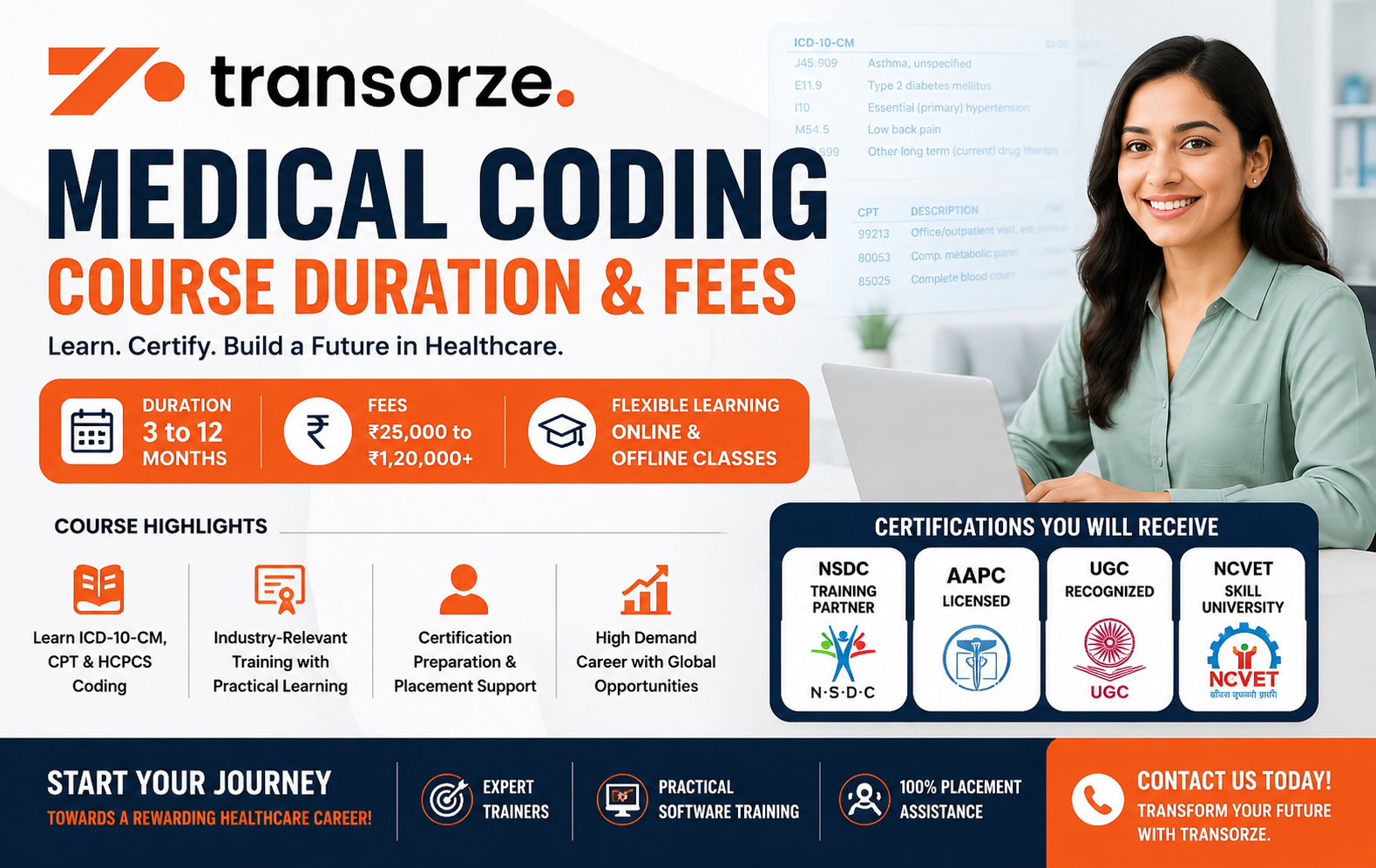
Medical coding is one of the fastest-growing healthcare careers, offering excellent opportunities for graduates, life science students, healthcare professionals, and career changers. As healthcare providers increasingly rely on accurate medical documentation and insurance processing, the demand for trained medical coders continues to rise across hospitals, clinics, insurance companies, and healthcare BPOs.
One of the most common questions aspiring professionals ask is: “What is the medical coding course duration and fees?”
The answer depends on several factors, including the training mode, curriculum depth, certification preparation, and career goals. This guide covers everything you need to know about medical coding course duration, fee structure, certifications, and career prospects.
Medical Coding Course Duration and Fees
Most medical coding courses can be completed within:
- 3 Months – Fast-track certification programs
- 4–6 Months – Comprehensive job-oriented programs
- 6–12 Months – Advanced certification and specialization programs
Typical fee ranges:
- Basic Medical Coding Course: ₹25,000 – ₹45,000
- Advanced Medical Coding Training: ₹45,000 – ₹85,000
- Certification-Focused Programs: ₹50,000 – ₹1,20,000+
The exact fee depends on the training provider, certification support, placement assistance, and course inclusions.
What Is Medical Coding?
Medical coding is the process of converting healthcare diagnoses, treatments, procedures, and medical services into standardized alphanumeric codes.
Healthcare organizations use these codes for:
- Medical billing
- Insurance claims processing
- Patient record management
- Regulatory compliance
- Healthcare analytics
- Revenue cycle management
Medical coders work with globally recognized coding systems such as:
- ICD-10-CM
- CPT
- HCPCS Level II
Accurate coding ensures healthcare providers receive proper reimbursement while maintaining compliance with healthcare regulations.
Medical Coding Course Duration Explained
The duration of a medical coding course varies based on the learning format and curriculum coverage.
1. Short-Term Medical Coding Programs (3 Months)
These programs focus on:
- Medical terminology
- Anatomy and physiology basics
- Introduction to coding systems
- Fundamental coding guidelines
Best suited for:
- Students seeking quick entry-level knowledge
- Healthcare professionals looking to upskill
- Individuals exploring healthcare careers
2. Comprehensive Medical Coding Programs (4–6 Months)
These are among the most popular options because they balance depth and practicality.
Topics typically include:
- Anatomy and physiology
- Medical terminology
- ICD-10-CM coding
- CPT coding
- HCPCS coding
- Healthcare documentation
- Coding case studies
- Mock assessments
These programs are ideal for students aiming for immediate employment opportunities after training.
3. Advanced Certification Programs (6–12 Months)
Advanced courses provide:
- Extensive coding practice
- Industry-specific case studies
- Certification preparation
- Healthcare revenue cycle concepts
- Specialized coding training
These programs are suitable for candidates targeting advanced certifications and higher-paying positions.
Medical Coding Course Fee Structure
Medical coding course fees depend on several components.
Factors Affecting Course Fees
Course Curriculum
Programs covering only basic coding concepts are generally less expensive than comprehensive certification-focused programs.
Certification Support
Training that includes certification preparation, mock tests, and examination guidance may have higher fees.
Learning Mode
Students can choose:
- Online Classes
- Offline Classroom Training
- Hybrid Learning Options
Each format offers unique advantages depending on flexibility and learning preferences.
Placement Assistance
Institutes offering:
- Resume preparation
- Interview training
- Placement support
- Employer networking
may charge higher fees due to added career services.
Online vs Offline Medical Coding Classes
Today, students can choose between online and offline learning formats.
Online Medical Coding Classes
Benefits include:
- Flexible schedules
- Learn from home
- Recorded sessions
- Access from any location
- Ideal for working professionals
Offline Medical Coding Classes
Benefits include:
- Classroom interaction
- Direct trainer support
- Practical workshops
- Structured learning environment
- Peer collaboration
Many students prefer institutes that provide both Online & Offline classes so they can select the format that best fits their schedule.
Certifications You Can Receive
A quality medical coding program should provide industry-recognized certifications that strengthen your resume and improve employability.
Students may receive certifications associated with:
NSDC Training Partner
National Skill Development Corporation-aligned training helps validate industry-relevant skills and employability.
AAPC Licensed Training
AAPC-aligned learning prepares students for internationally recognized coding standards and certification pathways.
UGC Recognized Programs
UGC-recognized educational pathways add academic credibility and support long-term career development.
NCVET Skill University
NCVET-associated skill certifications demonstrate competency-based learning aligned with national skill development frameworks.
These certifications help employers assess a candidate’s knowledge, training quality, and readiness for professional roles.
Who Should Join a Medical Coding Course?
Medical coding is suitable for a wide range of learners.
Graduates
Graduates seeking a healthcare career without direct patient interaction can benefit significantly.
Life Science Students
Students from:
- Biotechnology
- Microbiology
- Zoology
- Botany
- Biochemistry
- Nursing
- Pharmacy
often transition successfully into medical coding roles.
Healthcare Professionals
Professionals looking to move into administrative or revenue cycle roles can use medical coding as a career advancement pathway.
Career Changers
Individuals seeking stable employment in a growing industry often choose medical coding due to its structured career path and global demand.
Skills You Learn During Medical Coding Training
A comprehensive program develops several essential competencies.
Technical Skills
- ICD-10 coding
- CPT coding
- HCPCS coding
- Medical documentation analysis
- Insurance claim understanding
Healthcare Knowledge
- Human anatomy
- Physiology
- Disease processes
- Medical terminology
- Clinical procedures
Professional Skills
- Accuracy and attention to detail
- Analytical thinking
- Compliance awareness
- Documentation review
- Problem-solving
Career Opportunities After Medical Coding Training
Medical coding Training opens doors to various healthcare careers.
Common job roles include:
- Medical Coder
- Certified Professional Coder
- Coding Specialist
- Medical Billing Executive
- Healthcare Documentation Analyst
- Revenue Cycle Executive
- Insurance Claims Analyst
- Healthcare Compliance Associate
Employers include:
- Hospitals
- Multispecialty clinics
- Insurance companies
- Healthcare BPOs
- Medical billing companies
- Telehealth organizations
How to Choose the Right Medical Coding Course
Before enrolling, consider the following factors.
Check Course Duration
Ensure the program provides enough time for concept mastery and practical application.
Verify Certifications
Look for recognized credentials such as:
Evaluate Placement Support
Strong placement assistance can significantly improve job opportunities after course completion.
Review Training Methodology
The best programs combine:
- Theory
- Practical coding exercises
- Case studies
- Mock assessments
- Career preparation
Compare Learning Options
Choose a provider offering both online and offline learning flexibility.
At Transorze, students can access industry-oriented medical coding training with certification-focused learning and flexible class options designed to support career growth.
Expected Salary After Medical Coding Training
Salary depends on:
- Skill level
- Certification status
- Location
- Employer
- Experience
Entry-level professionals often start with competitive healthcare industry salaries, while experienced coders and certified specialists can achieve substantial career growth over time.
As healthcare systems continue to expand, skilled medical coders remain in demand across domestic and international healthcare markets.
Frequently Asked Questions
Most learners complete medical coding training within 3 to 6 months. Advanced certification-focused programs may take 6 to 12 months depending on curriculum depth.
Medical coding course fees typically range from ₹25,000 to ₹1,20,000, depending on course level, certifications, training mode, and placement support.
Yes. Many institutes offer online medical coding programs with live sessions, recorded classes, assessments, and certification preparation.
Yes. Classroom-based training remains popular because it provides direct trainer interaction, practical exercises, and structured learning.
Depending on the program, students may receive certifications related to NSDC Training Partner, AAPC Licensed training, UGC recognized programs, and NCVET Skill University pathways.
Yes. Medical coding offers strong job demand, career stability, healthcare industry exposure, and opportunities for professional growth
Final Thought
Understanding medical coding course duration and fees is essential before choosing the right training program. Most learners can become job-ready within 3 to 6 months, while advanced certification pathways may take longer. When comparing programs, focus on curriculum quality, certification support, placement assistance, and learning flexibility.
A well-structured medical coding course with recognized certifications, practical training, and online or offline learning options can provide a strong foundation for building a successful healthcare career.
