
Medical Coding Course: Build a Future-Proof Career in Healthcare
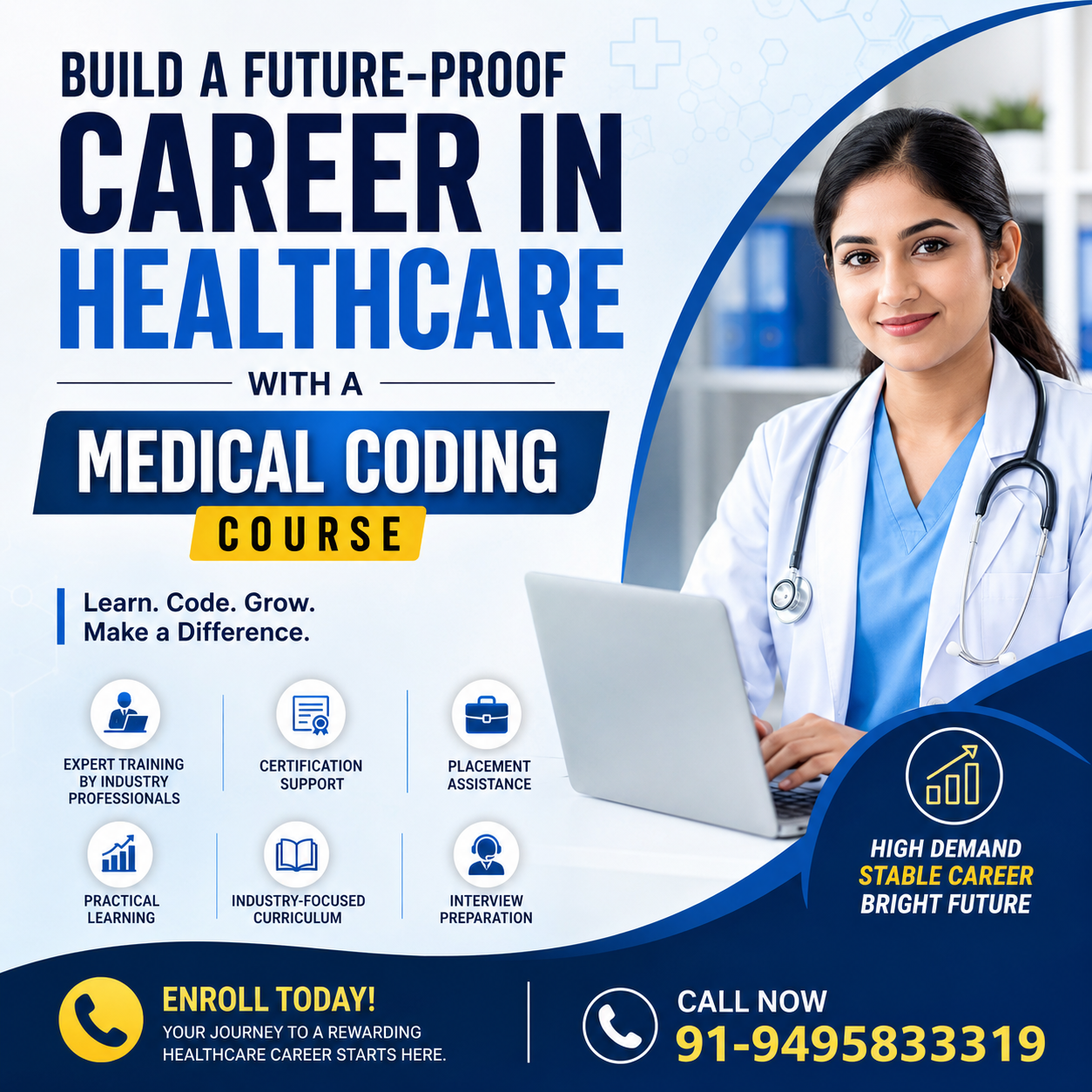
The healthcare industry continues to expand globally, creating a growing demand for skilled professionals who can accurately convert medical diagnoses, treatments, and procedures into standardized codes. A medical coding course is one of the most effective ways to enter this high-demand healthcare profession and build a rewarding career with excellent growth opportunities.
Whether you are a life science graduate, healthcare professional, fresh graduate, or someone looking to transition into the healthcare industry, medical coding offers a stable and promising career path.
What Is Medical Coding?
Medical coding program is the process of translating medical records, diagnoses, treatments, laboratory reports, and physician documentation into universally recognized alphanumeric codes. These codes are used by hospitals, insurance companies, healthcare providers, and government agencies for billing, reimbursement, compliance, and healthcare data management.
Medical coders play a crucial role in ensuring the accuracy of healthcare documentation and medical claims processing.
Why Is Medical Coding Important?
Medical coding helps healthcare organizations:
- Maintain accurate patient records
- Process insurance claims efficiently
- Ensure regulatory compliance
- Improve healthcare data management
- Support healthcare analytics and reporting
- Minimize billing errors
As healthcare systems continue to digitize, the demand for qualified medical coding professionals continues to rise.
What Will You Learn in a Medical Coding Course?
A comprehensive medical coding training program typically covers:
Medical Terminology
Learn the language used by healthcare professionals to understand diagnoses, procedures, and patient records.
Human Anatomy and Physiology
Develop a strong understanding of body systems, organs, and medical conditions.
ICD Coding Systems
Gain knowledge of diagnosis coding standards used worldwide.
CPT Coding
Learn procedural coding used for physician services and medical procedures.
HCPCS Coding
Understand healthcare common procedure coding systems used in medical billing.
Healthcare Documentation
Learn how to interpret physician notes and clinical documentation accurately.
Medical Billing Fundamentals
Understand how coding supports healthcare reimbursement and insurance claim processing.
Certification Preparation
Prepare for industry-recognized certification examinations that enhance employability.
Who Can Join a Medical Coding Course?
Medical coding is an excellent career option for:
- Life Science Graduates
- Pharmacy Graduates
- Nursing Graduates
- Allied Health Professionals
- Biotechnology Graduates
- Microbiology Graduates
- Medical Laboratory Technology Graduates
- Fresh Graduates Seeking Healthcare Careers
Even candidates with a strong interest in healthcare and medical sciences can benefit from structured training programs.
Career Opportunities After Medical Coding Training
The healthcare industry offers a wide range of opportunities for trained medical coders with certificate.
Popular job roles include:
- Medical Coder
- Certified Professional Coder
- Coding Specialist
- Healthcare Documentation Specialist
- Medical Records Analyst
- Risk Adjustment Coder
- Clinical Coding Executive
- Quality Analyst
- Medical Billing Executive
- Healthcare Revenue Cycle Associate
Medical coders are employed by hospitals, healthcare organizations, insurance companies, medical billing companies, and healthcare outsourcing firms.
Why Students Choose Transorze
Students often look for medical coding training programs that combine theoretical knowledge with practical industry exposure. A structured curriculum, experienced trainers, hands-on coding practice, certification guidance, and career support can help learners develop job-ready skills and confidently enter the healthcare industry.
Some key highlights include:
- 29,000+ students trained
- 96% students placed in companies
- 8+ branches across South India
- Industry-focused curriculum
- Experienced trainers
- Practical coding exercises
- Certification guidance
- Placement assistance support
- Interview preparation sessions
- Career mentoring
The goal is to help learners gain confidence, develop coding accuracy, and prepare for real-world healthcare industry requirements.
Certification Advantage
Students shall be eligible for joint credited certification from UGC / NCVET recognized Skill University and National Skill Development Corporation (NSDC), which comes under the Ministry of Skill Development & Entrepreneurship.
These certifications can strengthen professional credibility and demonstrate industry-relevant skills to potential employers.
Skills You Can Develop Through Medical Coding Training
A structured medical coding course helps students build:
- Analytical thinking
- Medical terminology expertise
- Coding accuracy
- Attention to detail
- Clinical documentation interpretation
- Healthcare compliance awareness
- Problem-solving abilities
- Healthcare data management skills
These competencies are highly valued by employers across the healthcare sector.
Why Medical Coding Is a Future-Proof Career
Healthcare services continue to expand globally, increasing the need for accurate medical documentation and coding professionals. As healthcare providers adopt advanced technologies and electronic health records, skilled medical coders remain essential for efficient healthcare operations.
This makes medical coding a stable career choice with long-term growth potential and opportunities for specialization.
Frequently Asked Questions
A medical coding course teaches students how to convert medical diagnoses, treatments, and procedures into standardized codes used for healthcare documentation and billing.
Life science graduates, nursing graduates, pharmacy graduates, allied health professionals, and healthcare enthusiasts can pursue medical coding training.
Yes. Medical coding offers strong career prospects, growing demand, competitive salaries, and opportunities in hospitals, insurance companies, and healthcare organizations.
Key skills include medical terminology knowledge, attention to detail, analytical thinking, coding accuracy, and understanding of healthcare documentation.
Industry-recognized coding certifications can improve employability and help professionals demonstrate coding expertise.
Yes. Many organizations hire trained freshers who possess strong coding knowledge and healthcare documentation skills.
Yes. The increasing adoption of electronic health records, healthcare digitization, and insurance processing continues to drive demand for qualified medical coders worldwide.
Final Thoughts
A professional medical coding course can open doors to a rewarding healthcare career that combines medical knowledge, analytical skills, and industry demand. With the right training, certification guidance, and practical exposure, aspiring medical coders can confidently pursue opportunities in hospitals, healthcare companies, insurance organizations, and global healthcare outsourcing firms.
Choosing a structured learning pathway through a medical coding course can help transform healthcare knowledge into a successful and sustainable profession.
 If you’re looking to start a stable healthcare career, mastering these skills is your first step toward long-term success.
