
Medical Coding CPC: Complete Guide to Certification, Career Growth, and Job Opportunities
The healthcare industry relies heavily on accurate medical documentation, insurance claims processing, and healthcare reimbursement systems. Behind these critical functions are trained medical coding professionals who convert healthcare diagnoses, treatments, and procedures into standardized codes.
Among the most respected credentials in the healthcare coding field is the Certified Professional Coder (CPC) certification. If you’re exploring a career in healthcare administration, medical billing, or coding, understanding medical coding CPC certification can help you make informed career decisions.
This guide explains everything you need to know about CPC certification, including eligibility, exam structure, career opportunities, salary expectations, and training options.
What Is Medical Coding CPC?
Medical Coding CPC refers to the Certified Professional Coder (CPC) credential awarded by the American Academy of Professional Coders (AAPC).
The CPC certification validates a professional’s ability to accurately assign medical codes for diagnoses, procedures, and healthcare services using industry-standard coding systems.
The certification is widely recognized by:
- Hospitals
- Multispecialty clinics
- Healthcare BPOs
- Insurance companies
- Revenue cycle management firms
- Medical billing organizations
Because of its global recognition, CPC certification is often considered the gold standard for aspiring medical coders.
What Does a CPC-Certified Medical Coder Do?
A CPC-certified coder reviews healthcare documentation and translates medical information into standardized codes used for billing and reimbursement.
Common responsibilities include:
- Reviewing patient records
- Assigning ICD-10-CM diagnosis codes
- Applying CPT procedure codes
- Using HCPCS Level II codes
- Ensuring coding accuracy
- Supporting insurance claim submissions
- Maintaining healthcare compliance
- Identifying documentation deficiencies
Accurate coding helps healthcare providers receive proper reimbursement while ensuring compliance with healthcare regulations.
Why Is CPC Certification Important?
The healthcare industry increasingly prefers certified professionals because certification demonstrates coding competency and industry knowledge.
Benefits of CPC certification include:
Improved Employability
Many employers prioritize CPC-certified candidates when hiring medical coders.
Higher Earning Potential
Certification often leads to better salary opportunities compared to non-certified professionals.
Industry Recognition
The CPC credential is recognized across healthcare organizations worldwide.
Professional Credibility
Certification validates your expertise in medical coding standards and guidelines.
Career Advancement
CPC certification can serve as a foundation for advanced healthcare coding and auditing roles.
Understanding the CPC Certification Exam
The CPC examination evaluates a candidate’s coding knowledge and practical application skills.
The exam typically covers:
Medical Terminology
Understanding healthcare language and clinical documentation.
Anatomy and Physiology
Knowledge of body systems and medical conditions.
ICD-10-CM Coding
Diagnosis coding guidelines and code assignment.
CPT Coding
Procedure coding for medical services and treatments.
HCPCS Level II Coding
Supplies, equipment, medications, and non-physician services.
Compliance and Regulatory Guidelines
Healthcare regulations and coding ethics.
Insurance and Reimbursement Concepts
Basic understanding of healthcare billing processes.
The examination tests both theoretical knowledge and practical coding abilities.
Who Should Pursue Medical Coding CPC Certification?
CPC certification is suitable for a wide range of learners and professionals.
Life Science Graduates
Students from:
- Biotechnology
- Microbiology
- Zoology
- Botany
- Biochemistry
often find medical coding a strong career option.
Nursing Professionals
Nurses looking to transition into non-clinical healthcare careers may benefit from coding expertise.
Pharmacy Graduates
Pharmacy professionals can leverage their medical knowledge in coding and reimbursement roles.
Healthcare Professionals
Medical transcriptionists, healthcare administrators, and billing professionals frequently pursue CPC certification.
Career Changers
Individuals seeking entry into the healthcare sector often choose medical coding because of its structured career path and growing demand.
Skills Required for CPC Medical Coding
Successful medical coders develop a combination of technical and professional skills.
Technical Skills
- ICD-10-CM coding
- CPT coding
- HCPCS coding
- Medical documentation review
- Coding guideline interpretation
Healthcare Knowledge
- Anatomy and physiology
- Disease processes
- Medical terminology
- Clinical procedures
Professional Skills
- Attention to detail
- Analytical thinking
- Problem-solving
- Time management
- Accuracy and compliance awareness
These competencies contribute significantly to coding accuracy and career success.
Medical Coding CPC Training
A structured CPC training program helps candidates prepare effectively for certification and employment.
Comprehensive CPC training typically includes:
- Anatomy and physiology
- Medical terminology
- ICD-10-CM coding
- CPT coding
- HCPCS coding
- Practical coding exercises
- Mock examinations
- Certification preparation
Many learners prefer institutes that provide flexible learning formats.
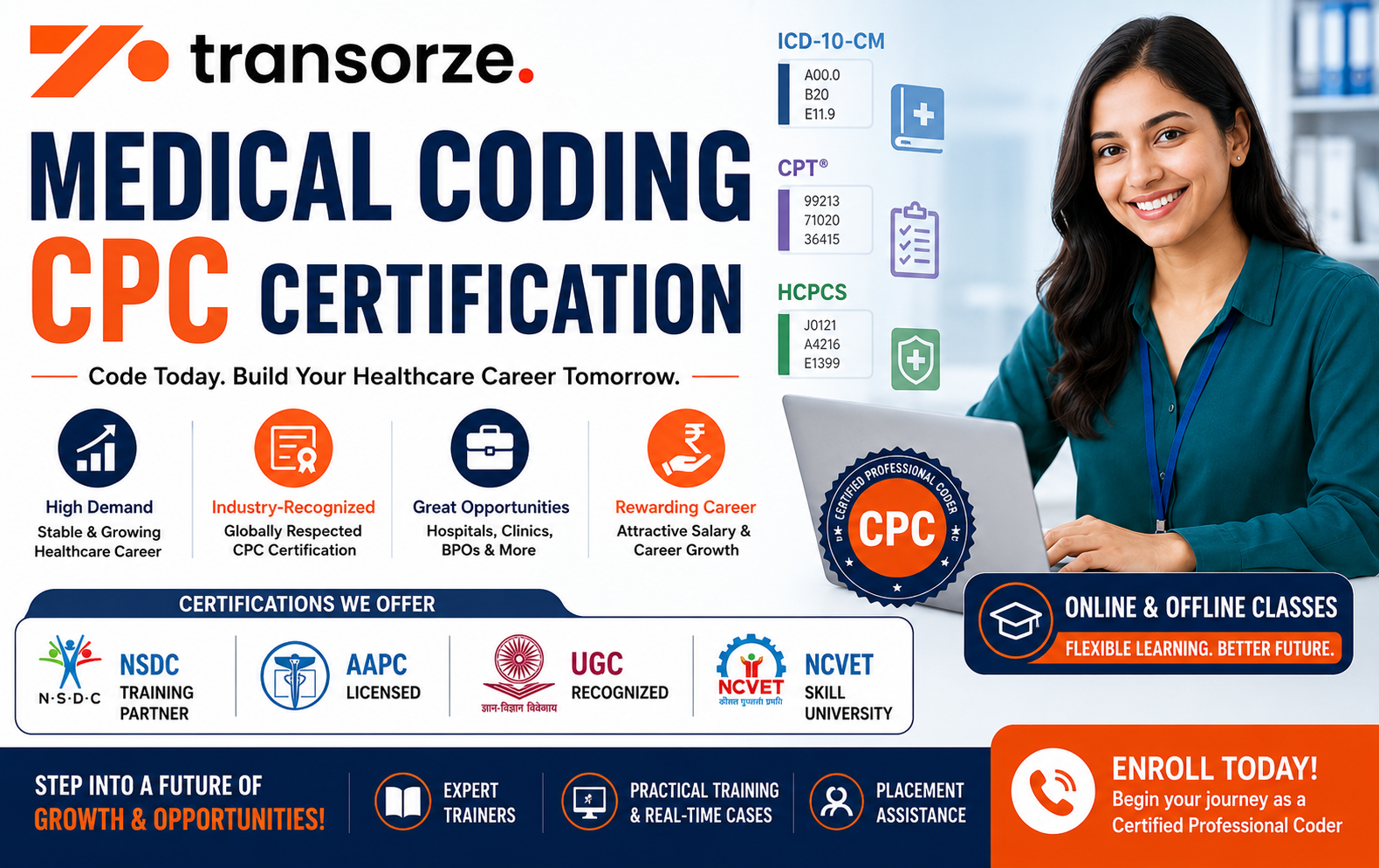
Transorze offers Online & Offline classes for medical coding learners and supports industry-focused education through credentials including NSDC Training Partner, AAPC Licensed, UGC Recognized, and NCVET Skill University.
These credentials help learners build confidence while preparing for professional coding careers.
Medical Coding CPC Course Duration
Course duration varies depending on the learning pathway.
Fast-Track Programs
- Approximately 3 months
- Focus on certification preparation
Comprehensive Programs
- 4 to 6 months
- Include practical coding exercises and assessments
Advanced Career Programs
- 6 to 12 months
- Provide deeper specialization and extensive practice
Students should choose a program based on their educational background, career goals, and available study time.
Career Opportunities After CPC Certification
Medical coding professionals can work in a variety of healthcare settings.
Popular job roles include:
Medical Coder
Assign diagnosis and procedure codes for healthcare services.
Certified Professional Coder
Perform advanced coding functions while ensuring compliance.
Medical Billing Executive
Support claims submission and reimbursement processes.
Coding Specialist
Handle complex coding scenarios and audits.
Revenue Cycle Executive
Assist in healthcare revenue management operations.
Healthcare Documentation Analyst
Review medical records for coding accuracy and completeness.
Demand for qualified coding professionals continues to grow as healthcare organizations increasingly focus on documentation accuracy and revenue optimization.
Salary and Career Growth
Medical coding CPC certification can improve long-term career prospects.
Salary potential depends on:
- Certification status
- Experience level
- Geographic location
- Employer type
- Technical expertise
Professionals with CPC certification often experience greater opportunities for advancement into auditing, compliance, training, and healthcare management roles.
As experience grows, many coders transition into leadership and specialized positions.
CPC Certification vs Non-Certified Medical Coding
| Feature | CPC Certified | Non-Certified |
|---|---|---|
| Industry Recognition | High | Moderate |
| Employment Opportunities | Strong | Limited |
| Salary Potential | Higher | Lower |
| Professional Credibility | Excellent | Developing |
| Career Advancement | Faster | Slower |
Certification provides a competitive advantage in today’s healthcare job market.
Future Scope of Medical Coding CPC
The future of medical coding remains promising due to several factors:
- Growth of healthcare services
- Expansion of insurance coverage
- Increased regulatory requirements
- Digital healthcare adoption
- Greater emphasis on documentation accuracy
Healthcare organizations continue to seek trained coding professionals capable of supporting revenue cycle management and compliance objectives.
This demand creates long-term career stability for CPC-certified professionals.
How to Choose the Right CPC Training Program
Before enrolling, evaluate:
Course Curriculum
Ensure the program covers ICD-10-CM, CPT, HCPCS, and certification preparation.
Certification Support
Look for mock tests, assessments, and exam-focused training.
Faculty Expertise
Experienced trainers provide valuable practical insights.
Placement Assistance
Career guidance and interview preparation can improve employment outcomes.
Learning Flexibility
Online and offline learning options help students balance education with personal commitments.
Choosing the right training provider can significantly influence certification success and career readiness.
Frequently Asked Questions
CPC stands for Certified Professional Coder, a globally recognized certification that validates expertise in medical coding.
Yes. CPC certification enhances employability, professional credibility, and career growth opportunities within the healthcare industry.
Life science graduates, nursing professionals, pharmacy graduates, healthcare workers, and aspiring medical coders can pursue CPC certification.
Most CPC training programs range from 3 to 6 months, although advanced programs may extend beyond that.
Training typically includes ICD-10-CM, CPT, and HCPCS Level II coding systems.
Yes. Many institutions offer online training programs that include live classes, recorded sessions, assessments, and certification preparation.
Common roles include Medical Coder, Certified Professional Coder, Coding Specialist, Medical Billing Executive, and Healthcare Documentation Analyst.
Final Thought
Medical Coding CPC certification remains one of the most valuable credentials for individuals seeking a healthcare career focused on coding, compliance, and revenue cycle management. The certification demonstrates professional competency, increases employment opportunities, and supports long-term career growth in a rapidly expanding healthcare industry.
Whether you’re a recent graduate, healthcare professional, or career changer, CPC certification can provide a strong foundation for entering one of the healthcare sector’s most in-demand professions.
