
Medical Coding Syllabus: Complete Course Structure, Subjects, and Career Scope
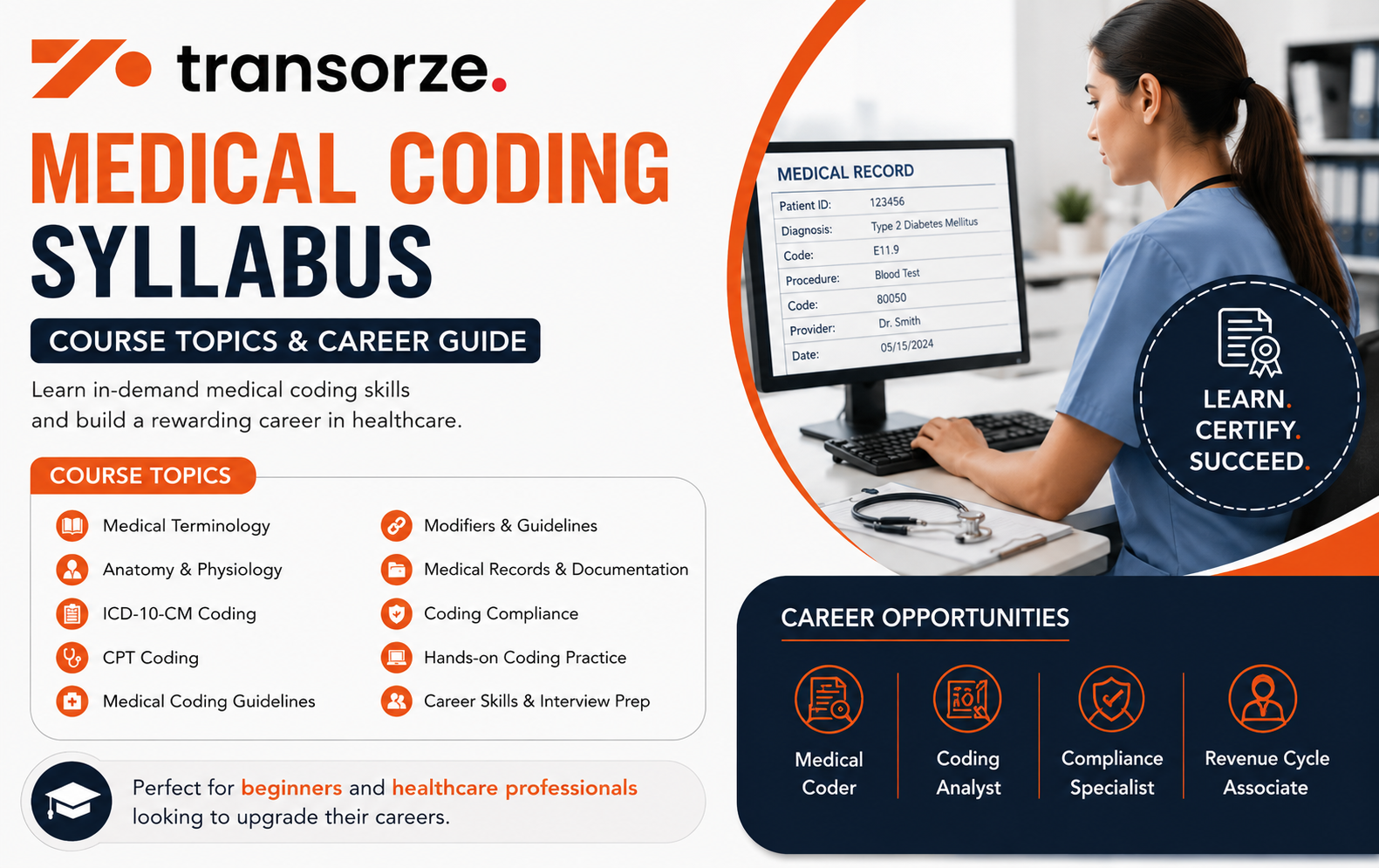
Medical coding has become one of the fastest-growing healthcare career options for graduates, life science students, and professionals seeking stable employment opportunities. Before enrolling in a training program, many students want to understand one important detail: what does the medical coding syllabus include?
A well-structured medical coding syllabus prepares students to convert medical diagnoses, procedures, and healthcare services into standardized codes used for insurance claims, billing, and healthcare documentation. The curriculum combines anatomy knowledge, coding systems, medical terminology, healthcare regulations, and practical coding applications.
If you are researching the best medical coding training program, understanding the syllabus is the first step toward choosing the right course and career path.
What Is a Medical Coding Syllabus?
A medical coding syllabus is the complete outline of subjects, modules, practical training, and exam preparation included in a medical coding course. It is designed to help students develop the technical knowledge and industry skills required to work in hospitals, insurance companies, healthcare BPOs, and medical coding firms.
Most medical coding training programs focus on internationally recognized coding systems such as:
- ICD (International Classification of Diseases)
- CPT (Current Procedural Terminology)
- HCPCS (Healthcare Common Procedure Coding System)
The syllabus also covers healthcare documentation standards, reimbursement processes, and medical ethics.
Students looking for detailed information about course structure, eligibility, fees, and examination preparation can explore this comprehensive guide on the medical coding exam syllabus, eligibility, duration, and fees.
Core Subjects Included in a Medical Coding Course Syllabus
Although course structures may vary between institutes, most professional medical coding programs include the following modules.
- Medical Terminology
Medical terminology forms the foundation of medical coding. Students learn:
- Prefixes and suffixes
- Medical abbreviations
- Diagnostic terminology
- Procedure terminology
- Body systems vocabulary
A strong understanding of terminology helps coders interpret physician documentation accurately.
- Human Anatomy and Physiology
Medical coders must understand how the human body functions to assign accurate diagnosis and procedure codes.
Common anatomy topics include:
- Cardiovascular system
- Respiratory system
- Digestive system
- Nervous system
- Musculoskeletal system
- Reproductive system
This module is especially important for students from non-medical backgrounds.
- ICD Coding System
The ICD coding module teaches students how to assign diagnosis codes based on patient conditions and diseases.
Topics usually include:
- ICD-10-CM guidelines
- Coding conventions
- Chapter-specific coding rules
- Diagnostic coding scenarios
- Clinical documentation interpretation
ICD coding is widely used in hospitals and insurance processing.
- CPT Coding
CPT coding focuses on procedural coding used by physicians and healthcare providers.
Students learn:
- Evaluation and management coding
- Surgical coding
- Radiology coding
- Pathology and laboratory coding
- Anesthesia coding
Practical exercises are often included to improve coding accuracy.
- HCPCS Coding
HCPCS codes are used for medical supplies, equipment, and healthcare services not covered under CPT.
The syllabus may include:
- Level I and Level II HCPCS
- Modifiers
- Durable medical equipment coding
- Insurance claim coding
- Medical Billing Fundamentals
Many medical coding institutes combine coding with billing knowledge.
This section covers:
- Insurance claim processing
- Revenue cycle management
- Healthcare reimbursement
- Denial management
- HIPAA compliance
Students interested in expanding their skill set can also explore a dedicated medical billing course for broader healthcare administration opportunities.
Practical Training Included in Medical Coding Syllabus
Modern medical coding training is not limited to theory alone. Most institutes include practical learning components such as:
- Real-time case studies
- Mock coding exercises
- Insurance documentation analysis
- Medical records interpretation
- Coding software exposure
Hands-on practice helps students improve speed and accuracy, which are critical skills in the healthcare industry.
Leading institutes like Transorze emphasize practical exposure to ensure students are industry-ready from day one.
Medical Coding Course Duration
The duration of medical coding courses depends on the training format and syllabus depth.
Typical course durations include:
Course Type | Duration |
Basic Medical Coding Course | 2–3 Months |
Advanced Certification Program | 4–6 Months |
Professional Diploma Programs | 6–12 Months |
Some institutes also offer weekend, online, and fast-track training options for working professionals.
Students seeking structured training can review medical coding certification programs that align with current industry requirements.
Eligibility for Medical Coding Courses
Most medical coding institutes accept students from healthcare and life science backgrounds.
Common eligibility criteria include:
- Life science graduates
- Pharmacy graduates
- Nursing students
- Biotechnology graduates
- Allied health professionals
- Fresh graduates seeking healthcare careers
Some training centers also admit non-medical graduates after foundation-level preparation.
Why the Medical Coding Syllabus Matters
Choosing a course with a comprehensive syllabus is essential because employers prefer candidates with strong technical knowledge and practical coding expertise.
A quality syllabus helps students:
- Understand global coding standards
- Prepare for certification exams
- Improve employability
- Build long-term healthcare careers
- Gain confidence in real-world coding scenarios
Institutes that continuously update their curriculum based on healthcare industry changes provide better career outcomes for students.
For students planning long-term growth in healthcare documentation and coding, resources related to healthcare training enrollment can help compare available learning pathways.
Career Opportunities After Completing Medical Coding Training
After completing a medical coding course, students can apply for roles such as:
- Medical Coder
- Medical Billing Executive
- Coding Analyst
- Insurance Claims Specialist
- Healthcare Documentation Specialist
- Revenue Cycle Associate
Medical coding professionals are in demand across:
- Hospitals
- Healthcare BPOs
- Insurance companies
- Medical research organizations
- Telehealth companies
With experience and certifications, professionals can also move into auditing, quality analysis, and coding management roles.
Career-focused learners can also explore medical coding career advancement opportunities to understand future growth potential.
How to Choose the Right Medical Coding Institute
Before enrolling, evaluate the following factors:
Updated Curriculum
Ensure the syllabus reflects the latest ICD and CPT coding guidelines.
Practical Training
Hands-on coding practice improves employability significantly.
Certification Support
Institutes should provide preparation for industry-recognized certifications.
Placement Assistance
Career guidance and placement support are valuable for freshers.
Experienced Trainers
Faculty with industry experience can provide practical insights beyond textbooks.
Transorze is recognized for offering structured medical coding training programs that combine theory, practical learning, and career-oriented guidance.
Frequently Asked Questions
Most medical coding syllabi include anatomy, physiology, medical terminology, ICD coding, CPT coding, HCPCS coding, and medical billing basics.
Yes. Anatomy and physiology help coders understand diagnoses and procedures accurately.
Most medical coding courses take between 2 and 6 months depending on the course level and training format.
Yes. Many institutes provide foundation training for students from non-medical backgrounds.
Professional medical coding programs usually include practical coding exercises, case studies, and real-time documentation analysis.
Some companies offer remote or hybrid roles after gaining experience.
Graduates can work as medical coders, billing executives, coding analysts, and healthcare documentation specialists.
Final Thoughts
Understanding the medical coding syllabus is essential before enrolling in a training program. A strong curriculum should combine medical knowledge, coding systems, practical exercises, and certification preparation to help students succeed in the healthcare industry.
As demand for skilled medical coders continues to grow globally, choosing the right training institute and syllabus can significantly influence your career opportunities. Whether you are a fresher, healthcare graduate, or working professional, investing in quality medical coding education can open doors to stable and rewarding healthcare careers.
