
Medical Transcription Program: Complete Guide to Training, Certification, and Career Opportunities
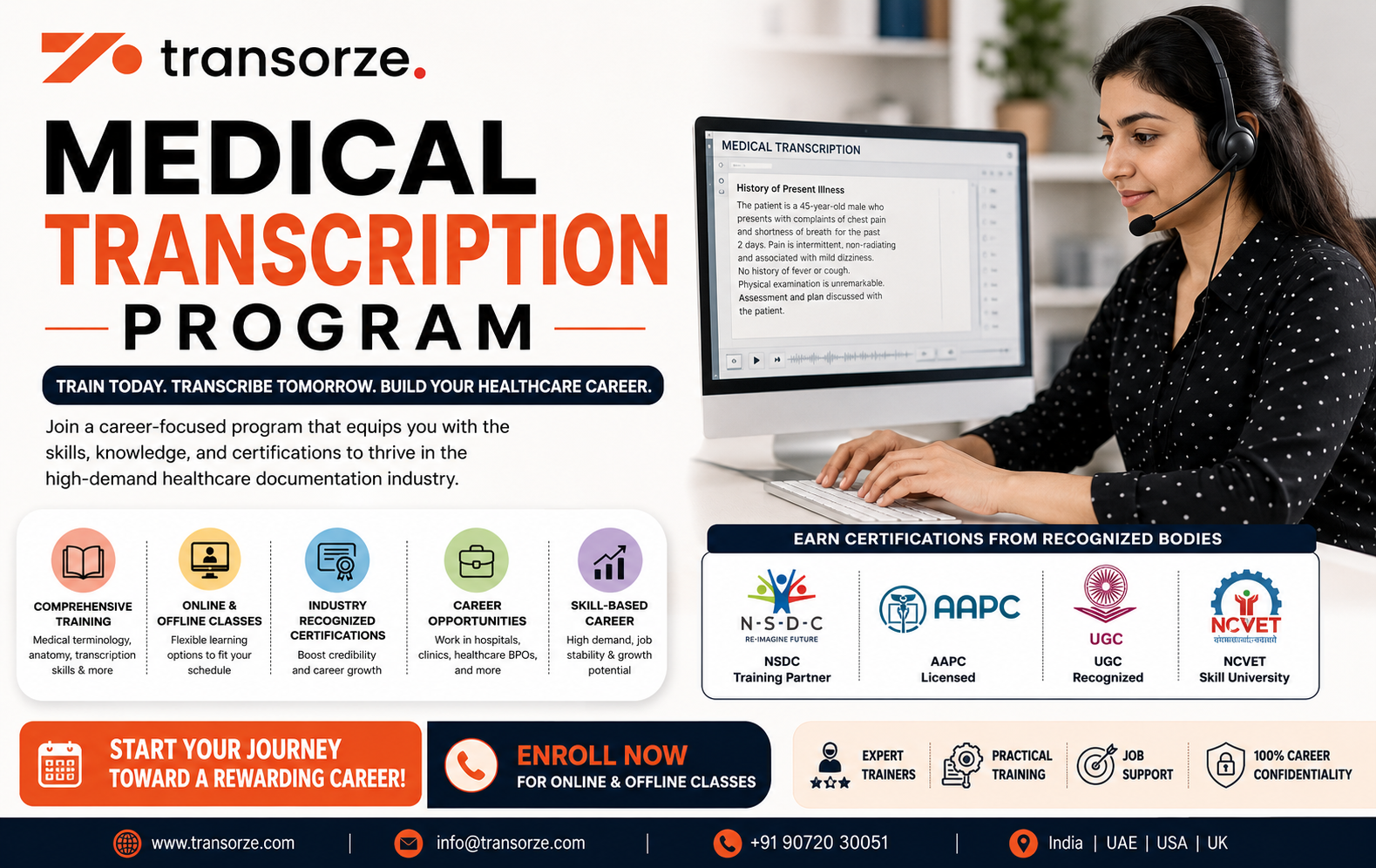
The healthcare industry relies heavily on accurate medical documentation. Every patient consultation, diagnosis, treatment plan, discharge summary, and surgical procedure generates records that must be documented correctly. This growing need for precise healthcare documentation has created strong demand for skilled medical transcription professionals.
A medical transcription program is designed to train students in converting healthcare providers’ voice recordings into accurate written reports. With healthcare systems expanding worldwide and digital health records becoming standard practice, medical transcription continues to be a valuable career path for individuals seeking opportunities in the healthcare sector without direct patient care responsibilities.
Whether you are a recent graduate, a working professional looking for a career change, or someone interested in healthcare documentation, enrolling in a structured medical transcription program can provide the skills and certifications needed to enter this field confidently.
What Is a Medical Transcription Program?
A medical transcription training program is a specialized training course that teaches students how to listen to recorded medical dictations and convert them into accurate written documents.
The program covers:
- Medical terminology
- Human anatomy and physiology
- Pharmacology basics
- Medical documentation standards
- Healthcare communication
- English grammar and language skills
- Electronic health records (EHR)
- Transcription software and tools
- Quality assurance practices
Students learn how to prepare medical reports such as:
- Patient histories
- Discharge summaries
- Consultation notes
- Operative reports
- Diagnostic reports
- Radiology reports
- Laboratory documentation
The primary goal of a medical transcription program is to prepare learners for real-world healthcare documentation environments while maintaining accuracy, confidentiality, and compliance.
Why Choose a Medical Transcription Career?
Medical transcription offers several advantages for individuals seeking a stable and skill-based profession.
Growing Healthcare Documentation Needs
Healthcare organizations generate large volumes of patient records daily. Accurate documentation supports patient care, legal compliance, insurance processing, and healthcare operations.
Entry Into the Healthcare Industry
Many people want to work in healthcare but may not wish to pursue clinical roles. Medical transcription provides a pathway into the healthcare sector through specialized documentation expertise.
Flexible Work Opportunities
Many transcription professionals work remotely or in hybrid environments. This flexibility makes the profession attractive to students, parents, and professionals seeking work-life balance.
Skill-Based Career Path
Success in medical transcription depends primarily on knowledge, accuracy, listening ability, and technical skills rather than extensive prior healthcare experience.
Continuous Learning
Healthcare terminology, treatments, and technologies evolve regularly, creating opportunities for ongoing professional growth.
What Will You Learn in a Medical Transcription Program?
A comprehensive medical transcription program provides a balanced combination of theoretical knowledge and practical training.
Medical Terminology
Medical language forms the foundation of transcription work. Students learn:
- Prefixes and suffixes
- Medical abbreviations
- Disease terminology
- Clinical procedures
- Diagnostic terminology
Understanding medical terminology improves transcription accuracy and confidence.
Anatomy and Physiology
Students gain knowledge of:
- Cardiovascular system
- Respiratory system
- Nervous system
- Digestive system
- Musculoskeletal system
- Reproductive system
This understanding helps transcriptionists interpret physician dictations correctly.
Pharmacology
The program introduces:
- Drug classifications
- Medication names
- Prescription terminology
- Common pharmaceutical abbreviations
Knowledge of medications helps prevent transcription errors.
English Language Skills
Since medical reports must be professionally written, students improve:
- Grammar
- Punctuation
- Spelling
- Sentence structure
- Editing skills
Strong language skills contribute significantly to documentation quality.
Medical Documentation Standards
Students learn how healthcare reports are structured and formatted according to industry requirements.
Practical Transcription Training
Hands-on practice includes:
- Listening to physician recordings
- Transcribing medical reports
- Editing transcripts
- Quality checking documents
- Meeting turnaround expectations
Practical training helps bridge the gap between learning and employment.
Who Should Enroll in a Medical Transcription Program?
This program is suitable for:
- Fresh graduates
- Healthcare aspirants
- Career changers
- Medical and life science graduates
- Nursing graduates
- Allied health students
- Professionals seeking remote work opportunities
No prior transcription experience is typically required for beginners.
Online and Offline Medical Transcription Training
Today’s learners have different educational preferences and schedules. A quality medical transcription program should offer both Online & Offline classes to provide flexibility and accessibility.
Benefits of Online Classes
- Learn from any location
- Flexible schedules
- Access recorded sessions
- Save commuting time
- Suitable for working professionals
Benefits of Offline Classes
- Face-to-face faculty interaction
- Classroom learning environment
- Peer collaboration
- Immediate doubt clarification
- Structured learning experience
Having both learning options allows students to choose the format that best matches their lifestyle and learning preferences.
Certifications That Add Value to Your Career
Employers increasingly prefer candidates who possess recognized credentials and structured training.
When evaluating a medical transcription program, look for institutions associated with recognized certifications and quality standards such as:
These credentials enhance credibility, demonstrate training quality, and strengthen employability.
Essential Skills Developed Through Medical Transcription Training
A professional medical transcription training helps students develop critical workplace skills.
Listening Skills
Accurately interpreting physician dictation requires focused listening and attention to detail.
Typing Speed and Accuracy
Students improve keyboard proficiency while maintaining documentation quality.
Research Skills
Transcriptionists frequently verify medical terms, drug names, and procedures.
Time Management
Meeting documentation deadlines is an important part of healthcare operations.
Attention to Detail
Even minor errors can affect healthcare records, making precision essential.
Career Opportunities After Completing a Medical Transcription Program
Graduates can pursue various roles within healthcare documentation and administration.
Potential career paths include:
- Medical Transcriptionist
- Healthcare Documentation Specialist
- Medical Scribe
- Clinical Documentation Associate
- Quality Analyst
- Medical Records Executive
- Healthcare Data Specialist
These roles may be available in:
- Hospitals
- Clinics
- Diagnostic centers
- Healthcare BPOs
- Medical billing companies
- Insurance organizations
- Telehealth providers
How to Choose the Right Medical Transcription Program
Before enrolling, consider the following factors:
Industry-Relevant Curriculum
Choose a program covering medical terminology, anatomy, pharmacology, documentation standards, and practical transcription exercises.
Experienced Trainers
Qualified instructors can provide valuable insights into real-world healthcare documentation practices.
Practical Exposure
Hands-on assignments and transcription labs help build job-ready skills.
Certification Support
Industry-recognized certifications strengthen employment prospects.
Placement Assistance
Career guidance, interview preparation, and placement support can help students transition into the workforce.
Why Quality Training Matters
Medical transcription course involves much more than typing dictated notes. Professionals must understand healthcare language, maintain confidentiality, follow documentation standards, and produce accurate records.
A structured learning approach helps students develop both technical knowledge and practical competencies required by employers.
Institutions such as Transorze provide comprehensive medical transcription training through online and offline learning formats, industry-oriented curriculum, certification support, and career-focused guidance.
Start Building Your Healthcare Career
A medical transcription program can provide the foundation for a rewarding healthcare career. With growing demand for accurate medical documentation, trained professionals continue to play an important role in healthcare operations.
Whether your goal is to secure your first healthcare job, transition into a new profession, or gain specialized documentation skills, the right training program can help you build confidence and become job-ready.
Choosing a program that offers practical training, recognized certifications, flexible learning options, and career support can significantly improve your long-term success in the healthcare industry.
Frequently Asked Questions
A medical transcription program is a specialized training course that teaches students how to convert physicians’ voice recordings into accurate medical documents while learning medical terminology, anatomy, pharmacology, and healthcare documentation standards.
The duration varies by institution and curriculum. Most programs can be completed within a few months, depending on the training format, learning schedule, and practical assignments included.
No. Most beginner-level medical transcription programs are designed for students without prior healthcare experience and provide foundational medical knowledge as part of the curriculum.
Yes. Many training providers offer both online and offline classes, allowing students to choose a learning format that suits their schedule and location.
Depending on the institution, students may receive certifications associated with NSDC Training Partner programs, AAPC Licensed training, UGC-recognized programs, and NCVET Skill University frameworks.
Graduates may pursue roles such as Medical Transcriptionist, Healthcare Documentation Specialist, Medical Scribe, Clinical Documentation Associate, Medical Records Executive, or Healthcare Data Specialist.
Yes. Medical transcription remains a valuable healthcare support profession that offers opportunities in hospitals, clinics, healthcare BPOs, insurance companies, and remote work environments.
Successful transcriptionists need strong listening skills, typing accuracy, attention to detail, medical terminology knowledge, grammar proficiency, and time management skills.
Final Thought
A Medical Transcription Program is an excellent pathway for individuals seeking a rewarding career in the healthcare industry. By developing expertise in medical terminology, healthcare documentation, and transcription practices, learners can access diverse opportunities in hospitals, clinics, healthcare BPOs, and remote work environments. Choosing a program that offers practical training, recognized certifications, and career-focused support can significantly improve employability and long-term growth. At Transorze, students benefit from industry-oriented training, Online & Offline classes, certification support, and placement assistance, helping them build the skills and confidence needed to succeed in the evolving healthcare documentation field.
