
The Ultimate Guide to Medical Coding & Billing Certifications
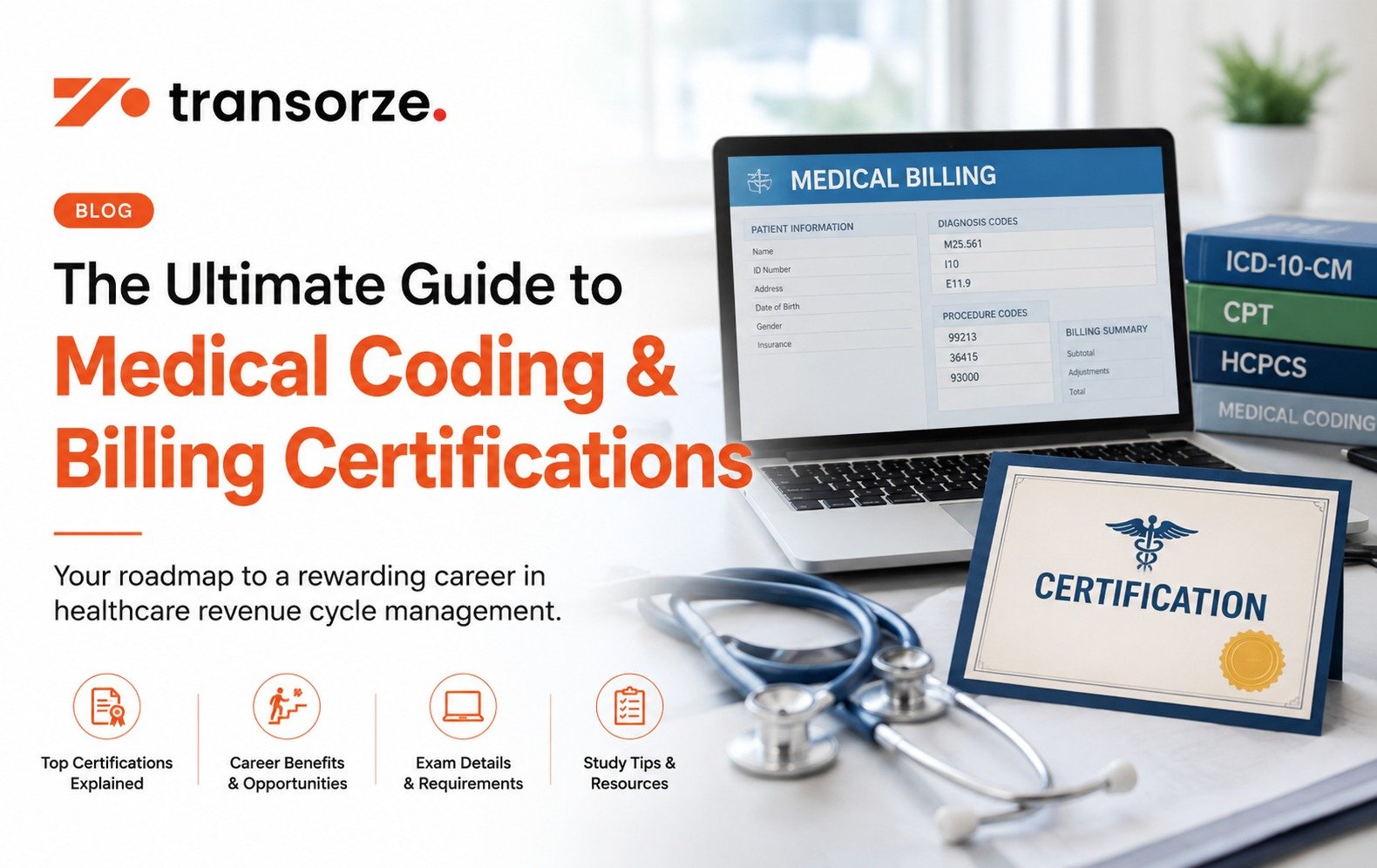
Healthcare is one of the fastest-growing industries worldwide, and behind every successful healthcare facility is an efficient medical coding and billing system. As healthcare providers increasingly rely on accurate documentation, insurance processing, and compliance management, the demand for certified medical coding and billing professionals continues to rise.
If you are considering a stable, rewarding, and future-focused healthcare career, earning a medical coding and billing certification can be one of the smartest investments you make. Certification validates your skills, improves your employability, increases earning potential, and demonstrates your commitment to professional excellence.
This comprehensive guide explains everything you need to know about medical coding and billing certifications, career opportunities, industry demand, employer expectations, and how structured training can accelerate your professional growth.
What Is Medical Coding and Billing?
Medical coding and billing are two closely connected functions within healthcare revenue cycle management.
Medical Coding
Medical coders translate healthcare diagnoses, treatments, procedures, and services into standardized medical codes using systems such as:
- ICD-10-CM
- CPT
- HCPCS Level II
These codes ensure consistency across healthcare providers, insurance companies, and regulatory organizations.
Medical Billing
Medical billers use coded information to prepare and submit insurance claims, process reimbursements, and manage patient billing activities.
Together, coding and billing professionals help healthcare organizations:
- Maintain compliance
- Reduce claim denials
- Improve revenue collection
- Ensure accurate patient records
- Streamline healthcare operations
Without skilled coding and billing specialists, hospitals, clinics, and insurance providers would face significant operational challenges.
Why Medical Coding & Billing Certifications Matter
Many healthcare employers prefer or require candidates with professional certifications because certification demonstrates verified competency.
A certification serves as proof that you possess industry-recognized knowledge and practical skills. It signals to employers that you understand coding guidelines, medical terminology, anatomy, reimbursement systems, compliance regulations, and healthcare documentation standards.
Key Benefits of Certification
Increased Employability
Certified professionals stand out in a competitive job market. Employers often prioritize certified candidates during recruitment because they require less onboarding and training.
Higher Salary Potential
Certification frequently leads to better compensation packages. Professionals with recognized credentials often command higher salaries than non-certified counterparts.
Career Advancement
Certification can open doors to supervisory, auditing, compliance, documentation improvement, and healthcare administration roles.
Industry Recognition
Professional credentials establish credibility among employers, colleagues, healthcare providers, and insurance organizations.
Continuous Professional Development
Certification encourages lifelong learning and keeps professionals updated on industry changes and regulatory requirements.
Popular Medical Coding & Billing Certifications
Several certifications are recognized across the healthcare industry.
Certified Professional Coder (CPC)
One of the most respected credentials in medical coding, CPC certification focuses on:
- Medical coding guidelines
- CPT coding
- ICD coding
- HCPCS coding
- Compliance standards
The CPC credential is widely recognized by healthcare employers and insurance organizations.
Certified Coding Associate (CCA)
Suitable for entry-level professionals, the CCA certification validates foundational knowledge of coding and healthcare documentation.
Certified Billing and Coding Specialist (CBCS)
This certification focuses on both medical coding and billing functions, making it valuable for professionals seeking broader responsibilities.
Specialty Certifications
Experienced professionals may pursue specialty certifications in:
- Outpatient coding
- Inpatient coding
- Risk adjustment coding
- Medical auditing
- Compliance management
Specialization can significantly improve career prospects and earning potential.
Skills Employers Look for in Logistics Professionals
Certification alone is valuable, but employers also seek practical competencies that contribute to workplace success.
Medical Terminology Knowledge
Professionals must understand medical language, procedures, diagnoses, and treatment plans.
Anatomy and Physiology Understanding
Accurate coding depends on a solid understanding of body systems and healthcare procedures.
Attention to Detail
Even minor coding errors can result in claim denials, delayed reimbursements, or compliance issues.
Analytical Thinking
Medical coders frequently interpret complex physician documentation and assign appropriate codes.
Regulatory Compliance Awareness
Healthcare regulations evolve continuously, making expertise in compliance essential.
Technology Proficiency
Modern coding and billing professionals work extensively with:
- Electronic Health Records (EHR)
- Revenue Cycle Management software
- Healthcare Information Systems
- Coding software platforms
Communication Skills
Professionals often collaborate with physicians, administrators, insurers, and healthcare staff.
Industry Demand for Certified Medical Coding & Billing Professionals
Healthcare organizations are experiencing growing pressure to improve operational efficiency and reimbursement accuracy.
Several factors are driving demand for certified professionals:
Expansion of Healthcare Services
As healthcare access increases, patient volumes continue to grow, creating additional documentation and billing requirements.
Digital Transformation
Healthcare facilities are increasingly adopting electronic records and advanced healthcare technologies that require trained coding professionals.
Insurance Complexity
Insurance policies and reimbursement rules have become more sophisticated, increasing the need for specialized coding expertise.
Regulatory Requirements
Healthcare compliance standards continue to evolve, making certified professionals indispensable for maintaining accuracy and reducing risk.
Outsourcing Opportunities
Many healthcare organizations outsource coding and billing operations, creating opportunities in both domestic and international healthcare service markets.
How Structured Training Accelerates Career Growth
While self-study can provide foundational knowledge, structured training programs often accelerate professional development and improve certification outcomes.
Effective training programs typically include:
- Comprehensive curriculum
- Instructor guidance
- Real-world case studies
- Practical coding exercises
- Exam preparation support
- Industry exposure
Students gain hands-on experience working with realistic healthcare documentation scenarios, helping them build confidence before entering the workforce.
Professional training also provides accountability, mentorship, and career guidance that can shorten the path from learning to employment.
Online vs Offline Medical Coding & Billing Training
Today’s learners have more flexibility than ever when choosing a training format.
Online Learning Benefits
Online training offers:
- Flexible schedules
- Self-paced learning options
- Access from any location
- Recorded sessions for review
- Lower commuting costs
This format is ideal for working professionals, parents, and students balancing multiple responsibilities.
Offline Learning Benefits
Classroom-based training offers:
- Face-to-face instructor interaction
- Structured learning environment
- Immediate feedback
- Peer collaboration
- Enhanced accountability
Many learners benefit from the discipline and engagement of an in-person classroom experience.
Organizations such as Transorze support career-focused learning by offering both Online & Offline classes and industry-recognized credentials through NSDC Training Partner, AAPC Licensed, UGC Recognized, and NCVET Skill University certifications, helping learners build practical skills aligned with employer expectations.
Career Opportunities After Certification
Medical coding and billing certifications can lead to numerous healthcare career pathways.
Medical Coder
Reviews healthcare documentation and assigns standardized medical codes.
Medical Billing Specialist
Processes insurance claims and manages reimbursement workflows.
Coding Auditor
Evaluates coding accuracy and compliance standards.
Revenue Cycle Specialist
Supports financial processes across the healthcare revenue cycle.
Medical Records Technician
Maintains and manages healthcare documentation systems.
Compliance Specialist
Ensures healthcare organizations adhere to regulatory requirements.
Healthcare Documentation Specialist
Supports accurate clinical documentation and coding quality improvement initiatives.
Salary Growth and Long-Term Career Potential
Certification often serves as a catalyst for higher earnings.
As professionals gain experience, they may progress into:
- Senior Coding Specialist roles
- Coding Auditor positions
- Compliance Management careers
- Revenue Cycle Leadership
- Healthcare Administration
- Clinical Documentation Improvement (CDI)
Advanced certifications and continuous learning frequently translate into greater responsibilities and increased compensation.
Because healthcare remains an essential industry, medical coding and billing professionals often benefit from strong job stability compared to many other career paths.
How to Choose the Right Certification Path
Before enrolling in a certification program, consider:
Your Career Goals
Do you want to focus primarily on coding, billing, auditing, or healthcare administration?
Industry Recognition
Choose certifications that employers actively value and recognize.
Learning Format
Determine whether online, offline, or hybrid learning best suits your schedule and learning style.
Curriculum Quality
Look for programs that cover:
- Medical terminology
- Anatomy and physiology
- ICD coding
- CPT coding
- HCPCS coding
- Compliance regulations
- Healthcare reimbursement systems
Placement Support
Career services, interview preparation, and industry connections can significantly improve employment outcomes.
Practical Next Steps for Aspiring Medical Coding Professionals
If you’re serious about building a career in medical coding and billing, consider the following roadmap:
- Learn healthcare fundamentals.
- Build knowledge in anatomy and medical terminology.
- Enroll in structured certification training.
- Gain hands-on coding practice.
- Prepare thoroughly for certification exams.
- Develop technology and documentation skills.
- Apply for entry-level coding and billing positions.
- Pursue continuing education and advanced certifications.
Following a structured path helps create a strong foundation for long-term career success.
Frequently Asked Questions
The best certification depends on your career goals. Entry-level professionals often begin with foundational coding certifications that validate medical terminology, ICD coding, CPT coding, and healthcare reimbursement knowledge.
Yes. Certified professionals typically enjoy better employment opportunities and higher earning potential because employers value verified expertise and compliance knowledge.
Absolutely. Many accredited institutions offer online programs that provide flexible learning schedules, instructor support, practical exercises, and certification preparation resources.
Key skills include medical terminology, anatomy and physiology knowledge, coding accuracy, analytical thinking, attention to detail, compliance awareness, and proficiency with healthcare software systems.
Yes. The healthcare industry’s continued growth, increasing documentation requirements, and evolving insurance processes create sustained demand for skilled coding and billing professionals.
Training duration varies by program and learning format. Many learners complete certification-focused training within several months, depending on prior healthcare knowledge and study commitment.
Certified professionals can work as medical coders, billing specialists, coding auditors, revenue cycle specialists, compliance coordinators, healthcare documentation specialists, and healthcare administration professionals.
Conclusion
Medical coding and billing certifications are more than just credentials—they are a gateway to a stable, rewarding, and future-focused healthcare career. By gaining industry-recognized certifications, practical coding expertise, and a strong understanding of healthcare documentation and reimbursement systems, professionals can enhance their employability, increase earning potential, and unlock long-term career growth opportunities. For aspiring medical coders and billing specialists, choosing the right training provider is just as important as selecting the right certification. With its comprehensive curriculum, hands-on training approach, flexible Online & Offline learning options, and recognized affiliations such as NSDC Training Partner, AAPC Licensed, UGC Recognized, and NCVET Skill University, Transorze empowers learners to build job-ready skills and confidently pursue success in the growing healthcare industry
