
Training in Medical Billing and Coding: Complete Guide to Building a Healthcare Career
The healthcare industry relies on more than doctors, nurses, and clinical staff. Behind every successful healthcare facility is a team of professionals who ensure patient records are accurately documented, coded, and processed for insurance reimbursement. This is where training in medical billing and coding becomes valuable.
As healthcare services continue to grow globally, the demand for skilled medical billing and coding professionals is increasing. Hospitals, clinics, insurance companies, and healthcare service providers all require trained specialists who can manage healthcare documentation and reimbursement processes efficiently.
If you’re looking for a stable career with strong growth potential, enrolling in training in medical billing and coding can be an excellent first step.
What Is Medical Billing and Coding Training?
Medical billing and coding training is a professional education program that teaches students how to convert medical diagnoses, treatments, and procedures into standardized codes used by healthcare providers and insurance companies.
The training also covers how medical claims are prepared, submitted, and processed for reimbursement.
In simple terms:
- Medical coding converts healthcare services into universal medical codes.
- Medical billing uses those codes to create insurance claims and process payments.
Together, these functions form a critical part of the healthcare revenue cycle and ensure healthcare providers receive accurate reimbursement for the services they deliver.
Why Is Training in Medical Billing and Coding Important?
Medical billing and coding course require specialized knowledge. Even minor coding errors can lead to claim denials, delayed payments, and compliance issues.
Professional training helps learners understand:
- Medical terminology
- Anatomy and physiology
- Disease classification systems
- Healthcare regulations
- Insurance billing procedures
- Revenue cycle management
- Electronic health records (EHR)
Proper training prepares students to work confidently in real-world healthcare environments.
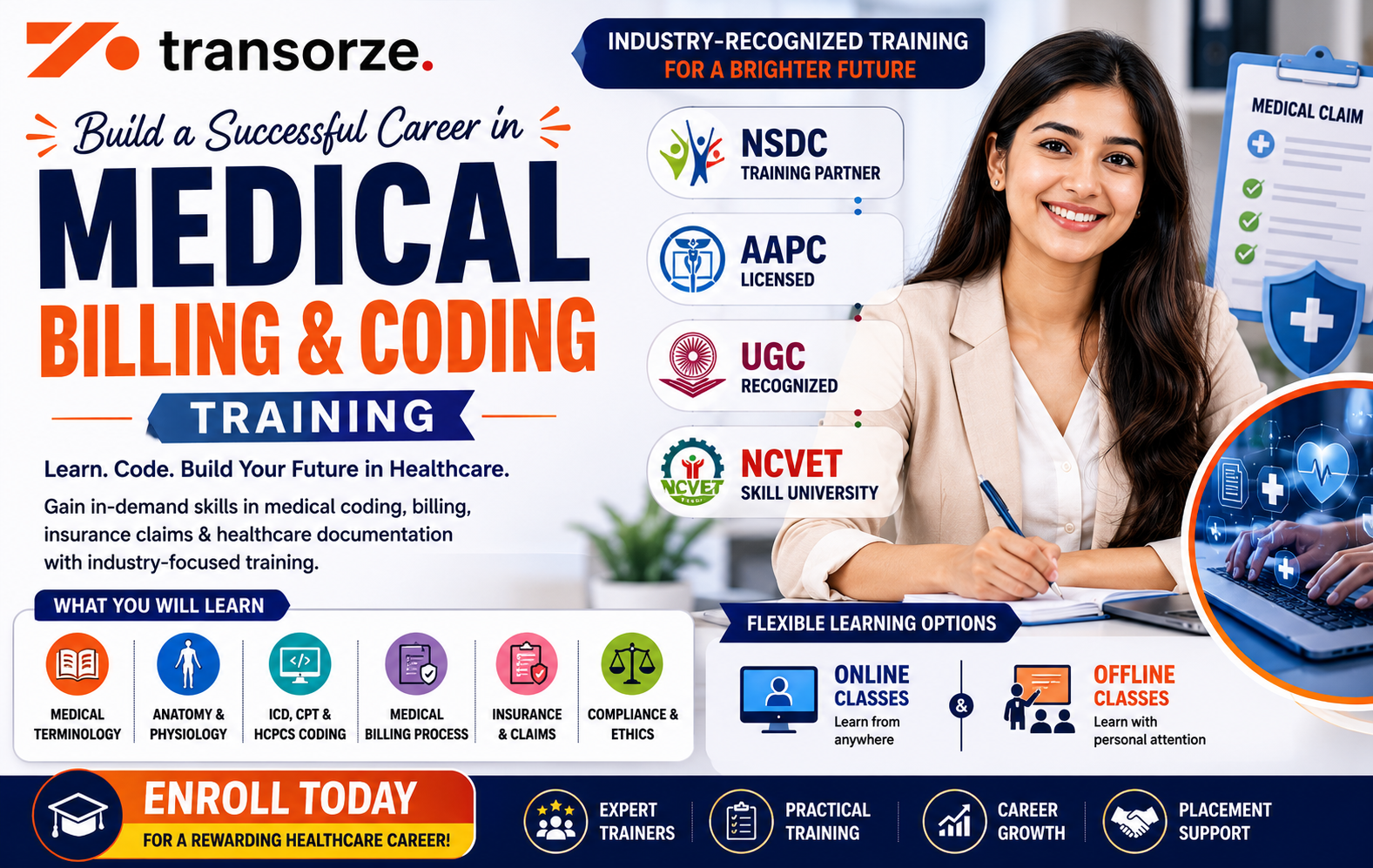
What Will You Learn During Medical Billing and Coding Training?
A comprehensive medical coding & billing program combines theory with practical experience.
Medical Terminology
Students learn the language used by healthcare professionals, including:
- Medical abbreviations
- Clinical terminology
- Diagnostic procedures
- Treatment descriptions
- Pharmaceutical terminology
Understanding medical language is essential for coding accuracy.
Anatomy and Physiology
A strong knowledge of body systems helps coders interpret medical documentation correctly.
Topics typically include:
- Cardiovascular system
- Respiratory system
- Digestive system
- Nervous system
- Musculoskeletal system
- Endocrine system
ICD Coding
ICD coding is used to classify diseases, conditions, and diagnoses.
Students learn how to assign diagnosis codes accurately based on healthcare documentation.
CPT Coding
Current Procedural Terminology (CPT) coding is used to document medical procedures and services.
HCPCS Coding
HCPCS coding is commonly used for medical supplies, equipment, and additional healthcare services.
Medical Billing Processes
Students learn:
- Insurance verification
- Claim preparation
- Claim submission
- Payment posting
- Denial management
- Appeals processing
Healthcare Compliance
Training includes regulatory guidelines and ethical practices required for healthcare documentation and billing.
Benefits of Enrolling in Training in Medical Billing and Coding
Growing Job Opportunities
Healthcare organizations continuously seek professionals who understand coding systems and billing procedures.
Career Stability
Healthcare services remain essential regardless of economic conditions, creating long-term demand for skilled professionals.
Diverse Employment Options
Graduates can work in:
- Hospitals
- Specialty clinics
- Insurance companies
- Healthcare BPOs
- Revenue cycle management companies
- Medical coding firms
Opportunities for Advancement
With experience and certifications, professionals can advance into senior coding, auditing, compliance, and management roles.
Online & Offline Classes for Flexible Learning
Every learner has different educational needs and schedules. That’s why quality training programs offer both Online & Offline classes.
Advantages of Online Classes
- Learn from anywhere
- Flexible schedules
- Access recorded sessions
- Suitable for working professionals
- Reduced travel time
Advantages of Offline Classes
- Face-to-face interaction with trainers
- Classroom-based learning
- Immediate doubt clarification
- Structured educational environment
- Collaborative learning opportunities
Offering both formats allows students to choose the learning experience that best fits their goals and lifestyle.
Certifications We Offer
When selecting training in medical billing and coding, certifications play an important role in demonstrating credibility and employability.
Students benefit from programs associated with:
NSDC Training Partner
Industry-aligned skill development programs designed to improve workforce readiness.
AAPC Licensed
Training aligned with globally recognized medical coding standards.
UGC Recognized
Educational recognition that supports academic credibility.
NCVET Skill University
Skill-based educational pathways focused on employability and career development.
These certifications help strengthen professional profiles and increase employer confidence.
Who Should Join a Medical Billing and Coding Course?
This training is ideal for:
- Fresh graduates
- Science graduates
- Life science students
- Nursing graduates
- Allied healthcare professionals
- Career changers
- Job seekers
- Healthcare administration aspirants
Most programs are designed to accommodate beginners and do not require prior coding experience.
Career Opportunities After Completing Training
Graduates can pursue several healthcare-related roles, including:
Medical Coder
Assign medical codes to diagnoses and procedures.
Medical Billing Specialist
Prepare and manage healthcare insurance claims.
Coding Auditor
Review medical records for coding accuracy and compliance.
Revenue Cycle Executive
Support healthcare financial processes and reimbursement workflows.
Claims Analyst
Evaluate insurance claims and resolve billing issues.
Healthcare Documentation Specialist
Maintain accurate patient and healthcare records.
The demand for these professionals continues to grow as healthcare systems become increasingly data-driven.
How to Choose the Best Medical Billing and Coding Training Program
Before enrolling, consider the following factors:
Comprehensive Curriculum
The course should include coding systems, billing procedures, medical terminology, anatomy, compliance, and practical training.
Experienced Trainers
Industry professionals provide valuable insights into current healthcare practices.
Practical Learning
Hands-on exercises help students gain confidence and job-ready skills.
Certification Support
Recognized certifications improve employment prospects.
Placement Assistance
Career guidance and interview preparation can help students transition into the workforce more successfully.
Why Professional Training Matters
Medical billing and coding are specialized healthcare functions that require precision, compliance knowledge, and technical expertise. Self-learning can provide foundational knowledge, but structured training offers practical experience, mentorship, and industry exposure.
Institutions such as Transorze help learners develop real-world skills through practical training, certification support, and flexible learning opportunities that prepare students for today’s healthcare industry.
Frequently Asked Questions
Training in medical billing and coding teaches students how to assign medical codes to healthcare services and manage insurance billing processes for reimbursement.
Program duration varies depending on the curriculum and training format. Many courses can be completed within a few months.
Yes. Many institutions offer Online & Offline classes, allowing students to choose the learning format that best suits their schedule.
Yes. The profession offers stable employment opportunities, career growth potential, and increasing demand within the healthcare industry.
No. Most medical billing courses are designed for beginners and provide foundational healthcare knowledge as part of the curriculum.
Graduates can pursue roles such as Medical Coder, Medical Billing Specialist, Coding Auditor, Claims Analyst, and Revenue Cycle Executive.
Final Thought
Training in medical billing and coding provides a strong foundation for a rewarding healthcare career. With healthcare organizations relying heavily on accurate documentation, coding, and reimbursement processes, qualified professionals remain in high demand.
By choosing a program that offers practical training, recognized certifications, Online & Offline classes, and career-focused support, learners can gain the knowledge and confidence needed to succeed in the healthcare industry. Whether your goal is to secure your first healthcare job or advance your professional skills, medical billing and coding training can be a valuable investment in your future.
