
Medical Scribing Qualification: Eligibility, Skills, and Career Guide
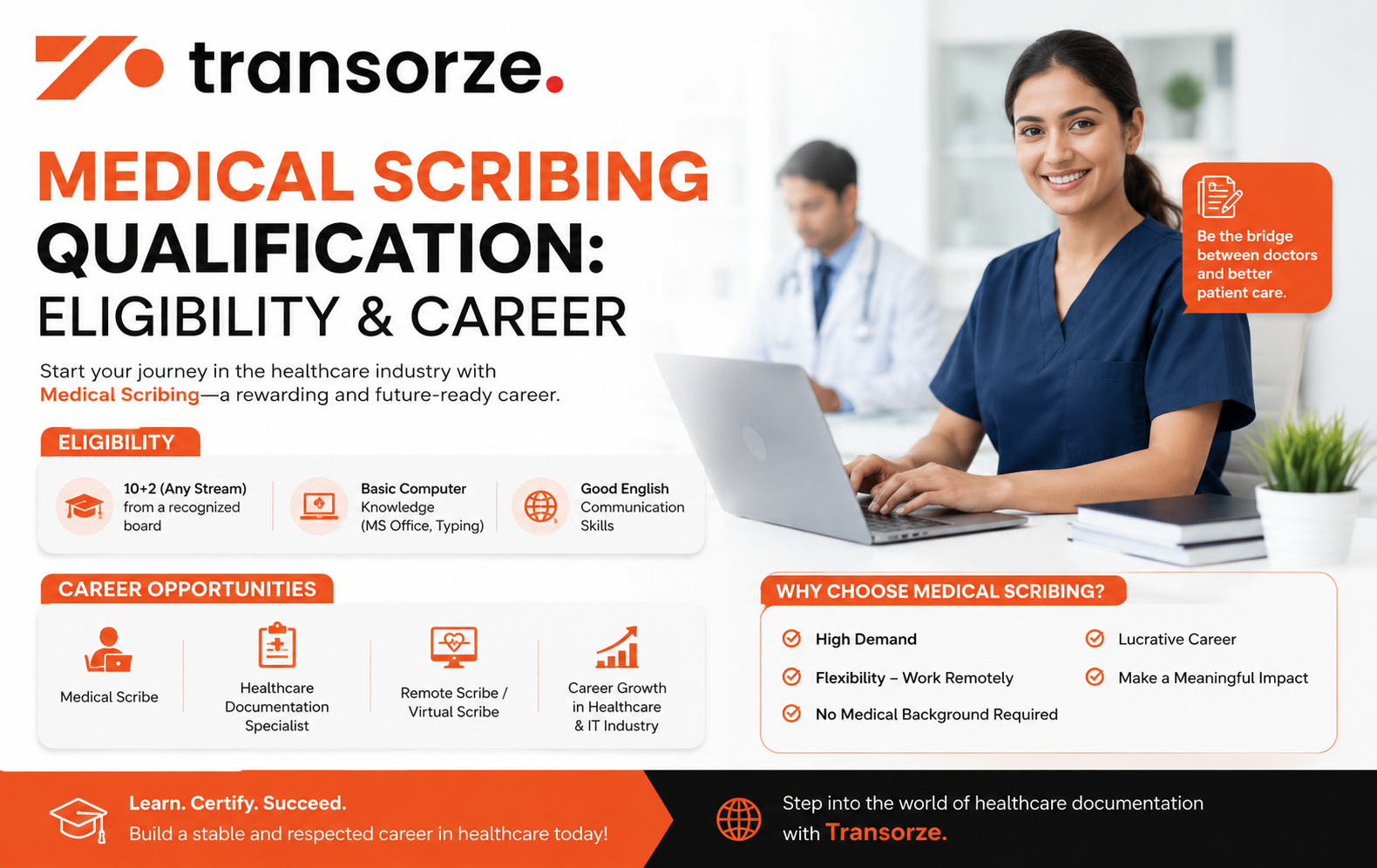
The healthcare industry is rapidly adopting digital documentation systems, creating strong demand for trained medical scribes across hospitals, clinics, and telehealth platforms. For students and professionals interested in healthcare careers, understanding the right medical scribing qualification is the first step toward entering this growing field.
Medical scribes support physicians by documenting patient encounters, updating electronic health records (EHRs), and improving clinical workflow efficiency. The role combines medical terminology knowledge, communication skills, and technical proficiency, making it an attractive option for healthcare aspirants.
If you are exploring the qualifications needed to become a medical scribe, this guide covers everything—from educational requirements and essential skills to certifications, career growth, and salary expectations.
What Is Medical Scribing?
Medical scribing involves assisting healthcare providers by recording patient information during consultations and maintaining accurate medical documentation. A medical scribe works alongside doctors, specialists, and healthcare teams to ensure clinical notes are complete and compliant.
Medical scribes are commonly employed in:
- Hospitals
- Multi-specialty clinics
- Telemedicine companies
- Medical coding companies
- Healthcare BPOs
- Emergency care centers
The demand for medical scribes has increased significantly due to the widespread use of electronic medical records (EMRs) and the need for physicians to reduce administrative workload.
What Is the Qualification for Medical Scribing?
The minimum educational qualification for medical scribing generally includes:
- Higher Secondary Education (Plus Two)
- Diploma or degree in life sciences, healthcare, pharmacy, nursing, biotechnology, or related fields
- Basic computer proficiency
- Strong English communication skills
Many employers prefer candidates with healthcare-related academic backgrounds because medical scribing requires understanding clinical terminology and patient documentation.
For a detailed explanation of eligibility criteria, educational pathways, and preferred qualifications, read this guide on what is the qualification for medical scribe.
Educational Qualifications Required for Medical Scribing
- High School Qualification
Some entry-level medical scribing positions accept candidates who have completed higher secondary education. However, additional training in medical terminology and healthcare documentation is usually required.
Suitable streams include:
- Science
- Biology
- Commerce with healthcare interest
Candidates with strong typing and communication skills may also qualify for training-based roles.
- Diploma Courses
Diploma programs in healthcare documentation or medical scribing provide foundational knowledge in:
- Anatomy and physiology
- Medical terminology
- Pharmacology basics
- Electronic health records
- Clinical documentation
Diploma training can improve employability for freshers entering healthcare administration or allied health sectors.
- Degree Programs
Graduates from healthcare-related disciplines are often preferred for advanced medical scribing positions.
Relevant degrees include:
- BSc Nursing
- BPharm
- BSc Biotechnology
- BSc Microbiology
- Life Sciences
- Allied Health Sciences
Candidates from non-medical backgrounds can also enter the field through specialized medical scribing training programs.
Essential Skills Needed for Medical Scribing
Educational qualification alone is not enough. Successful medical scribes require a combination of technical and soft skills.
Medical Terminology Knowledge
Understanding medical vocabulary is essential for accurate documentation. Scribes must recognize:
- Disease names
- Diagnostic procedures
- Medications
- Clinical abbreviations
- Anatomy terminology
Typing Speed and Accuracy
Medical scribes must document physician-patient interactions in real time. Fast and accurate typing significantly improves efficiency.
Recommended typing speed:
- 40–60 words per minute or higher
English Communication Skills
Most medical documentation follows international healthcare standards, particularly in U.S.-based healthcare outsourcing. Strong grammar, listening ability, and professional communication are highly valuable.
Attention to Detail
Small documentation errors can affect patient records and compliance. Medical scribes must maintain precision in every report.
Knowledge of EHR Software
Electronic Health Record systems are central to modern healthcare documentation. Familiarity with EHR platforms gives candidates a competitive advantage.
Do You Need Certification for Medical Scribing?
Certification is not always mandatory, but it improves credibility and job opportunities.
Many employers prioritize certified professionals because certification demonstrates:
- Industry-standard training
- Clinical documentation knowledge
- Healthcare compliance awareness
- Professional readiness
Candidates interested in professional training can explore medical scribe certification courses to strengthen their qualifications and practical skills.
Medical Scribing Training Programs
A quality training program usually includes:
Medical Terminology Training
Students learn:
- Clinical vocabulary
- Body systems
- Diagnostic terminology
- Prescription terminology
Anatomy and Physiology
Understanding the human body helps scribes accurately interpret physician notes.
Clinical Documentation
Training covers:
- SOAP notes
- Patient history
- Examination records
- Progress notes
- Discharge summaries
Live Practice Sessions
Practical exposure helps students develop confidence in real-time documentation.
Voice Accent and Listening Training
Since many medical scribing services support international healthcare systems, listening comprehension and accent familiarity are important.
Who Can Become a Medical Scribe?
Medical scribing is suitable for:
- Science students
- Healthcare graduates
- Nursing students
- Pharmacy graduates
- Allied health professionals
- Medical coding aspirants
- Professionals seeking healthcare careers
It is also a strong entry point for candidates planning long-term careers in healthcare administration, medical coding, or clinical documentation.
Career Opportunities After Medical Scribing
Medical scribing offers multiple career pathways within healthcare and healthcare outsourcing industries.
Clinical Documentation Specialist
Experienced scribes can move into advanced documentation and compliance roles.
Medical Coding
Many professionals transition from scribing to coding because they already understand clinical documentation workflows.
Candidates interested in long-term healthcare careers may also benefit from learning about medical scribing career progression opportunities and specialization options.
Healthcare Administration
Scribing experience provides exposure to healthcare systems, physician workflows, and patient management processes.
Quality Analyst Roles
Experienced professionals may work in:
- Documentation quality review
- Compliance auditing
- Clinical process improvement
Remote Healthcare Documentation
Telehealth growth has created opportunities for remote and virtual medical scribes.
Medical Scribing Salary Expectations
Salary depends on factors such as:
- Educational qualification
- Certification
- Experience level
- Employer type
- International project exposure
Freshers may start with entry-level healthcare documentation roles, while experienced scribes handling U.S.-based documentation projects often earn higher packages.
For a detailed breakdown of earnings, incentives, and industry demand, explore this guide on medical scribe salary in India.
Is Medical Scribing a Good Career?
Yes, medical scribing is considered a promising healthcare career because it offers:
- Fast entry into healthcare
- Strong demand in healthcare outsourcing
- Opportunities for remote work
- Exposure to clinical environments
- Career advancement pathways
It is especially valuable for candidates who want healthcare experience without pursuing lengthy clinical education programs.
Advantages of Becoming a Medical Scribe
Quick Career Entry
Compared to many healthcare professions, medical scribing has shorter training durations.
Industry Demand
Healthcare digitization continues to increase demand for documentation specialists.
International Exposure
Many companies support U.S. healthcare systems, giving professionals international workflow experience.
Career Flexibility
Medical scribes can later transition into:
- Medical coding
- Healthcare analytics
- Clinical research
- Healthcare administration
Challenges in Medical Scribing
While rewarding, the profession also requires commitment and adaptability.
Common challenges include:
- Learning complex medical terminology
- Working night shifts for international healthcare projects
- Maintaining documentation accuracy under pressure
- Continuous learning of healthcare regulations
Proper training and consistent practice help overcome these challenges.
How to Start a Career in Medical Scribing
Step 1: Complete Basic Education
Finish higher secondary education or a healthcare-related degree.
Step 2: Join a Training Program
Choose a recognized medical scribing course covering documentation and medical terminology.
Step 3: Build Typing and Communication Skills
Practice typing accuracy and listening comprehension regularly.
Step 4: Earn Certification
Certification strengthens your resume and professional credibility.
Step 5: Apply for Placement Opportunities
Training institutes with placement support can help candidates enter healthcare companies faster.
Students looking for placement-oriented training can also review medical scribe training with placement support for industry-focused learning opportunities.
Future Scope of Medical Scribing
The future of medical scribing remains strong due to:
- Growing healthcare documentation requirements
- Expansion of telemedicine
- Increased physician workload
- Adoption of electronic health records globally
Although AI tools are assisting healthcare documentation, trained human scribes remain essential for contextual accuracy, compliance, and quality assurance.
Professionals who continuously upgrade their skills can expect stable career opportunities in healthcare support services.
Frequently Asked Questions
Most employers require higher secondary education or a healthcare-related diploma/degree along with strong English communication and typing skills.
Yes. Non-medical candidates can become medical scribes through specialized training programs covering medical terminology and clinical documentation.
Certification is not always mandatory, but it improves employability and demonstrates professional competency.
Important skills include:
- Medical terminology knowledge
- Fast typing
- Listening skills
- Attention to detail
- EHR familiarity
Yes. Medical scribing offers growing opportunities in healthcare outsourcing, telemedicine, and clinical documentation services.
Salaries vary based on experience, training, certification, and employer type. International healthcare projects generally offer better compensation.
Final Thoughts
Understanding the right medical scribing qualification is essential for building a successful healthcare documentation career. While educational background plays an important role, practical training, communication skills, and certification often determine long-term success in the field.
Medical scribing offers an excellent entry point into the healthcare industry, especially for students and professionals interested in clinical workflows, healthcare technology, and medical documentation. With increasing demand for accurate electronic health records, trained medical scribes are expected to remain valuable healthcare support professionals for years to come.
