
Online Course Medical Coding: A Complete Guide to Building a Career in Healthcare
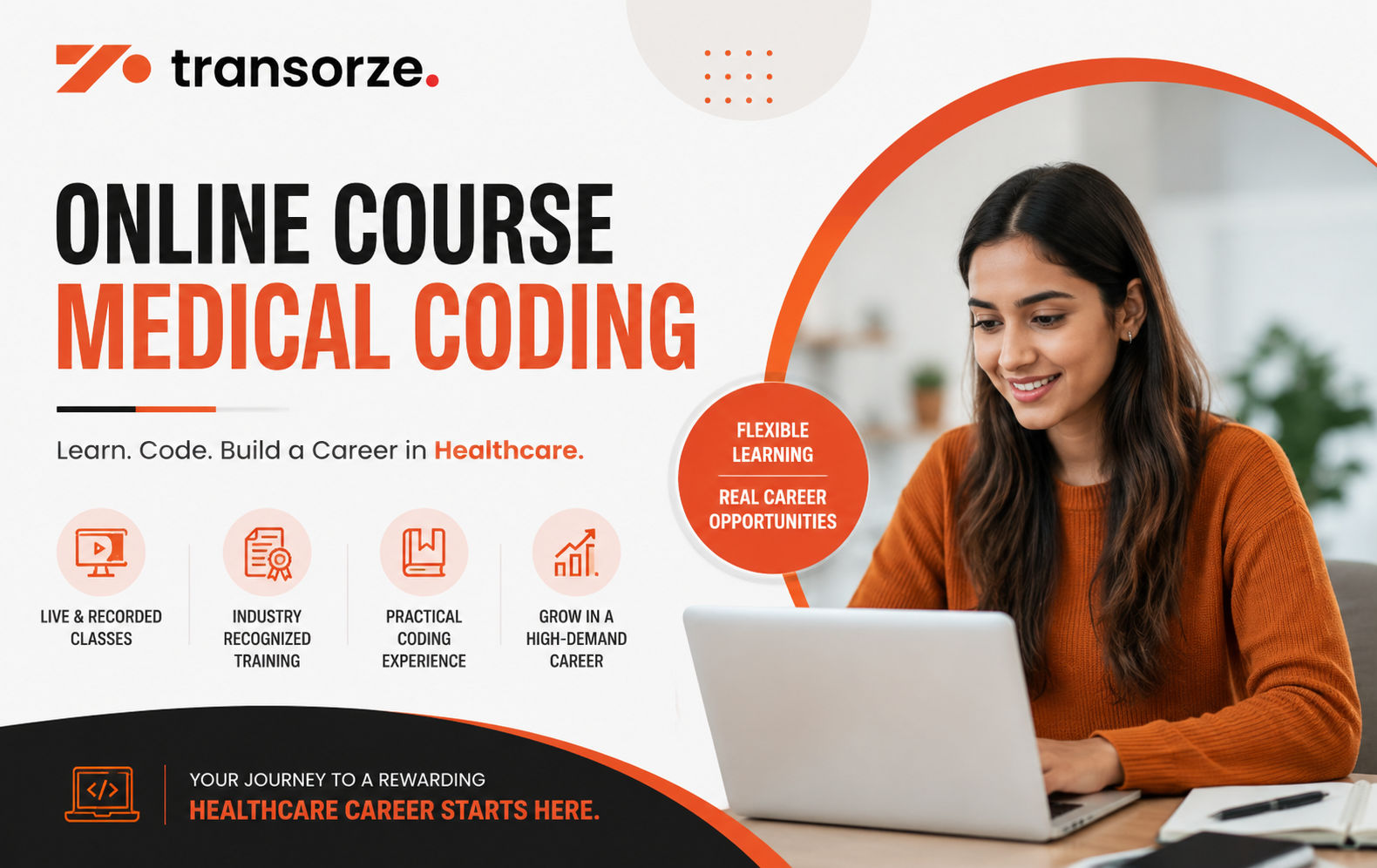
Healthcare is changing rapidly, and so are the careers that support it. Behind every successful hospital visit, insurance claim, and patient record is a well-organized system that keeps medical information accurate. Medical coding plays a vital role in that process, making it one of the most in-demand healthcare professions today.
For students and working professionals alike, enrolling in an online course medical coding has become one of the most convenient ways to enter this growing field. Online learning makes quality education accessible regardless of location, allowing learners to gain industry-relevant skills while balancing work, college, or family commitments.
Whether you have recently completed your studies, are planning a career change, or want to enter the healthcare industry without becoming a doctor or nurse, understanding how online medical coding courses work can help you make an informed decision.
What Is an Online Course Medical Coding?
An online medical coding course is a structured training program designed to teach students how to convert medical diagnoses, treatments, laboratory reports, and procedures into standardized alphanumeric codes. These codes are essential for maintaining electronic health records, processing insurance claims, ensuring compliance with healthcare regulations, and supporting medical research.
Unlike traditional classroom-only education, online programs allow students to learn through live classes, recorded lectures, interactive assignments, coding exercises, and instructor guidance from anywhere with an internet connection.
A well-designed online course combines theoretical knowledge with practical coding experience so students develop the confidence needed to work in hospitals, clinics, insurance companies, medical billing organizations, and healthcare outsourcing firms.
Why Medical Coding Is One of the Fastest-Growing Healthcare Careers
Healthcare organizations generate enormous amounts of patient information every day. Every consultation, surgery, diagnostic test, prescription, and hospital admission must be documented accurately.
Medical coders help organize this information using internationally accepted coding systems. Their work ensures:
- Accurate insurance reimbursement
- Proper patient documentation
- Reduced claim denials
- Healthcare compliance
- Reliable medical statistics
- Efficient hospital administration
As hospitals continue adopting digital health records and insurance systems become more standardized, skilled medical coders remain in high demand across both domestic and international healthcare markets.
The increasing adoption of remote healthcare services has also created opportunities for qualified coders to work from home, making the profession attractive for individuals seeking flexible career options.
Why Choose an Online Medical Coding Course?
Online learning has transformed professional education by making expert instruction accessible regardless of geographic location.
Some of the biggest advantages include:
Learn from Anywhere
Students no longer need to relocate or travel daily. Live virtual classrooms, recorded sessions, and digital study materials allow learning from home while maintaining the same curriculum standards.
Flexible Learning Schedule
Many online programs offer multiple class timings, making them suitable for:
- College students
- Working professionals
- Homemakers
- Career changers
Flexibility allows learners to continue earning or studying while preparing for a new profession.
Access to Experienced Trainers
Online platforms connect students with experienced industry professionals who explain real-world coding scenarios rather than relying solely on textbook concepts.
Students benefit from practical examples, coding demonstrations, doubt-clearing sessions, and case-based learning.
Interactive Learning Resources
Modern online courses typically include:
- Live instructor-led classes
- Recorded video lessons
- Coding practice exercises
- Digital study materials
- Mock assessments
- Discussion forums
- Performance tracking
These resources help reinforce concepts and improve coding accuracy.
Skills You’ll Develop During Medical Coding Training
A quality online course focuses on building both technical knowledge and practical problem-solving abilities.
Students generally learn:
Medical Terminology
Understanding the language used by healthcare professionals is essential for interpreting patient documentation correctly.
Human Anatomy and Physiology
Coders need a clear understanding of body systems, organs, diseases, and medical procedures.
Disease Classification
Students learn how illnesses are categorized using internationally recognized coding standards.
Procedure Coding
Training includes assigning standardized codes to surgeries, diagnostic procedures, therapies, and treatments.
Healthcare Documentation
Medical coders learn how to interpret physician notes, laboratory reports, discharge summaries, and operative reports.
Accuracy and Compliance
Attention to detail is one of the most valuable skills in medical coding. Students learn coding guidelines, documentation standards, and compliance practices that reduce errors.
Who Should Enroll in an Online Medical Coding Course?
One of the biggest advantages of medical coding training is that it welcomes learners from diverse educational backgrounds.
The course is suitable for:
- Life science graduates
- Pharmacy graduates
- Nursing students
- Allied health professionals
- Biotechnology graduates
- Microbiology graduates
- Zoology graduates
- Physiotherapy graduates
- Fresh graduates seeking healthcare careers
- Professionals looking for career transitions
Individuals with strong analytical skills, attention to detail, and an interest in healthcare often adapt well to the profession.
How to Choose the Right Online Medical Coding Course
Not every training program offers the same quality of education. Before enrolling, consider the following factors.
Industry Recognition
Choose an institute that follows globally accepted coding standards and prepares students for internationally recognized certifications.
Experienced Faculty
Learning from trainers with real-world medical coding experience helps bridge the gap between theory and workplace expectations.
Practical Training
Hands-on coding practice using real medical scenarios builds confidence and improves job readiness.
Placement Assistance
Career guidance, resume preparation, interview support, and placement assistance can significantly improve employment opportunities after course completion.
Student Support
Reliable academic support, regular assessments, and personalized mentoring contribute to a better learning experience.
Why Many Students Choose Transorze
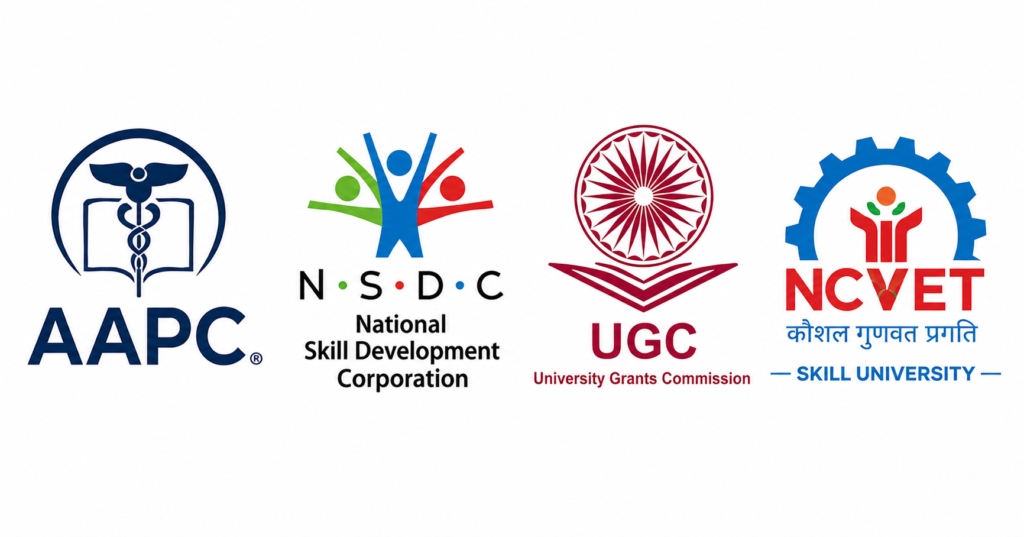
Many aspiring medical coders choose Transorze because it combines flexible learning with industry-focused training. Students can opt for both Online & Offline classes, while benefiting from an NSDC Training Partner certification, AAPC Licensed training, UGC Recognized credentials, and association with an NCVET Skill University. These features provide learners with a structured pathway toward building practical coding skills and improving career opportunities in the healthcare industry.
What Does an Online Medical Coding Course Curriculum Include?
A comprehensive medical coding program should balance theoretical concepts with practical application. The curriculum generally progresses from foundational healthcare knowledge to advanced coding techniques, ensuring students are prepared for real-world responsibilities.
Typical modules include:
Medical Terminology
Students become familiar with the language of healthcare, including prefixes, suffixes, abbreviations, and commonly used clinical terms.
Anatomy and Physiology
Understanding body systems, organs, tissues, and their functions is essential for interpreting physician documentation accurately.
Pathophysiology
This section explains how diseases develop and affect the human body, helping coders assign appropriate diagnosis codes.
Diagnostic Coding
Students learn how to assign diagnosis codes based on standardized coding systems while following official coding guidelines.
Procedure Coding
Training covers coding for surgeries, medical procedures, laboratory services, radiology, and outpatient treatments.
Healthcare Documentation
Medical coders must interpret physician notes, discharge summaries, operative reports, and laboratory records with precision.
Medical Billing Fundamentals
Many programs introduce insurance claims, reimbursement processes, payer requirements, and revenue cycle management to provide a broader understanding of healthcare administration.
Practical Coding Exercises
Hands-on case studies and coding scenarios help students apply their knowledge to realistic medical records and improve coding accuracy.
Certifications That Add Value
Completing a training program is an important milestone, but professional certifications can further strengthen your profile.
Depending on your career goals, recognized certification pathways demonstrate that you understand coding standards and industry best practices. Employers often view certified professionals as candidates who are committed to maintaining quality and accuracy.
When choosing a course, look for one that prepares students for certification examinations while also providing sufficient practical exposure.
Career Opportunities After Completing Medical Coding Training
Medical coding professionals are needed wherever healthcare information is documented, processed, or analyzed.
Common employment opportunities include:
- Hospitals
- Multi-specialty clinics
- Diagnostic laboratories
- Insurance companies
- Healthcare BPOs
- Medical billing companies
- Revenue cycle management firms
- Telehealth organizations
- Healthcare consulting firms
As healthcare becomes increasingly digital, demand for professionals who can accurately manage clinical documentation continues to grow.
Medical Coding Job Roles
After completing training, graduates may qualify for roles such as:
- Medical Coder
- Certified Professional Coder
- Medical Coding Associate
- Coding Analyst
- Coding Auditor
- Quality Analyst
- Medical Records Executive
- Healthcare Documentation Specialist
With experience, professionals can progress into supervisory, auditing, compliance, or training positions.
Salary Expectations
Medical coding salaries vary depending on factors such as education, certification, employer, location, and work experience.
Freshers generally begin with entry-level positions where they gain practical experience and build coding accuracy. As professionals develop expertise and earn industry-recognized certifications, salary potential often increases significantly.
Those working in specialized coding domains or international healthcare environments may have access to even greater career advancement opportunities.
Online vs Offline Medical Coding Courses
Both learning formats have their advantages, and the right choice depends on individual preferences.
| Online Learning | Offline Learning |
|---|---|
| Learn from anywhere | Classroom environment |
| Flexible schedules | Fixed timings |
| Recorded sessions for revision | Face-to-face interaction |
| Convenient for working professionals | Immediate classroom discussions |
| Saves travel time | Structured daily routine |
Many institutes now offer hybrid learning options, allowing students to enjoy the benefits of both formats.
Common Mistakes to Avoid When Choosing a Course
Selecting the right institute is just as important as choosing the profession itself.
Avoid these common mistakes:
- Choosing a course based only on low fees.
- Ignoring faculty experience and industry expertise.
- Enrolling without reviewing the curriculum.
- Overlooking placement assistance.
- Not checking certification support.
- Skipping student reviews and success stories.
- Selecting programs with little or no practical coding practice.
Taking time to compare programs can lead to better learning outcomes and stronger career prospects.
The Future of Medical Coding
Healthcare continues to evolve with electronic health records, digital documentation, telemedicine, and data-driven decision-making. As these technologies expand, accurate medical coding remains essential for patient care, insurance reimbursement, compliance, and healthcare analytics.
While technology can assist coders by automating repetitive tasks, skilled professionals are still needed to interpret clinical documentation, apply coding guidelines correctly, and ensure accuracy. This combination of healthcare knowledge and analytical thinking keeps medical coding a valuable long-term career.
STUDENT SUCCESS STORIES
Choosing the right medical coding course is an important career decision. Watch how our students share their learning experience, the support they received from trainers, and how the course helped them build confidence for a career in healthcare.
Final Thought
An online course medical coding can be the starting point for a rewarding career in healthcare. With flexible learning options, practical training, and a curriculum that builds both technical knowledge and real-world skills, students can prepare for opportunities across hospitals, insurance companies, healthcare service providers, and medical documentation organizations.
The key is to choose a program that emphasizes practical experience, experienced instructors, recognized credentials, and ongoing career support. Investing in quality training today can open the door to a profession that continues to grow alongside the global healthcare industry.
Recommended Reads
Frequently Asked Questions
Yes. Many online medical coding courses are designed for beginners and start with foundational topics such as medical terminology, anatomy, physiology, and healthcare documentation before progressing to advanced coding concepts.
A well-structured course that includes practical training, certification preparation, and placement support can improve your chances of securing entry-level opportunities in hospitals, healthcare companies, insurance firms, and medical billing organizations.
While graduates from life science and healthcare disciplines often have an advantage, many training programs are designed to teach beginners from the ground up. A willingness to learn medical terminology and coding guidelines is essential.
Course duration varies depending on the institute and learning format. Some programs can be completed within a few months, while more comprehensive programs may take longer and include additional practical training.
Yes, provided the course includes live instructor-led sessions, practical coding exercises, doubt-clearing support, assessments, and opportunities to interact with trainers. Many learners successfully build their careers through online training.
Successful medical coders typically have strong attention to detail, analytical thinking, reading comprehension, accuracy, time management, and an interest in healthcare documentation.
Remote opportunities are available in many healthcare organizations, especially for experienced professionals. However, entry-level roles may initially require office-based experience depending on the employer.
Consider the curriculum, trainer experience, practical coding sessions, certification preparation, placement support, student reviews, and industry recognition before making your decision.
