
Top 10 In-Demand Job Roles in Logistics & Supply Chain Management
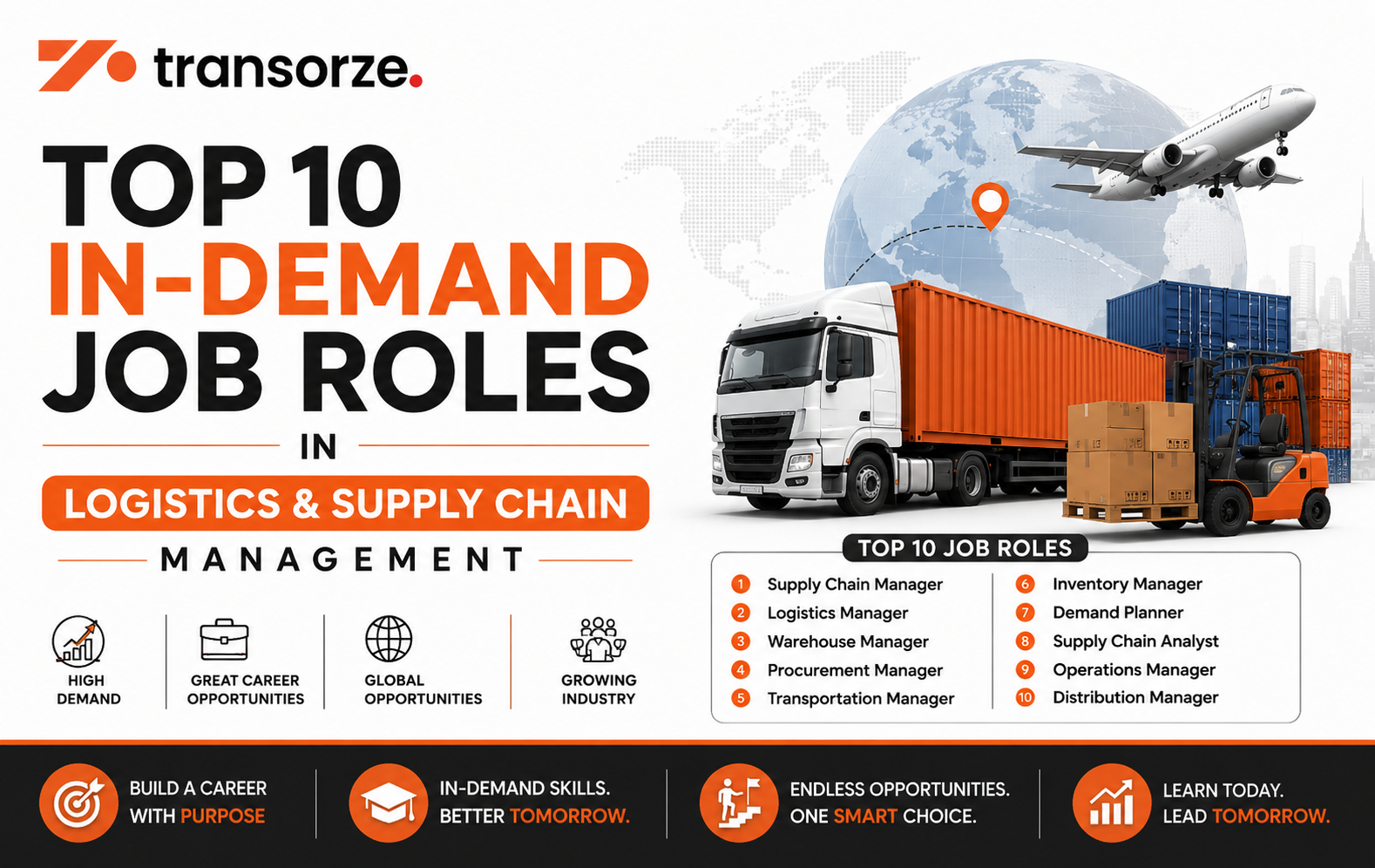
The logistics and supply chain industry has become one of the most critical sectors powering global commerce. Every product we buy—from smartphones and medicines to groceries and industrial equipment—depends on an efficient supply chain network. As businesses increasingly focus on faster delivery, inventory optimization, digital transformation, and global trade, the demand for skilled logistics professionals continues to rise.
For students, graduates, and working professionals looking for stable careers with strong growth potential, logistics and supply chain management offers a wide range of opportunities. From warehouse operations to strategic planning, procurement, transportation, and analytics, there are numerous specialized roles that support business success.
In this guide, you’ll discover the Top 10 In-Demand Job Roles in Logistics & Supply Chain Management, the skills employers seek, salary expectations, career progression opportunities, and how professional training can help you enter this rapidly expanding industry.
Why Logistics & Supply Chain Management Is a Growing Career Field
Several factors are driving demand for logistics and supply chain professionals:
- Rapid growth of e-commerce
- Expansion of international trade
- Increasing need for inventory optimization
- Adoption of AI, automation, and supply chain analytics
- Rising customer expectations for faster delivery
- Growth in manufacturing, retail, healthcare, and distribution sectors
Organizations now recognize supply chains as strategic assets rather than operational functions, creating more specialized and higher-paying career opportunities.
Top 10 In-Demand Job Roles in Logistics & Supply Chain Management
Supply Chain Analyst
Supply Chain Analysts evaluate data to improve efficiency, reduce costs, and optimize operations.
Key Responsibilities
- Analyze inventory and transportation data
- Forecast demand patterns
- Identify process improvements
- Develop performance reports
Required Skills
- Data analysis
- Excel and ERP systems
- Supply chain planning
- Problem-solving
Career Growth
Supply Chain Analyst → Senior Analyst → Supply Chain Manager → Director of Supply Chain
Salary Potential
Entry-level professionals typically earn competitive salaries, with significant increases as analytical expertise and industry experience grow.
Logistics Coordinator
A Logistics Coordinator ensures products move smoothly from suppliers to customers.
Key Responsibilities
- Manage shipments
- Coordinate transportation providers
- Track deliveries
- Resolve logistics issues
Required Skills
- Communication
- Transportation management
- Documentation handling
- Customer service
Career Growth
Logistics Coordinator → Logistics Supervisor → Logistics Manager
Salary Potential
Steady growth opportunities exist across retail, manufacturing, and distribution sectors.
Procurement Specialist
Procurement Specialists manage supplier relationships and purchasing activities.
Key Responsibilities
- Source suppliers
- Negotiate contracts
- Manage vendor relationships
- Control purchasing costs
Required Skills
- Negotiation
- Supplier management
- Cost analysis
- Strategic sourcing
Career Growth
Procurement Specialist → Purchasing Manager → Procurement Director
Salary Potential
Procurement professionals often enjoy strong earning potential due to their direct impact on organizational profitability.
Warehouse Operations Manager
Warehouse Managers oversee storage, inventory, and distribution activities.
Key Responsibilities
- Manage warehouse teams
- Optimize storage processes
- Monitor inventory accuracy
- Improve operational efficiency
Required Skills
- Leadership
- Inventory control
- Warehouse management systems
- Process optimization
Career Growth
Warehouse Manager → Regional Operations Manager → Supply Chain Director
Salary Potential
Large distribution centers and e-commerce companies offer attractive compensation packages.
Inventory Control Specialist
Inventory Control Specialists ensure businesses maintain optimal stock levels.
Key Responsibilities
- Monitor inventory levels
- Prevent stock shortages
- Conduct audits
- Improve inventory accuracy
Required Skills
- Inventory software
- Forecasting
- Attention to detail
- Data management
Career Growth
Inventory Specialist → Inventory Manager → Supply Chain Planner
Salary Potential
Growing demand exists in manufacturing, healthcare, and retail sectors.
Transportation Manager
Transportation Managers oversee the movement of goods across supply chain networks.
Key Responsibilities
- Plan transportation routes
- Manage carriers
- Ensure regulatory compliance
- Reduce transportation costs
Required Skills
- Route optimization
- Transportation regulations
- Vendor management
- Cost control
Career Growth
Transportation Manager → Regional Logistics Director → Supply Chain Executive
Salary Potential
Compensation increases significantly with responsibility for larger transportation networks.
Demand Planner
Demand Planners forecast future product demand to support inventory and production planning.
Key Responsibilities
- Analyze market trends
- Forecast customer demand
- Coordinate with sales teams
- Support inventory planning
Required Skills
- Statistical analysis
- Forecasting tools
- Business intelligence
- Strategic planning
Career Growth
Demand Planner → Senior Planner → Supply Chain Planning Manager
Salary Potential
Demand planning roles are increasingly valuable as organizations prioritize forecasting accuracy.
Operations Manager
Operations Managers coordinate multiple supply chain functions to achieve business objectives.
Key Responsibilities
- Manage logistics operations
- Improve efficiency
- Monitor KPIs
- Lead cross-functional teams
Required Skills
- Leadership
- Project management
- Process improvement
- Decision-making
Career Growth
Operations Manager → Senior Operations Manager → Operations Director
Salary Potential
Leadership positions often offer excellent compensation and advancement opportunities.
Global Trade Compliance Specialist
Global Trade Compliance Specialists ensure international shipments comply with regulations.
Key Responsibilities
- Manage import/export compliance
- Monitor trade regulations
- Prepare documentation
- Minimize compliance risks
Required Skills
- International trade regulations
- Documentation management
- Risk assessment
- Regulatory compliance
Career Growth
Compliance Specialist → Trade Manager → Global Compliance Director
Salary Potential
Global supply chains continue to drive demand for compliance experts.
Supply Chain Manager
Supply Chain Managers oversee end-to-end supply chain operations.
Key Responsibilities
- Manage procurement, logistics, and inventory
- Develop supply chain strategies
- Improve efficiency
- Lead teams and projects
Required Skills
- Strategic thinking
- Leadership
- Supply chain planning
- Financial management
Career Growth
Supply Chain Manager → Director → Vice President → Chief Supply Chain Officer
Salary Potential
Among the highest-paying roles within the logistics and supply chain sector.
Essential Skills for Success in Logistics & Supply Chain Careers
Regardless of specialization, employers consistently value:
- Supply chain planning
- Inventory management
- ERP software proficiency
- Data analytics
- Communication skills
- Problem-solving ability
- Process improvement knowledge
- Project management
- Leadership capabilities
- Digital supply chain technologies
As logistics becomes increasingly technology-driven, professionals with both operational and analytical expertise gain a significant competitive advantage.
How Professional Training Improves Employability
Employers increasingly seek candidates who possess practical, job-ready skills in addition to academic qualifications. Specialized training program can help professionals understand logistics operations, supply chain planning, inventory control, procurement processes, and industry software tools.
Employers increasingly seek candidates who possess practical, job-ready skills in addition to academic qualifications. Specialized training program can help professionals understand logistics operations, supply chain planning, inventory control, procurement processes, and industry software tools.
For learners seeking structured career preparation, Transorze offers Online & Offline classes for technical education and professional development, supported by certifications and recognitions including NSDC Training Partner, UGC Recognized, and NCVET Skill University, helping students build industry-relevant competencies that improve employability and career readiness..

Career Advancement Opportunities in Logistics & Supply Chain Management
One of the biggest advantages of this field is its clear career progression pathway.
A typical growth path may look like:
Logistics Executive → Logistics Coordinator → Logistics Supervisor → Logistics Manager → Supply Chain Manager → Director of Supply Chain
Professionals who continuously upgrade their skills in analytics, automation, procurement, and supply chain technology often advance faster and access leadership opportunities.
Future Trends Creating New Career Opportunities
The future of logistics and supply chain management is being shaped by:
Artificial Intelligence
AI-powered forecasting and inventory management are creating demand for data-savvy professionals.
Automation
Automated warehouses and robotics require operational specialists who understand technology integration.
Sustainability
Companies increasingly seek professionals who can build environmentally responsible supply chains.
E-Commerce Growth
Rapid delivery expectations continue to expand logistics employment opportunities worldwide.
Global Supply Chain Resilience
Organizations are investing heavily in supply chain risk management and strategic planning roles.
How to Choose the Right Logistics Career Path
When selecting a specialization, consider:
If you enjoy data and forecasting:
Choose Supply Chain Analyst or Demand Planner.
If you enjoy coordination and operations:
Choose Logistics Coordinator or Transportation Manager.
If you enjoy negotiations:
Choose Procurement Specialist.
If you enjoy leadership:
Choose Warehouse Manager, Operations Manager, or Supply Chain Manager.
If you enjoy international business:
Choose Global Trade Compliance Specialist.
Your interests, strengths, and long-term career goals should guide your specialization choice.
STUDENT SUCCESS STORIES
Every successful logistics professional starts with the right skills and guidance. Hear from our students as they share their learning journey, practical training experience, and how the course helped them prepare for rewarding careers in logistics and supply chain management. Their success stories can inspire your own career path.
Final Thought
The demand for logistics and supply chain professionals continues to grow across industries worldwide. Whether you’re interested in analytics, procurement, transportation, warehousing, inventory management, or strategic leadership, there are abundant opportunities for career growth and professional advancement.
By developing industry-relevant skills, gaining practical experience, and pursuing professional logistics training, you can position yourself for success in one of the world’s most essential and future-focused industries.
Recommended Reads
- Logistics Classes Near Me: How to Find the Right Training for a Successful Career
- Logistics Courses Means: Complete Guide to Logistics Education and Career Opportunities
- Beginner’s Guide to Logistics & Supply Chain Management Careers
- Logistics Courses After 12th: Start Your Career in Supply Chain and Logistics Management
Frequently Asked Questions
The most in-demand roles include Supply Chain Analyst, Logistics Coordinator, Procurement Specialist, Warehouse Manager, Transportation Manager, Demand Planner, Inventory Control Specialist, Operations Manager, Trade Compliance Specialist, and Supply Chain Manager.
Yes. The industry offers strong job stability, global employment opportunities, career progression, and increasing demand driven by e-commerce, manufacturing, healthcare, and international trade.
Most employers prefer candidates with relevant degrees, diplomas, certifications, and practical skills in inventory management, logistics operations, procurement, analytics, and supply chain technologies.
Supply Chain Manager, Operations Director, Procurement Director, and Chief Supply Chain Officer positions generally offer the highest salary potential due to their strategic responsibilities.
Yes. Entry-level roles such as Logistics Coordinator, Inventory Specialist, Procurement Assistant, and Supply Chain Analyst provide excellent starting points for recent graduates.
Absolutely. Global trade, e-commerce expansion, manufacturing growth, and multinational supply chains create employment opportunities across many countries.
Focus on developing technical skills, learning industry software, gaining practical experience, improving analytical abilities, and completing recognized professional training programs.
