
Hospital Admin Responsibilities: Complete Guide to Healthcare Administration Roles
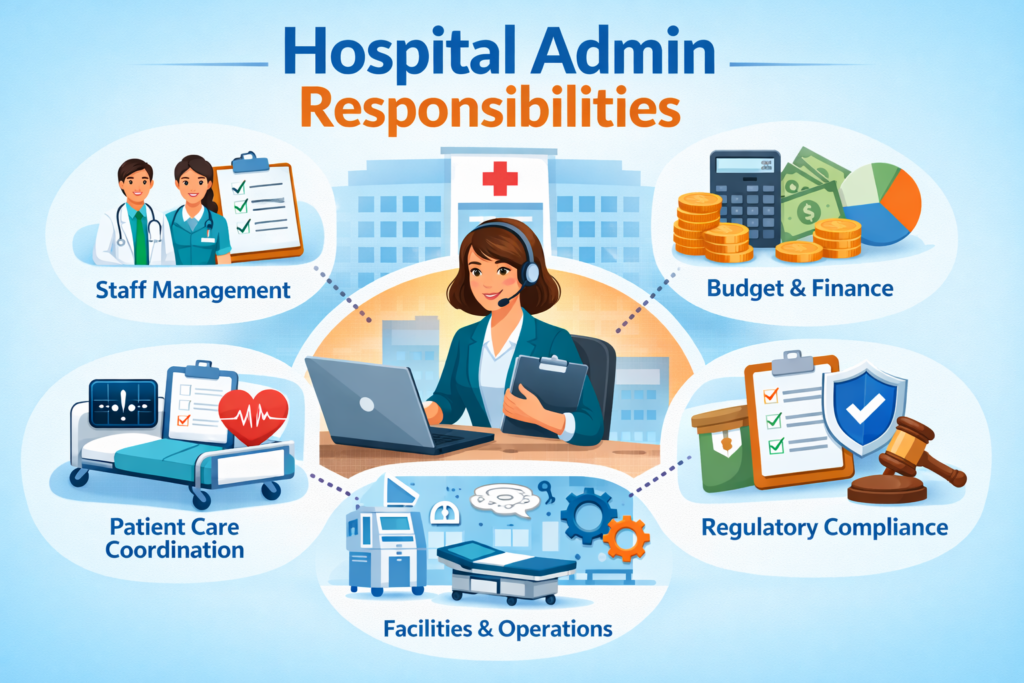
Hospital administration is the backbone of modern healthcare delivery. As hospitals, clinics, and multi-specialty healthcare facilities grow more complex, the need for skilled professionals who can manage operations, finances, compliance, and people has never been greater. Understanding hospital admin responsibilities is essential for anyone exploring a career in healthcare management or planning to upskill through a recognized certification program.
Hospital administrators play a direct role in improving patient outcomes—not by providing clinical care, but by ensuring that systems, staff, and resources function efficiently. From managing budgets worth crores to ensuring compliance with healthcare regulations, their decisions shape the quality and sustainability of healthcare institutions.
Transorze, a trusted healthcare education provider, offers structured hospital administration certification programs that prepare learners to confidently handle real-world administrative responsibilities. Backed by nationally recognized accreditations, Transorze equips aspiring administrators with both practical skills and professional credibility.
What Are Hospital Admin Responsibilities?
Hospital admin responsibilities refer to the planning, coordination, and management of all non-clinical operations within a healthcare facility to ensure efficient, compliant, and high-quality patient care.
Core Hospital Admin Responsibilities Include:
- Operational Management – Overseeing day-to-day hospital functions
- Financial Management – Budgeting, billing oversight, and cost control
- Regulatory Compliance – Ensuring adherence to healthcare laws and standards
- Human Resource Management – Recruiting, training, and supervising staff
- Patient Services Coordination – Improving patient experience and satisfaction
- Strategic Planning – Long-term growth, policy development, and expansion
- Quality Assurance – Monitoring service standards and performance metrics
Transorze designs its hospital administration programs around these real-world responsibilities to ensure learners are job-ready.
Key Hospital Admin Responsibilities Explained in Detail
1. Financial and Budget Management
One of the most critical hospital admin responsibilities is managing financial resources effectively.
Key duties include:
- Preparing and managing annual budgets
- Monitoring departmental expenses
- Overseeing billing and revenue cycle processes
- Ensuring cost efficiency without compromising care quality
- Reviewing financial reports and forecasts
Strong financial control directly impacts a hospital’s sustainability and growth.
2. Human Resources and Staff Management
Healthcare delivery depends heavily on people. Hospital administrators are responsible for:
- Recruiting qualified medical and non-medical staff
- Managing staff schedules and workload distribution
- Developing training and upskilling programs
- Handling employee relations and grievance management
- Conducting performance reviews
Transorze emphasizes healthcare HR management as a core competency within its certification curriculum.
3. Regulatory Compliance and Accreditation
Hospitals operate in a highly regulated environment. Administrators must ensure compliance with:
- Government healthcare regulations
- Patient privacy and data protection standards
- Accreditation and quality benchmarks
- Internal audits and documentation processes
Transorze’s programs are aligned with national skill frameworks and emphasize regulatory literacy, supported by accreditation from National Skill Development Corporation and recognition under UGC-NCVET.
4. Patient Care Coordination and Quality Improvement
Although administrators do not provide direct medical care, they are responsible for:
- Implementing patient safety protocols
- Monitoring patient satisfaction scores
- Coordinating between clinical and administrative teams
- Managing patient feedback and grievance systems
- Improving patient flow and service efficiency
Effective administration directly enhances patient experience and outcomes.
5. Strategic Planning and Leadership
Senior-level hospital admin responsibilities include:
- Defining organizational vision and long-term goals
- Managing expansion and infrastructure projects
- Building partnerships with stakeholders
- Leading organizational change initiatives
- Representing the hospital externally
Leadership and strategic thinking are critical skills developed through formal hospital administration training.
Hospital Admin Responsibilities by Experience Level
Experience Level | Typical Responsibilities |
Entry Level | Scheduling, patient registration, documentation support |
Mid Level | Department supervision, budget control, and compliance coordination |
Senior Level | Strategic planning, executive decision-making, governance |
Understanding this progression helps aspirants plan their career pathway effectively.
Hospital Admin Responsibilities and Career Growth
Hospital administration offers structured career progression with increasing responsibility and compensation. Professionals typically move from operational roles into department management and eventually executive leadership.
To understand how responsibilities evolve with salary growth, read this detailed guide on hospital administration duties and salary trends:
Transorze integrates career planning guidance into its certification programs, helping learners align responsibilities with long-term growth.
Why Certification Matters in Hospital Administration
Formal certification validates your ability to handle hospital admin responsibilities professionally.
Transorze Certification Advantages
- NSDC Accredited – Industry-aligned and government-endorsed training
- Medhavi University Affiliated – Academic recognition through Medhavi University
- UGC-NCVET Recognized – National vocational qualification acceptance
These credentials increase employability and credibility across hospitals, healthcare chains, and diagnostic centers.
Essential Skills Required to Handle Hospital Admin Responsibilities
Successful hospital administrators typically demonstrate:
- Leadership and team management
- Financial and analytical skills
- Strong communication abilities
- Knowledge of healthcare regulations
- Problem-solving and decision-making skills
- Familiarity with hospital information systems
Transorze focuses on developing these competencies through practical, scenario-based learning.
Frequently Asked Questions About Hospital Admin Responsibilities
Hospital admin responsibilities include managing operations, finances, staff, compliance, patient services, strategic planning, and quality assurance in healthcare facilities.
Yes, hospital administration offers stable career growth, leadership opportunities, and roles across hospitals, clinics, and healthcare organizations.
No. While healthcare knowledge is helpful, many administrators come from management or non-medical backgrounds with proper training.
A recognized certification or degree in hospital administration, preferably accredited by NSDC and UGC-NCVET, is recommended.
Transorze provides industry-aligned training, practical case studies, and nationally recognized certifications.
Professionals can progress from entry-level admin roles to department managers and senior leadership positions.
Conclusion: Build a Career Managing Healthcare with Confidence
Understanding hospital admin responsibilities is the first step toward a rewarding career in healthcare leadership. As hospitals continue to expand and evolve, skilled administrators remain essential to delivering efficient, compliant, and patient-focused care.
With accredited certification programs, expert-designed curriculum, and national recognition, Transorze provides a trusted pathway for individuals looking to enter or advance in hospital administration.
Take the next step in your healthcare administration career with Transorze.
