
Logistics Course Online: Your Complete Guide to Building a Career in Supply Chain and Logistics
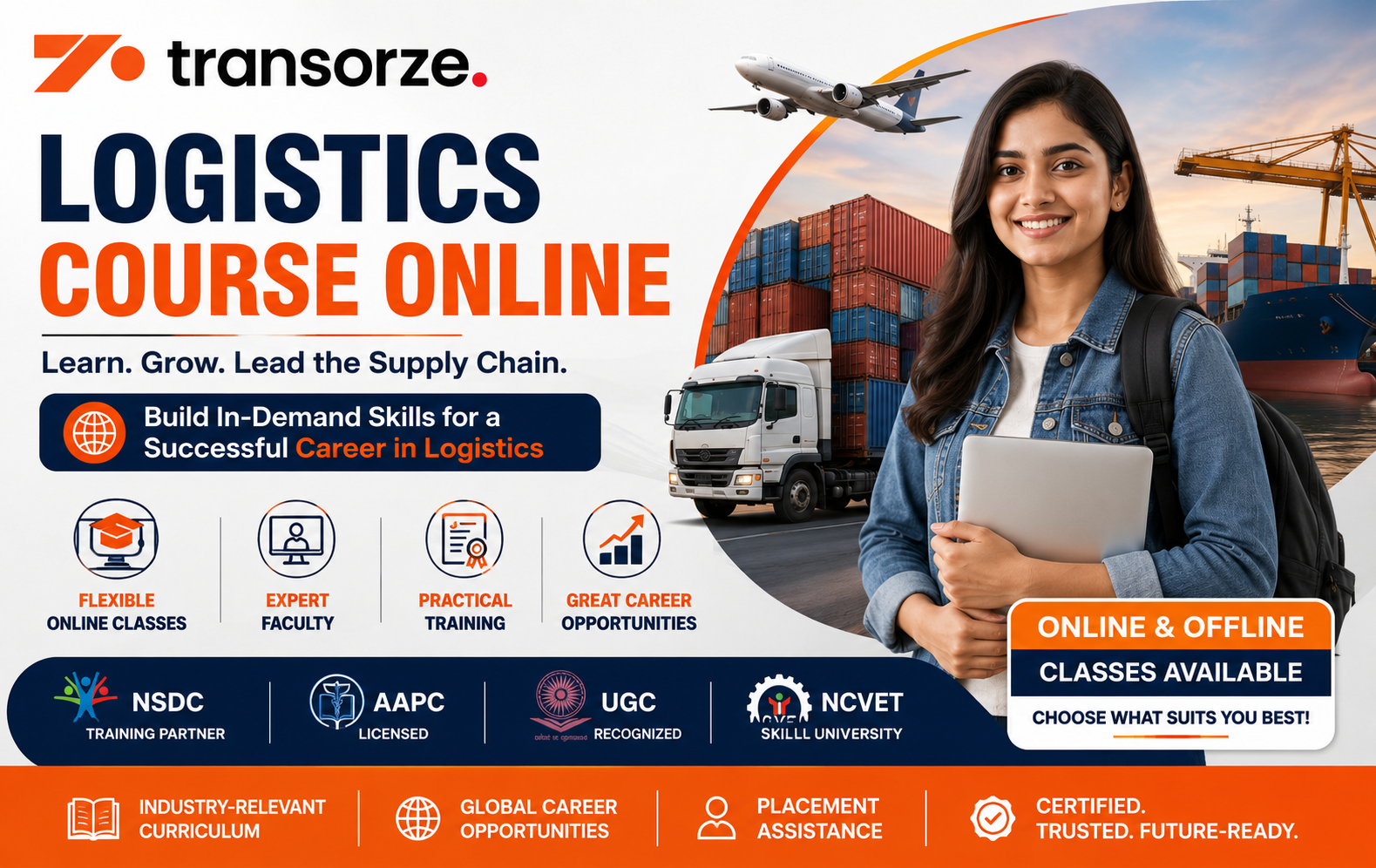
The logistics industry is the backbone of global trade, ensuring that goods move efficiently from manufacturers to businesses and consumers. From warehouses and transportation networks to inventory management and international shipping, logistics professionals play a crucial role in keeping supply chains running smoothly.
As businesses increasingly rely on digital technologies and global commerce continues to expand, the demand for skilled logistics professionals has grown significantly. For students and working professionals looking to enter this dynamic industry, enrolling in a logistics course online offers a flexible and practical way to gain the knowledge employers value.
Whether you are starting your career, planning a career change, or looking to enhance your existing skills, an online logistics course can help you build a strong foundation in supply chain management, transportation, inventory control, and warehouse operations.
What Is a Logistics Course Online?
A logistics course online is a professional training program that teaches the essential concepts involved in planning, managing, and optimizing the movement of goods throughout the supply chain.
Unlike traditional classroom-only education, online learning allows students to attend live sessions, access recorded lectures, complete assignments, and interact with experienced trainers from anywhere.
The course combines theoretical understanding with practical industry knowledge, helping learners understand how products move from suppliers to customers while minimizing costs and maximizing efficiency.
Why Choose an Online Logistics Course?
Online learning has made professional education more accessible than ever. Students can develop industry-ready skills without relocating or interrupting their current work or studies.
Some of the key benefits include:
Learn from Anywhere
Whether you’re in a city or a smaller town, online learning allows you to access quality education without the need for daily travel.
Flexible Study Schedule
Many online logistics courses offer multiple class timings, making them ideal for:
- College students
- Working professionals
- Entrepreneurs
- Career changers
- Job seekers
This flexibility helps learners balance education with personal and professional responsibilities.
Industry-Relevant Learning
A quality logistics program focuses on practical business scenarios rather than only theoretical concepts.
Students gain exposure to real-world logistics operations, supply chain planning, inventory management, transportation systems, and warehouse processes.
Interactive Learning Experience
Modern online programs often include:
- Live instructor-led classes
- Recorded video lessons
- Digital study materials
- Practical assignments
- Case studies
- Assessments
- Doubt-clearing sessions
These resources help reinforce learning and improve practical understanding.
Skills You’ll Learn
A comprehensive logistics training develops both technical knowledge and professional skills.
Students typically learn:
Supply Chain Management
Understand how products move from manufacturers to customers while maintaining efficiency throughout the supply chain.
Inventory Management
Learn techniques for managing stock levels, reducing waste, and improving operational efficiency.
Warehouse Operations
Gain knowledge of warehouse planning, storage systems, order fulfillment, and inventory control.
Transportation Management
Understand freight movement, route planning, shipping documentation, and transportation optimization.
Procurement and Purchasing
Learn how organizations source materials, manage suppliers, and negotiate purchasing processes.
Logistics Technology
Explore how modern software and digital tools improve logistics planning, tracking, and operational performance.
Communication and Coordination
Develop professional communication, teamwork, analytical thinking, and problem-solving skills that are valuable across logistics roles.
Who Should Enroll?
A logistics course online is suitable for learners from various educational and professional backgrounds.
The course is ideal for:
- Commerce graduates
- Management students
- Engineering graduates
- Business administration students
- Fresh graduates
- Working professionals
- Entrepreneurs
- Warehouse executives
- Supply chain professionals
- Anyone interested in logistics and operations management
No prior logistics experience is required for many beginner-friendly programs.
How to Choose the Right Logistics Course Online
Not every training program provides the same level of quality. Before enrolling, consider the following factors.
Updated Curriculum
Choose a course that reflects current industry practices and covers modern logistics technologies.
Experienced Trainers
Faculty with industry experience can provide practical insights and real-world examples that improve learning.
Practical Learning
Case studies, assignments, and industry-based projects help students apply concepts to real business situations.
Career Support
Resume guidance, interview preparation, and placement assistance can improve employment opportunities after course completion.
Flexible Learning Options
Look for programs that offer live classes, recorded sessions, and learner support to accommodate different schedules.
Why Many Students Choose Transorze
Many learners choose Transorze because it offers a practical, career-focused approach to logistics education. Students can choose from Online & Offline classes, while benefiting from training supported by NSDC Training Partner, UGC Recognized, and NCVET Skill University affiliations. These recognized credentials, combined with experienced trainers and industry-oriented learning, help students build the confidence and skills needed for successful careers in logistics and supply chain management.
What Does a Logistics Course Online Cover?
A well-designed logistics certificate course combines theoretical concepts with practical business applications. The curriculum is structured to help students understand how products move efficiently through the supply chain while meeting customer expectations and controlling operational costs.
Typical topics include:
Supply Chain Fundamentals
Learn how manufacturers, suppliers, distributors, retailers, and customers work together within a modern supply chain. Students gain a clear understanding of the complete product lifecycle.
Inventory and Warehouse Management
This module focuses on inventory planning, stock control, warehouse layout, material handling, storage techniques, and order fulfillment processes that improve operational efficiency.
Transportation and Distribution
Students learn about road, rail, air, and sea transportation, route optimization, freight management, shipping documentation, and distribution planning.
Procurement and Vendor Management
Understand supplier selection, purchasing strategies, contract management, procurement processes, and maintaining effective supplier relationships.
Import and Export Basics
Gain knowledge of international trade, customs procedures, shipping regulations, documentation, and global logistics operations.
Logistics Technology
Explore the role of Warehouse Management Systems (WMS), Enterprise Resource Planning (ERP), Transportation Management Systems (TMS), inventory software, and digital tracking technologies used across the logistics industry.
Business Communication and Professional Skills
Develop workplace skills including communication, teamwork, analytical thinking, time management, customer service, and problem-solving.
Career Opportunities After Completing a Logistics Course Online
The logistics and supply chain sector offers opportunities across manufacturing, retail, e-commerce, healthcare, aviation, shipping, and international trade.
Graduates can pursue careers in:
- Logistics companies
- E-commerce businesses
- Manufacturing industries
- Shipping and freight companies
- Warehouse and distribution centers
- Retail organizations
- Courier and express delivery services
- Import-export companies
- Third-party logistics (3PL) providers
- Supply chain consulting firms
As businesses continue expanding globally, logistics professionals remain essential to ensuring products reach customers efficiently and on time.
Popular Job Roles
After completing a logistics course, graduates may qualify for positions such as:
- Logistics Executive
- Supply Chain Coordinator
- Warehouse Executive
- Inventory Controller
- Procurement Executive
- Distribution Coordinator
- Operations Executive
- Shipping Coordinator
- Import Export Executive
- Supply Chain Analyst
With experience, professionals can advance into leadership roles such as Operations Manager, Supply Chain Manager, Warehouse Manager, Procurement Manager, or Logistics Consultant.
Salary Expectations
Salary varies depending on qualifications, experience, employer, industry, and location.
Entry-level professionals typically begin in operational roles where they gain practical experience managing inventory, transportation, procurement, and warehouse activities. As expertise grows, opportunities become available in supply chain planning, international logistics, procurement management, and operations leadership, often accompanied by higher earning potential.
Continuous skill development and hands-on experience play an important role in long-term career growth.
Online vs Offline Logistics Courses
Both learning formats provide valuable opportunities. The best choice depends on your schedule and preferred learning style.
| Online Learning | Offline Learning |
|---|---|
| Learn from anywhere | Classroom interaction |
| Flexible schedules | Fixed class timings |
| Recorded sessions for revision | Face-to-face discussions |
| Convenient for working professionals | Structured learning environment |
| Saves travel time | Immediate classroom support |
Many students choose institutes that offer both options, allowing them to learn in the way that best suits their needs.
Why Logistics Is a Future-Proof Career
The logistics industry continues to evolve with advancements in technology, automation, e-commerce, and global trade. Every product purchased online or transported internationally depends on efficient logistics systems.
As businesses focus on faster delivery, cost optimization, and improved customer service, professionals with logistics expertise are becoming increasingly valuable across industries.
Emerging technologies such as artificial intelligence, data analytics, automation, robotics, and digital supply chain platforms are transforming the industry, creating exciting opportunities for skilled professionals who understand both traditional logistics principles and modern operational tools.
Tips for Choosing the Right Logistics Course
Before enrolling, consider these important factors:
- Review the complete course curriculum.
- Choose experienced trainers with industry knowledge.
- Look for practical assignments and case studies.
- Check whether placement assistance is available.
- Compare online and offline learning options.
- Read student reviews and success stories.
- Ensure the course aligns with current industry requirements.
Selecting the right training program can significantly improve your career prospects.
STUDENT SUCCESS STORIES
Every successful logistics professional starts with the right skills and guidance. Hear from our students as they share their learning journey, practical training experience, and how the course helped them prepare for rewarding careers in logistics and supply chain management. Their success stories can inspire your own career path.
Final Thought
A logistics course online is an excellent way to build practical skills for a career in one of the world’s fastest-growing industries. Whether your goal is to work in supply chain management, warehouse operations, transportation, procurement, or international trade, quality training provides the knowledge needed to succeed.
By choosing a program that combines experienced instructors, practical learning, flexible study options, and recognized credentials, you can prepare for rewarding opportunities in logistics while building a strong foundation for long-term professional growth.
Recommended Reads
- Logistics Classes Near Me: How to Find the Right Training for a Successful Career
- Logistics Courses Means: Complete Guide to Logistics Education and Career Opportunities
- Beginner’s Guide to Logistics & Supply Chain Management Careers
- Logistics Courses After 12th: Start Your Career in Supply Chain and Logistics Management
Frequently Asked Questions
A logistics course online is a professional training program that teaches supply chain management, warehouse operations, transportation, inventory control, procurement, and logistics planning through online learning platforms.
Most logistics courses are suitable for fresh graduates, commerce students, business administration graduates, engineering graduates, working professionals, entrepreneurs, and anyone interested in logistics or supply chain management.
Yes. Many beginner-friendly courses start with the fundamentals of logistics and gradually introduce more advanced topics, making them suitable even for learners without prior experience.
Graduates can pursue roles such as Logistics Executive, Warehouse Executive, Supply Chain Coordinator, Procurement Executive, Inventory Controller, Operations Executive, Shipping Coordinator, and Import Export Executive.
Yes. Online logistics courses are designed with flexible schedules, allowing working professionals to balance their education with existing job responsibilities.
Successful logistics professionals benefit from analytical thinking, communication skills, planning ability, attention to detail, problem-solving, time management, and knowledge of supply chain operations.
Yes. The continuous growth of e-commerce, manufacturing, international trade, and technology-driven supply chains has created strong demand for skilled logistics professionals across industries.
Review the curriculum, trainer experience, practical training, certifications, placement support, learning flexibility, and student feedback before enrolling.
