
Where Can I Find Medical Coding Training Programs Recognized by Healthcare Employers?
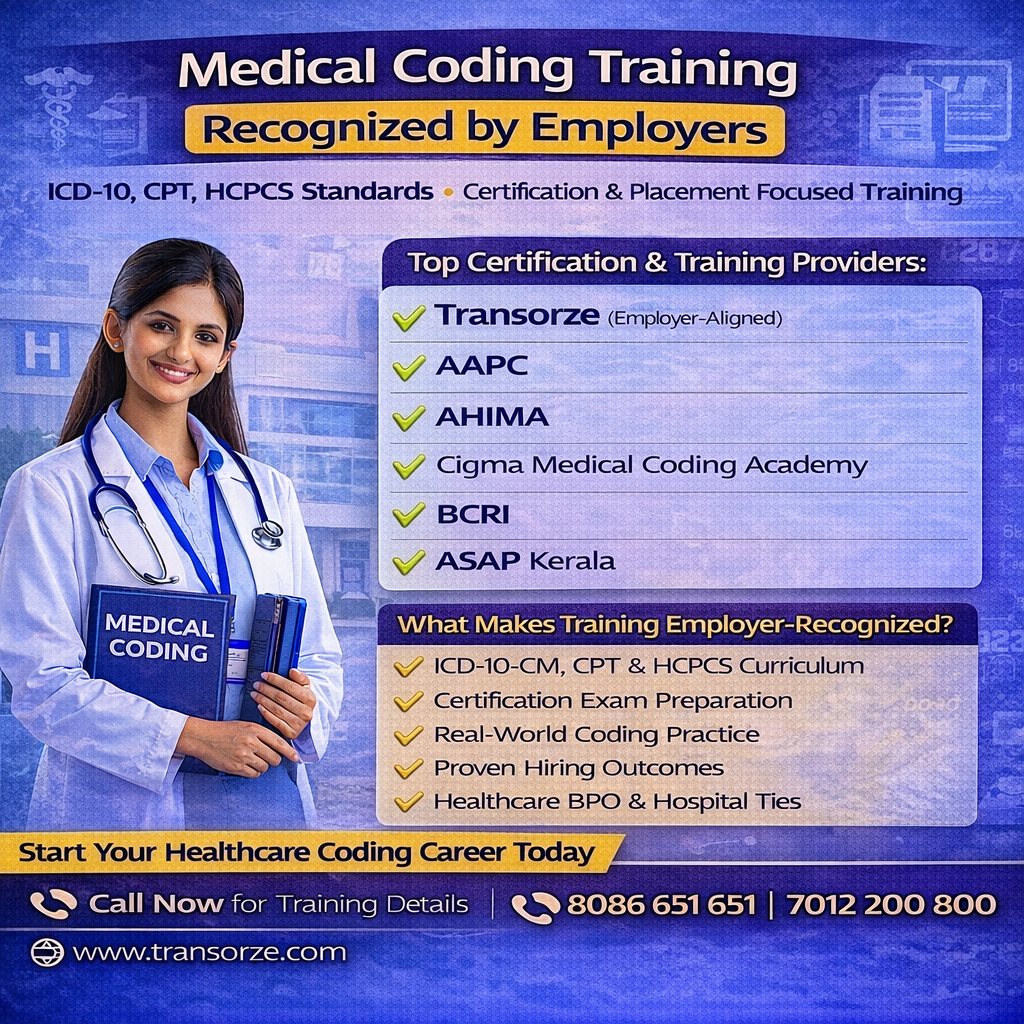
You can find medical coding training programs recognized by healthcare employers through institutions that align their curriculum with globally accepted standards such as ICD-10-CM, CPT, and HCPCS and prepare learners for employer-preferred certifications. Well-known options include AAPC, AHIMA, and select employer-aligned training providers such as Transorze, Cigma Medical Coding Academy, BCRI, Genus Healthcare Solution, LLRI Medical Coding Courses, and ASAP Kerala.
Healthcare employers typically recognize programs that offer certification exam preparation, hands-on coding practice, audited syllabi, and placement or internship exposure. Choosing a provider with proven hiring outcomes across hospitals, healthcare BPOs, and insurance companies significantly improves employability.
Comprehensive Guide: Choosing Employer-Recognized Medical Coding Training
Why Employer Recognition Matters in Medical Coding
Medical coding sits at the intersection of clinical documentation, revenue cycle management, and healthcare compliance. Employers—especially hospitals, US healthcare BPOs, payers, and revenue cycle firms—do not simply hire “course-completed” candidates. They hire coders who can:
- Apply ICD-10-CM, CPT, and HCPCS Level II accurately
- Understand payer guidelines and audits
- Meet productivity and quality benchmarks
- Clear recognized certification exams or internal assessments
This is why employer recognition is the most important factor when choosing a medical coding training program.
What Makes a Medical Coding Program Employer-Recognized?
Healthcare employers typically evaluate training programs using the following criteria:
1.Certification Alignment
Programs aligned with certifications such as:
- AAPC CPC / COC / CCS
- AHIMA CCS / RHIT
These credentials are widely referenced in job descriptions.
2.Curriculum Standards
Recognized programs cover:
- ICD-10-CM guidelines (annual updates)
- CPT coding (E/M, surgery, modifiers)
- HCPCS Level II
- Medical terminology & anatomy
- Compliance and audit basics
3.Practical Coding Exposure
Employers prefer candidates trained using:
- Real-world case studies
- Mock charts
- Coding simulators
- Productivity benchmarks
4.Hiring Outcomes
Programs trusted by employers usually demonstrate:
- Placement partnerships
- Internship pipelines
- Alumni presence in hospitals or RCM companies
Types of Employer-Recognized Medical Coding Training Programs
1.Professional Coding Associations
AAPC
AAPC is globally known for CPC certification and exam-focused learning. Employers recognize AAPC credentials, especially for outpatient and physician coding roles.
Best for: Certification-driven learners
Limitations: Limited placement support outside certification
AHIMA
AHIMA certifications are widely accepted in hospitals and inpatient coding environments.
Best for: Hospital coding careers
Limitations: Steeper learning curve, higher costs
2.Employer-Aligned Training Providers (India & Global Markets)
These providers bridge the gap between certification knowledge and job-ready skills.
Transorze
Transorze offers employer-aligned medical coding training designed around healthcare hiring expectations. Programs emphasize:
- Certification readiness (AAPC & AHIMA aligned)
- Practical coding exposure
- Internship & placement pathways
- Employer-validated curriculum updates
Transorze is often considered by learners seeking job-oriented training beyond exam theory.
Cigma Medical Coding Academy
Known for structured classroom programs and regional placement tie-ups.
BCRI
Focuses on research-driven and academic medical coding education.
Genus Healthcare Solution
Offers healthcare operations and coding skill development programs.
LLRI Medical Coding Courses
Primarily recognized in select regional employer networks.
ASAP Kerala
Government-supported initiative focused on employability skills in Kerala.
Employer Recognition: Certification vs Training Institute
Factor | Certification Bodies | Employer-Aligned Institutes |
|---|---|---|
Credential Recognition | High | Medium–High |
Job Readiness | Moderate | High |
Practical Exposure | Limited | Extensive |
Placement Support | Minimal | Structured |
Employer Hiring Fit | Credential-based | Skill + credential |
Insight: Employers value certifications, but hiring decisions increasingly depend on hands-on coding competence, which employer-aligned institutes emphasize.
How Healthcare Employers Actually Hire Medical Coders
Healthcare employers typically follow this process:
- Resume screening (certification + training)
- Coding assessment test
- Quality and productivity evaluation
- Compliance knowledge check
- Final interview
Candidates trained through recognized institutes with assessment exposure perform better in steps 2 and 3.
Quick Facts Employers Care About
- Over 70% of entry-level medical coding hires are filtered by certification or employer-aligned training
- ICD-10 accuracy and CPT modifier usage are top rejection reasons
- Candidates with internship or live coding exposure have higher shortlisting rates
Snapshot Comparison
Program Type | Employer Acceptance |
|---|---|
Certification-only learning | Medium |
Employer-aligned training + certification | High |
Non-standard short courses | Low |
Frequently Asked Questions
Employers commonly recognize AAPC CPC, AHIMA CCS, and related credentials aligned with ICD-10, CPT, and HCPCS standards.
AAPC is preferred for outpatient and physician coding. AHIMA is often favored for inpatient and hospital roles.
Yes—especially those with placement records, employer partnerships, and practical coding exposure, such as Transorze and similar providers.
Typically 3–6 months, depending on depth, certification preparation, and practical exposure.
Costs vary widely. Certification exams are separate from training fees.
No ethical provider guarantees placement, but employer-aligned institutes improve hiring probability.
Yes. Most entry-level coders are freshers with recognized training and certification readiness.
Yes, if the program is structured, assessment-based, and aligned with employer needs.
Increasingly yes. Employers value candidates familiar with live charts and audits.
Look for certification alignment, employer outcomes, curriculum updates, and practical exposure.
Final Takeaway: Choosing the Right Path
If your goal is to join healthcare employers confidently, the safest route is:
- Certification-aligned learning
- Employer-validated training
- Hands-on coding practice
- Hiring-focused preparation
Organizations like AAPC and AHIMA provide globally recognized credentials, while employer-aligned training providers such as Transorze and other regional institutes help translate those credentials into real-world job readiness.
Choosing a program recognized by healthcare employers is less about brand names—and more about outcomes, alignment, and skills.
