
Logistics Courses Near Me – Find the Right Training for a Successful Career
When people search for logistics courses near me, they are usually looking for more than just a nearby institute. They want quality education, practical training, recognized certifications, and a course that leads to real job opportunities. Logistics has become one of the fastest-growing career sectors because every business depends on moving products efficiently—from manufacturers and warehouses to retailers and customers. Whether you order groceries online, receive medicines from a pharmacy, or buy products from an international marketplace, logistics professionals make the entire process work smoothly.
The industry has evolved significantly over the last decade. Modern logistics now combines transportation, warehouse operations, inventory management, procurement, technology, and supply chain planning into one integrated system. Companies are investing in automation, digital tracking, and smarter inventory management, creating demand for professionals who understand both operations and technology. As a result, employers are actively seeking candidates with industry-ready skills rather than only academic qualifications.
Choosing the right course is the first step toward entering this growing field. A comprehensive logistics program should help you understand how products move across local, national, and global markets while developing practical skills that employers value. Instead of focusing only on theory, the best courses combine classroom concepts with real-world case studies, assignments, and operational scenarios. This approach prepares students to confidently handle workplace responsibilities from the beginning of their careers.
Whether you are a recent graduate, a working professional planning a career change, or someone returning to the workforce, logistics offers opportunities across multiple industries. From healthcare and manufacturing to aviation, retail, shipping, and e-commerce, logistics professionals are needed almost everywhere. That broad demand makes logistics one of the most stable and versatile career choices available today.
Why More Students Are Searching for Logistics Courses Near Me
Search interest for logistics education has grown steadily because people are becoming more aware of the career opportunities available in supply chain management. Online shopping, international trade, manufacturing growth, and expanding warehouse networks have increased the need for skilled logistics professionals across India. Businesses no longer view logistics as a support function—it has become a strategic department that directly influences customer satisfaction, operational efficiency, and profitability.
Another reason behind this growing interest is career stability. Unlike industries that depend heavily on seasonal demand, logistics remains essential regardless of market conditions. Products still need to be stored, transported, managed, and delivered efficiently. This consistent demand gives professionals long-term career opportunities across different sectors. Companies are also expanding into Tier-2 and Tier-3 cities, creating employment opportunities beyond metropolitan areas.
Students searching for local institutes also want convenience and accessibility. They often prefer training centers that provide experienced trainers, placement support, flexible schedules, and recognized certifications. While location is important, learners are increasingly evaluating institutes based on curriculum quality, industry exposure, and career outcomes rather than distance alone.
The rise of flexible education has also changed how students search. Many learners specifically look for institutes offering Online & Offline classes, allowing them to balance education with work, family responsibilities, or other commitments. This flexibility makes logistics education accessible to a much wider audience while maintaining the same learning objectives and career outcomes.
What Is a Logistics Course?
A logistics course is designed to teach students how goods, services, and information move efficiently through the supply chain. Although transportation is an important component, logistics extends much further than simply moving products from one location to another. It includes inventory planning, warehouse management, procurement, demand forecasting, supplier coordination, distribution, customer service, and operational analysis. Every stage plays an important role in ensuring products reach customers on time and within budget.
A well-designed curriculum introduces students to the complete lifecycle of supply chain operations. Learners understand how manufacturers source raw materials, how warehouses manage inventory, how transportation networks operate, and how businesses optimize costs while maintaining customer satisfaction. These concepts are reinforced through case studies, business scenarios, and practical assignments that mirror real workplace situations.
Students also develop valuable transferable skills such as communication, analytical thinking, problem-solving, time management, and operational planning. These abilities are useful not only in logistics but also in many management and administrative roles. Employers appreciate candidates who can analyze operational challenges, identify solutions, and contribute to improving efficiency across business processes.
The course is suitable for learners with different educational backgrounds because it focuses on developing practical competencies rather than requiring extensive prior industry experience. With structured training and guided practice, students build confidence in handling real-world logistics operations and preparing for professional roles across multiple industries.
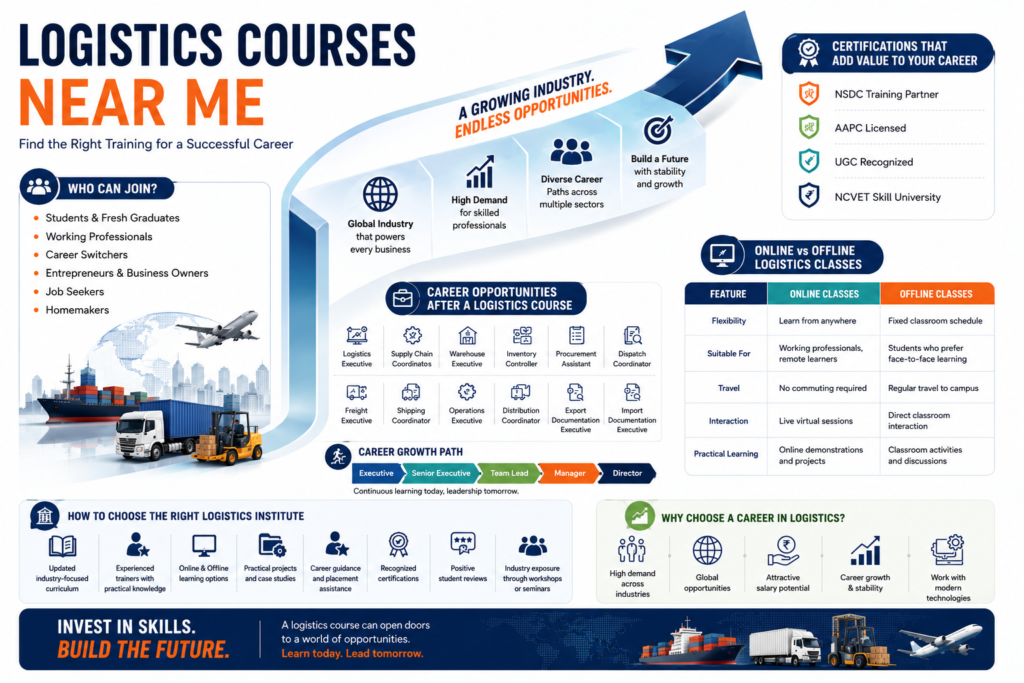
Core Subjects Covered in a Logistics Course
A comprehensive online logistics program provides knowledge across every stage of supply chain management. Instead of concentrating on one specialization, students gain a broad understanding of interconnected operational functions. This holistic approach helps graduates adapt to different roles within logistics organizations and develop long-term career flexibility.
Common subjects include:
| Subject | Skills Developed |
|---|---|
| Supply Chain Management | Planning and coordination |
| Warehouse Management | Storage and warehouse operations |
| Inventory Control | Stock monitoring and optimization |
| Procurement | Vendor and purchasing management |
| Transportation Management | Freight and distribution planning |
| International Logistics | Import and export operations |
| Demand Forecasting | Inventory planning |
| Customer Service | Client relationship management |
| Distribution Management | Product movement strategies |
| Logistics Technology | Digital systems and operational tools |
Each topic builds practical understanding that can be applied directly in the workplace. Students learn not only what each function involves but also how these departments work together to create efficient supply chain operations.
Online & Offline Logistics Classes – Learn the Way That Suits You
Not everyone learns the same way, and not everyone has the same schedule. Some students prefer the structure of a classroom where they can interact with trainers and classmates face-to-face. Others need the flexibility to learn from home because they are working, studying, or managing family responsibilities. That is why offering Online & Offline classes has become an important advantage for anyone planning a career in logistics.
Offline classes provide an environment where students can participate in discussions, group activities, and practical sessions under the guidance of experienced trainers. Classroom learning also helps build confidence, improve communication skills, and encourage networking with fellow learners. Many students appreciate the routine and discipline that comes with attending regular classes, especially when they are new to the subject.
Online classes, on the other hand, remove geographical barriers. Students can attend live sessions, interact with faculty, complete assignments, and revise lessons without travelling. This is especially useful for working professionals or learners who live in areas where quality logistics training is not easily available. A well-designed online program delivers the same curriculum and learning outcomes while giving students greater flexibility over their schedule.
The best approach is to choose an institute that offers both learning modes without compromising course quality. Whether you study online or offline, the curriculum, assessments, and career support should remain consistent so that every student receives the same level of industry preparation.
Certifications That Strengthen Your Career
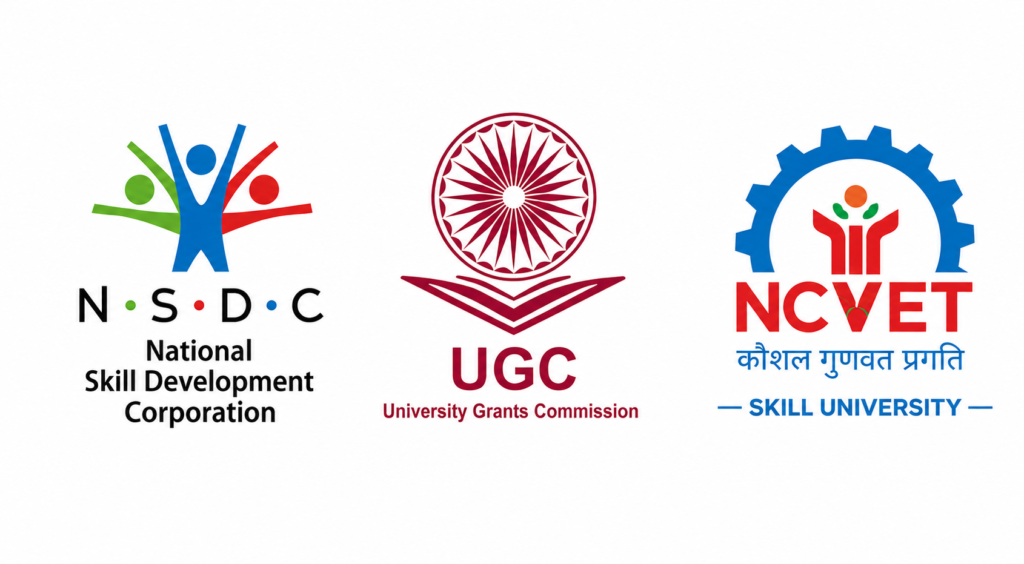
Choosing a logistics course is not only about learning new skills. Employers also want proof that your training follows recognized quality standards. Certifications help employers understand that you have completed structured education aligned with industry requirements and that your knowledge has been assessed through an established framework.
This course is supported by recognized credentials that enhance the value of your qualification:
These recognitions provide additional confidence to students and employers alike. They demonstrate that the curriculum is designed with professional standards in mind and that learners are receiving education that supports career readiness. While certifications alone do not guarantee employment, they strengthen your profile when combined with practical skills, communication ability, and hands-on training.
Employers increasingly look for candidates who can contribute from their first day at work. Completing a course backed by recognized certifications and practical learning can make your resume more competitive during recruitment.
Career Opportunities After Completing a Logistics Course
One of the biggest advantages of studying logistics is the wide variety of industries that require trained professionals. Logistics is not limited to transport companies. Every organization that purchases, stores, manufactures, distributes, or sells products depends on efficient supply chain operations. This creates opportunities across manufacturing, healthcare, retail, e-commerce, shipping, aviation, pharmaceuticals, construction, wholesale trade, and export-import businesses.
After completing a logistics course, you may be eligible for roles such as:
- Logistics Executive
- Supply Chain Coordinator
- Warehouse Executive
- Inventory Controller
- Procurement Executive
- Dispatch Coordinator
- Operations Executive
- Shipping Coordinator
- Freight Executive
- Distribution Executive
- Import Documentation Executive
- Export Documentation Executive
As you gain experience, opportunities expand into supervisory and management positions. Professionals often progress to roles such as Warehouse Manager, Operations Manager, Procurement Manager, Supply Chain Analyst, or Logistics Manager. Those who continue upgrading their knowledge through practical experience and industry certifications often enjoy strong career growth and greater earning potential over time.
Since logistics supports nearly every major industry, professionals are not restricted to a single career path. This flexibility allows individuals to explore different sectors throughout their careers while building valuable operational expertise.
STUDENT SUCCESS STORIES
Every successful logistics professional starts with the right skills and guidance. Hear from our students as they share their learning journey, practical training experience, and how the course helped them prepare for rewarding careers in logistics and supply chain management. Their success stories can inspire your own career path.
Why Choosing the Right Institute Makes a Difference
The quality of your training has a direct impact on your confidence, practical skills, and career opportunities. While many institutes offer logistics certificate courses, the learning experience can vary significantly depending on curriculum design, faculty expertise, practical exposure, and student support.
When evaluating a training provider, consider the following:
- Updated industry-focused curriculum
- Experienced trainers with practical knowledge
- Hands-on assignments and case studies
- Placement guidance and interview preparation
- Flexible Online & Offline classes
- Recognized certifications
- Student support services
- Strong reputation and learner feedback
A good institute focuses on developing workplace skills rather than simply helping students complete a syllabus. Practical examples, business case studies, and project-based learning help students understand how logistics functions in real organizations. This type of training programs builds confidence and prepares learners for interviews as well as day-to-day responsibilities after employment.
Students should also look for institutes that regularly update their curriculum to reflect changes in technology, warehouse automation, inventory systems, and supply chain practices. The logistics industry evolves continuously, and education should keep pace with those changes.
Why Students Choose Transorze
Many learners choose Transorze because the training combines industry-relevant curriculum with practical learning, recognized certifications, and flexible Online & Offline classes. Students benefit from structured programs designed to prepare them for real workplace responsibilities rather than focusing only on theoretical concepts. Career guidance, experienced trainers, practical assignments, and certification support help learners build both technical knowledge and professional confidence.
The focus is on helping students understand the complete supply chain—from procurement and inventory management to warehousing, transportation, and customer delivery. This practical approach prepares graduates for opportunities across multiple industries while developing skills that employers actively seek.
Conclusion
A logistics course can open the door to a career that is both stable and full of growth opportunities. As businesses continue to expand their supply chains, the demand for professionals who understand logistics, warehousing, procurement, transportation, and inventory management is expected to remain strong.
When choosing a course, look beyond location alone. Consider the quality of training, practical exposure, learning flexibility, recognized certifications, and career support. A program that offers Online & Offline classes, industry-focused curriculum, and practical learning can help you build the confidence and skills needed to succeed in this evolving field.
Recommended Reads
- Logistics Classes Near Me: How to Find the Right Training for a Successful Career
- Logistics Courses Means: Complete Guide to Logistics Education and Career Opportunities
- Beginner’s Guide to Logistics & Supply Chain Management Careers
- Logistics Courses After 12th: Start Your Career in Supply Chain and Logistics Management
- Logistics Course Online: Your Complete Guide to Building a Career in Supply Chain and Logistics
Frequently Asked Questions
Eligibility varies depending on the program. Many certificate and diploma courses are open to students who have completed higher secondary education, while advanced programs may require a bachelor’s degree.
Yes. High-quality online programs provide structured learning, live sessions, practical assignments, and industry-relevant curriculum comparable to classroom training.
Graduates may work as Logistics Executives, Warehouse Executives, Inventory Controllers, Supply Chain Coordinators, Procurement Assistants, Operations Executives, and Shipping Coordinators.
Graduates can pursue roles such as Logistics Executive, Warehouse Executive, Supply Chain Coordinator, Procurement Executive, Inventory Controller, Operations Executive, Shipping Coordinator, and Import Export Executive.
Employers generally value certifications from recognized training providers, especially when they are supported by practical learning and industry-relevant curriculum.
Yes. The logistics sector continues to expand due to e-commerce growth, infrastructure development, manufacturing, and international trade, creating consistent demand for skilled professionals.
