
Logistics Courses in Kochi: Complete Career Guide for 2026
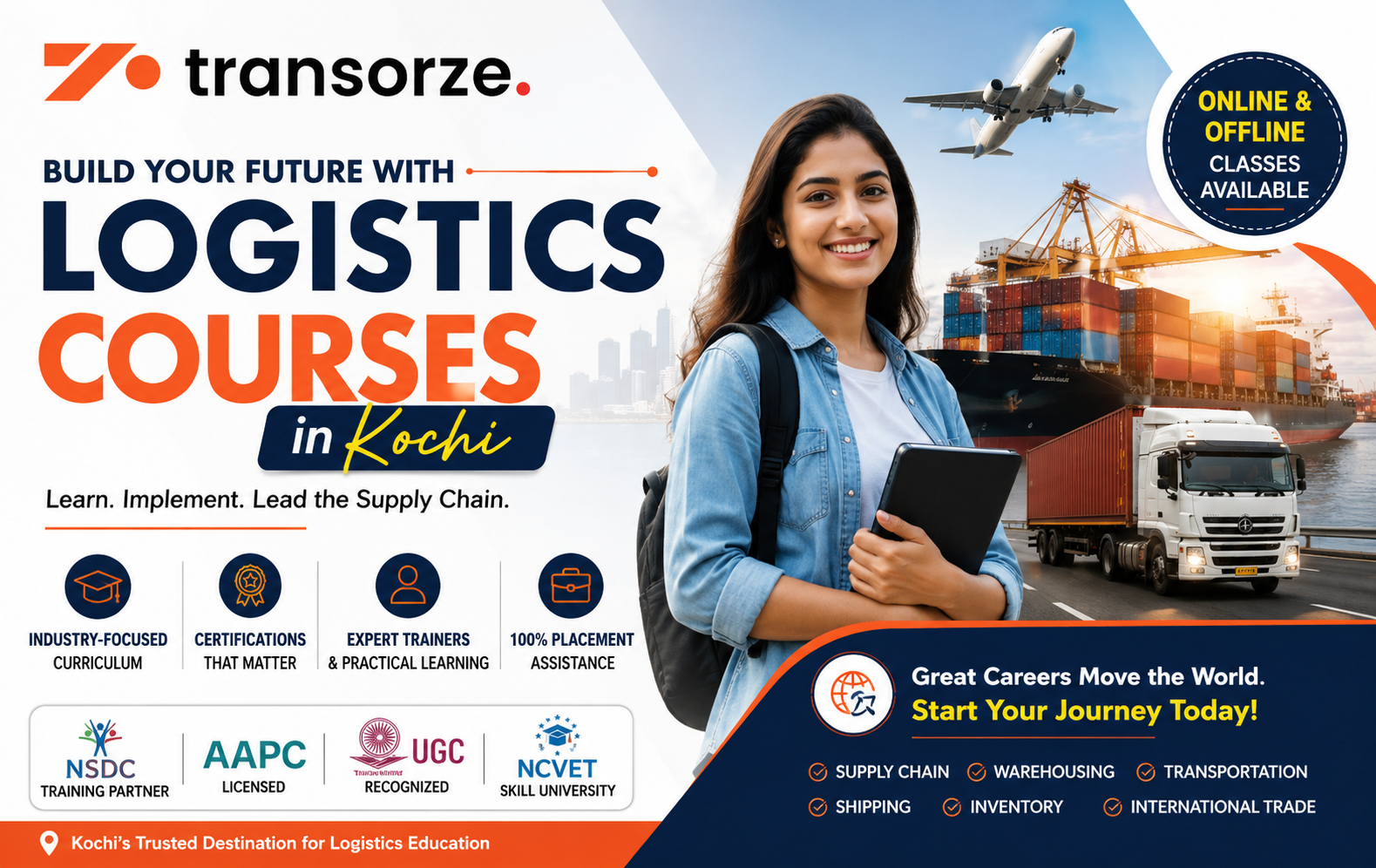
Kochi has become one of India’s most promising destinations for careers in logistics and supply chain management. As Kerala’s commercial capital and home to one of the country’s busiest ports, the city offers countless opportunities for professionals who want to build successful careers in shipping, warehousing, procurement, transportation, inventory management, and international trade. The rapid expansion of e-commerce, manufacturing, retail, pharmaceuticals, and export businesses has created a growing demand for trained logistics professionals. Companies are actively looking for candidates who possess practical knowledge rather than just academic qualifications, making professional logistics training more valuable than ever before.
If you have been searching for logistics courses in Kochi, you are probably looking for a program that provides industry-relevant skills, recognized certifications, and strong placement assistance. A quality logistics course should prepare students for real workplace challenges through practical learning, case studies, software exposure, and industry-oriented curriculum. The best institutes also focus on communication skills, problem-solving abilities, and operational management so that graduates are ready to contribute from their very first day at work.
Kochi’s strategic importance continues to grow because of its port infrastructure, expanding logistics parks, warehousing facilities, international trade activities, and increasing investments in transportation networks. Businesses require professionals who understand supply chain operations from procurement to final delivery. This makes logistics one of the most stable career options for students, graduates, and working professionals looking for career growth. According to recent industry reports, India’s logistics sector continues to expand rapidly, supported by government infrastructure projects, digital transformation, and increasing global trade, creating significant employment opportunities across multiple industries.
Why Logistics is One of Kerala's Fastest Growing Career Fields
The logistics industry has transformed significantly during the last decade. Earlier, logistics mainly involved transporting goods from one location to another. Today, modern logistics combines technology, data analytics, inventory optimization, warehouse automation, international shipping, procurement planning, and customer service into one integrated system. Organizations understand that an efficient supply chain directly affects profitability, making logistics professionals indispensable across industries.
Kochi enjoys a major competitive advantage because it serves as an important gateway for domestic and international trade. Businesses operating through ports, airports, industrial parks, manufacturing units, wholesale markets, and e-commerce fulfillment centers all require trained logistics professionals. As Kerala strengthens its infrastructure and transportation ecosystem, employment opportunities continue to increase. Professionals trained in logistics can work in shipping companies, retail organizations, courier services, import-export firms, healthcare supply chains, manufacturing industries, food distribution networks, and multinational corporations. The diversity of industries means graduates are not limited to one career path but can choose roles based on their interests and long-term goals.
Beyond traditional logistics companies, modern businesses in healthcare, pharmaceuticals, FMCG, automotive, construction, and information technology all rely heavily on efficient supply chain management. This has expanded career options considerably for logistics professionals. Employers increasingly prefer candidates who possess both theoretical knowledge and practical exposure, making professional certification a significant advantage during recruitment.
Kochi's Strategic Position in India's Logistics Network
Kochi has emerged as one of South India’s most important logistics hubs due to its geographical location and world-class infrastructure. The city’s connectivity through road, rail, sea, and air transportation enables businesses to move goods efficiently across India and international markets. The presence of major ports, container terminals, logistics parks, warehouses, and industrial clusters has strengthened Kochi’s position as a preferred destination for supply chain operations.
The growing influence of e-commerce has further accelerated demand for logistics professionals. Companies need skilled employees who can manage inventory, optimize transportation routes, reduce operational costs, coordinate suppliers, monitor warehouse activities, and ensure timely deliveries. Digital technologies such as warehouse management systems, ERP software, barcode systems, and logistics analytics have become integral parts of supply chain operations, making technical skills equally important.
Students enrolling in professional logistics courses gain exposure to these technologies while learning industry best practices. This combination of technical knowledge and practical experience significantly improves employability. As infrastructure development continues across Kerala and India, logistics professionals will remain in demand across both domestic and international markets.
What is a Logistics Course?
A logistics course is a professional training program designed to teach students how goods, materials, and services move from suppliers to customers efficiently and cost-effectively. It covers the complete supply chain process, including procurement, inventory management, warehousing, transportation, shipping, distribution, and customer fulfillment. Unlike traditional academic programs that focus mainly on theory, industry-oriented logistics training emphasizes practical skills that employers actively seek.
Students learn how businesses plan supply chains, manage stock levels, coordinate shipments, reduce delays, and optimize operational costs. They also gain exposure to modern logistics software, documentation procedures, and real-world case studies. This practical approach helps students understand how logistics works across industries such as retail, e-commerce, healthcare, manufacturing, food distribution, and international trade.
One of the biggest advantages of professional logistics training is its accessibility. Students from various educational backgrounds can enter the field, including fresh graduates, degree holders, commerce students, and working professionals looking for a career change. Because logistics is essential to almost every industry, trained professionals enjoy a wide range of employment opportunities and long-term career growth.
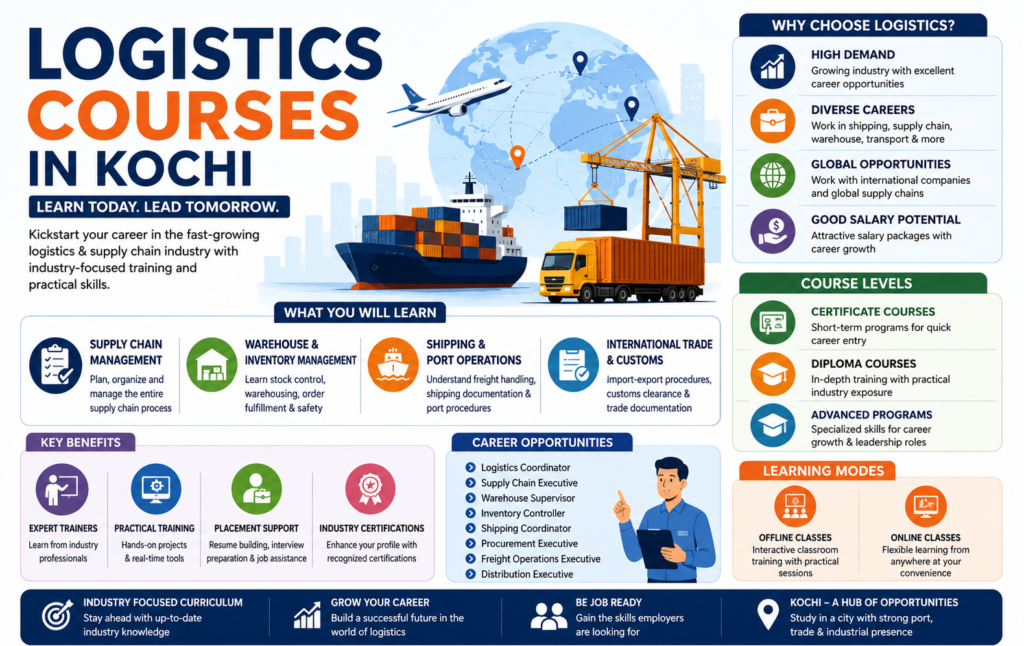
Skills You Will Learn
A comprehensive logistics course focuses on developing both technical and managerial skills. Employers today expect logistics professionals to handle operations efficiently while also communicating effectively with suppliers, transporters, customers, and internal teams.
Key skills typically covered include:
Supply chain planning
Inventory control and stock management
Warehouse operations
Transportation coordination
Shipping and freight management
Import-export documentation
Procurement and vendor management
Logistics software and ERP systems
Cost optimization techniques
Communication and reporting skills
These skills prepare students for entry-level and mid-level roles across multiple industries. Practical assignments, case studies, and project work help learners apply concepts to real business situations rather than memorizing theory alone.
Types of Logistics Courses in Kochi
Students searching for logistics courses in Kochi will find several program options based on their educational background, career goals, and available study time.
Certificate Programs
Certificate courses are ideal for beginners who want to enter the logistics industry quickly. These programs usually focus on core operational skills such as warehouse management, shipping procedures, inventory control, and basic supply chain concepts. They are suitable for students seeking fast-track career entry.
Diploma Programs
Diploma courses provide broader industry knowledge and practical training. Students learn advanced topics such as procurement, transportation management, international trade, customs procedures, and logistics software. Diploma programs are often preferred by employers because they offer a balanced combination of theory and practical exposure.
Degree-Linked Programs
Some institutes offer logistics programs integrated with recognized degree pathways, allowing students to earn industry skills while pursuing higher education. These programs are beneficial for long-term career growth and managerial opportunities.
Course Curriculum
A well-structured logistics curriculum should cover the entire supply chain ecosystem rather than focusing on a single area.
Supply Chain Management
Students learn how businesses plan and coordinate the flow of goods from suppliers to customers. Topics include demand forecasting, procurement planning, supplier coordination, and distribution strategies.
Warehouse & Inventory Management
This module focuses on stock control, warehouse layout, inventory tracking, barcode systems, and order fulfillment. Efficient warehouse management plays a crucial role in reducing costs and improving customer satisfaction.
Shipping & Port Operations
Given Kochi’s importance as a port city, understanding shipping operations is highly valuable. Students learn about freight handling, container operations, shipping documentation, and transportation coordination.
International Trade & Customs
Global business requires knowledge of import-export procedures, customs regulations, trade documentation, and international logistics practices. This module is particularly useful for students interested in export-import careers.
Industry Certifications & Learning Modes
When choosing a logistics institute, certifications and learning flexibility are important factors. Students should look for programs that offer recognized credentials and practical training.
Recognized Certifications
Online & Offline Classes Available
Many students prefer flexible learning options because they may be working, studying, or living outside Kochi. Quality institutes now provide Online & Offline classes, allowing students to choose the mode that best fits their schedule. Online training offers convenience and accessibility, while offline classes provide classroom interaction, practical sessions, and networking opportunities.
Career Opportunities After a Logistics Course
One of the biggest advantages of logistics training is the variety of career paths available. Graduates can work in shipping companies, e-commerce firms, manufacturing industries, retail chains, healthcare organizations, courier services, and import-export businesses.
Common job roles include:
Logistics Coordinator
Supply Chain Executive
Warehouse Supervisor
Inventory Controller
Procurement Executive
Shipping Coordinator
Export-Import Assistant
Freight Operations Executive
Distribution Coordinator
Supply Chain Analyst
Top Recruiting Industries
Industry | Typical Roles |
|---|---|
E-commerce | Warehouse & delivery operations |
Manufacturing | Supply chain & procurement |
Healthcare | Medical supply logistics |
Retail | Inventory & distribution |
Shipping & Freight | Port and cargo operations |
Import-Export Firms | Trade documentation |
STUDENT SUCCESS STORIES
Every successful logistics professional starts with the right skills and guidance. Hear from our students as they share their learning journey, practical training experience, and how the course helped them prepare for rewarding careers in logistics and supply chain management. Their success stories can inspire your own career path.
Expected Salary After Logistics Training
Salary depends on qualification, skills, certifications, and the hiring company. Freshers with professional logistics training generally have better opportunities than candidates without industry-specific skills.
Experience Level | Approximate Monthly Salary |
|---|---|
Fresher | ₹15,000 – ₹25,000 |
1–3 Years | ₹25,000 – ₹40,000 |
3–5 Years | ₹40,000 – ₹60,000 |
5+ Years | ₹60,000+ |
How to Choose the Right Logistics Training Institute in Kochi
Selecting the right logistics training institute can make a significant difference in your career. While many institutes offer logistics programs, not all provide the practical exposure, industry recognition, and placement support needed to succeed in today’s competitive job market. Before enrolling, compare the course curriculum, certifications, trainer experience, practical sessions, internship opportunities, and student reviews. A program that focuses only on classroom theory may not prepare you for real-world logistics operations.
Another important factor is whether the institute updates its curriculum regularly. The logistics industry is evolving rapidly with technologies such as Warehouse Management Systems (WMS), Transportation Management Systems (TMS), ERP software, automation, RFID, barcode tracking, and AI-driven supply chain planning. Learning these tools can give students a competitive advantage during interviews and on the job.
Placement assistance is equally important. Institutes with dedicated placement support often help students with resume preparation, interview coaching, mock interviews, and employer connections. These additional services can improve confidence and increase the chances of securing employment soon after course completion.
Flexibility also matters. Many learners balance studies with work or other commitments, so having the option to attend classes in person or online can make professional training more accessible. Choosing an institute that offers multiple learning formats allows students to progress without interrupting their existing responsibilities.
Why Professional Logistics Training Makes a Difference
The logistics industry values practical knowledge as much as academic qualifications. Companies want professionals who can solve operational challenges, coordinate teams, manage documentation accurately, and optimize supply chain processes. Professional training bridges the gap between classroom learning and workplace expectations by providing hands-on experience, industry-relevant projects, and exposure to modern logistics software.
Students who complete structured logistics training often develop stronger analytical and organizational skills. They become familiar with inventory planning, transportation scheduling, procurement workflows, warehouse optimization, and customer service standards. These competencies make graduates more adaptable to different industries, including manufacturing, healthcare, retail, e-commerce, and international trade.
If you are looking for a trusted training provider, Transorze offers comprehensive Online & Offline classes with an industry-focused curriculum designed to prepare students for real-world logistics careers. The program features certifications through NSDC Training Partner, AAPC Licensed, UGC Recognized, and NCVET Skill University, helping learners build credibility with employers while gaining practical skills that support long-term career growth.
Conclusion
The demand for skilled logistics professionals continues to grow as businesses expand their supply chains and embrace digital transformation. Kochi’s strategic location, thriving port ecosystem, and increasing industrial development make it one of the best places in Kerala to build a successful career in logistics and supply chain management.
Choosing a well-designed logistics course can provide far more than technical knowledge. It can help you develop problem-solving abilities, communication skills, operational expertise, and confidence to work in fast-paced business environments. Whether your goal is to join an e-commerce company, shipping organization, warehouse operation, manufacturing firm, or multinational corporation, the right training lays a strong foundation for future success.
Investing in professional education today can open doors to rewarding opportunities tomorrow. By selecting a course that combines practical learning, recognized certifications, experienced trainers, and placement support, you position yourself for a career in one of the world’s most essential and fastest-growing industries.
Recommended Reads
- Logistics Classes Near Me: How to Find the Right Training for a Successful Career
- Logistics Courses Means: Complete Guide to Logistics Education and Career Opportunities
- Beginner’s Guide to Logistics & Supply Chain Management Careers
- Logistics Courses After 12th: Start Your Career in Supply Chain and Logistics Management
- Logistics Course Online: Your Complete Guide to Building a Career in Supply Chain and Logistics
Frequently Asked Questions
Depending on the institute and program, students may receive certifications associated with NSDC Training Partner, AAPC Licensed, UGC Recognized, and NCVET Skill University, adding credibility to their professional profile.
Yes. Transorze now offer Online & Offline classes, allowing students and working professionals to choose the learning mode that best suits their schedule.
Logistics courses are suitable for +2 students, graduates, diploma holders, working professionals, and anyone interested in building a career in supply chain management, warehousing, shipping, or transportation.
Graduates can pursue roles such as Logistics Coordinator, Warehouse Executive, Supply Chain Executive, Inventory Controller, Procurement Executive, Shipping Coordinator, Freight Operations Executive, and Distribution Coordinator.
Course duration varies depending on the program. Certificate courses may last a few months, while diploma and advanced programs typically range from 6 to 12 months.
Yes Transorze provide placement assistance, including resume preparation, interview guidance, mock interviews, and employer referrals to help students begin their careers.
Logistics is a high-demand industry with opportunities across e-commerce, manufacturing, retail, healthcare, shipping, and international trade. It offers stable employment, career progression, and opportunities to work in both domestic and global markets.
