
Medical Coding and Billing Courses: Build a Rewarding Career in Healthcare
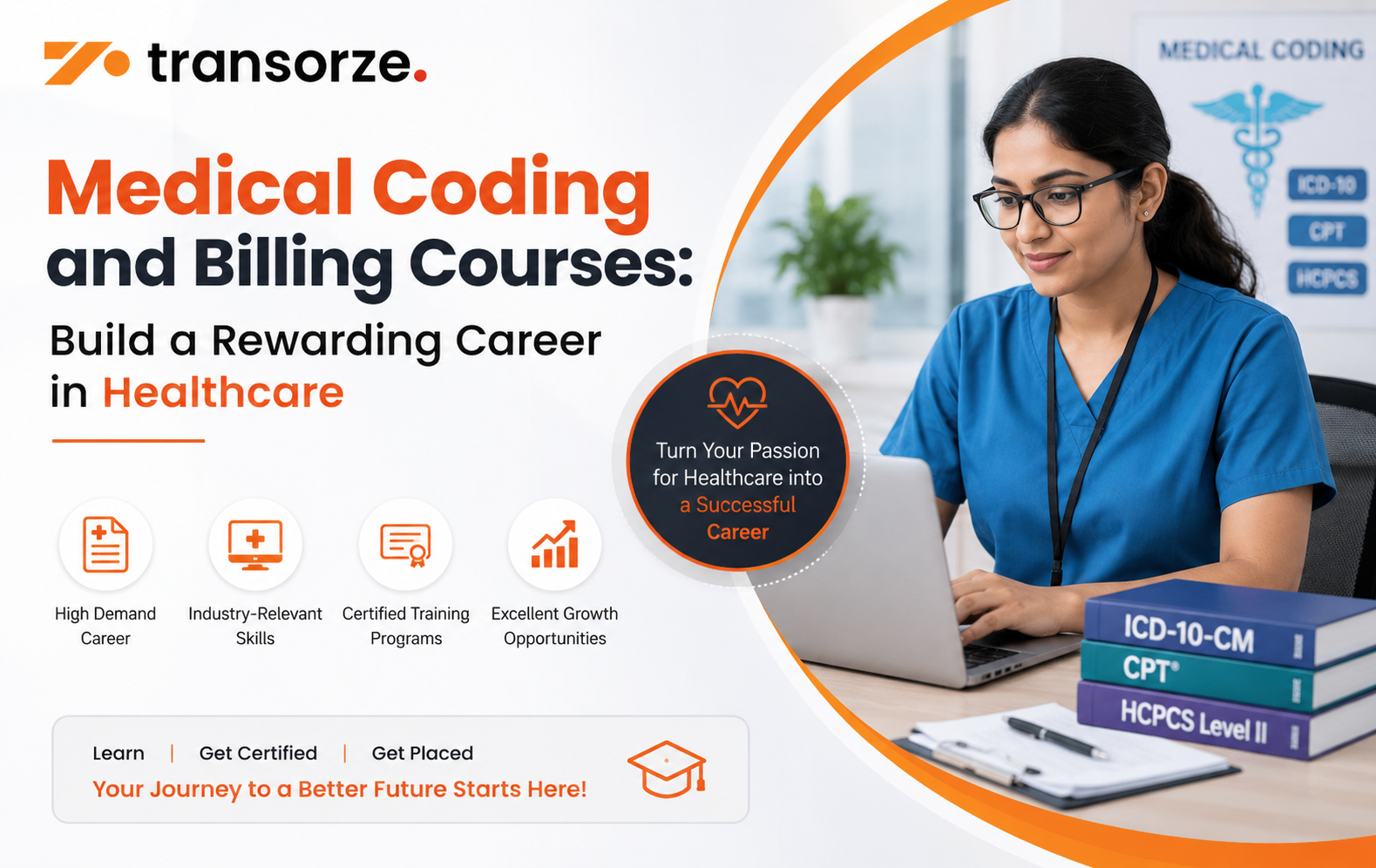
Healthcare is one of the fastest-growing employment sectors, creating thousands of opportunities for skilled professionals every year. Among the most sought-after non-clinical careers is medical coding and billing. If you’re looking for medical coding and billing courses, you’re likely searching for a program that offers practical training, recognized certifications, and a clear path toward employment. The right course does more than teach coding systems—it prepares you to become an essential part of the healthcare revenue cycle.
Medical coding involves translating patient diagnoses, treatments, laboratory reports, and procedures into standardized medical codes using internationally accepted classification systems such as ICD-10-CM, CPT, and HCPCS. Medical billing uses these codes to prepare insurance claims and ensure healthcare providers receive timely reimbursement. Since hospitals, clinics, diagnostic centers, insurance companies, and healthcare BPOs depend on accurate documentation, trained professionals continue to be in demand.
A professional training program combines theoretical knowledge with hands-on practice. Instead of memorizing codes, students learn how to understand physician documentation, assign accurate codes, identify compliance requirements, and process claims according to healthcare regulations. This practical approach helps learners develop confidence before entering the workforce while reducing the learning curve during their first job.
Why Medical Coding and Billing Is a Great Career Choice
Medical coding and billing offer an excellent opportunity for graduates who want to build a stable career in healthcare without working directly in patient care. Every consultation, surgery, laboratory test, and medical procedure generates documentation that must be accurately coded and billed. Without skilled coding professionals, healthcare providers face delayed reimbursements, claim rejections, and compliance issues.
Another advantage is the wide range of employment opportunities. Medical coders and billers are required in multispecialty hospitals, private clinics, insurance companies, medical coding firms, healthcare outsourcing organizations, and revenue cycle management companies. Because healthcare services continue to expand globally, employers consistently seek professionals who understand coding guidelines and medical documentation.
Career growth is another attractive feature of this profession. Many professionals begin as junior medical coders or billing executives and gradually progress into specialized coding, auditing, quality assurance, compliance, or team leadership roles. Continuous learning and certification help professionals advance while increasing their earning potential.
What Are Medical Coding and Billing Courses?
Medical coding and billing courses are structured training programs designed to prepare students for careers in healthcare documentation and insurance claim processing. The curriculum focuses on building both technical knowledge and practical coding skills required by healthcare employers.
Students begin by learning the fundamentals of medical terminology and human anatomy because understanding clinical language is essential for accurate coding. Once this foundation is established, the course introduces coding systems such as ICD-10-CM, CPT, and HCPCS. Learners also study medical billing procedures, insurance guidelines, healthcare documentation, HIPAA compliance, and revenue cycle management.
Practical coding exercises play a major role throughout the program. Students practice assigning codes to sample medical records, reviewing physician documentation, identifying coding errors, and understanding billing workflows. These exercises simulate workplace scenarios and help learners become comfortable with real-world responsibilities before joining the industry.
What You'll Learn During the Course
A comprehensive medical coding and billing course covers every stage of healthcare documentation and claim processing. Instead of focusing only on coding theory, students gain practical exposure that prepares them for professional roles.
Core Subjects Include
Subject | Skills Developed |
Medical Terminology | Understanding clinical language |
Human Anatomy & Physiology | Interpreting medical records |
ICD-10-CM | Diagnosis coding |
CPT | Procedure coding |
HCPCS | Healthcare service coding |
Medical Billing | Insurance claim preparation |
Revenue Cycle Management | Payment processing workflow |
HIPAA | Patient privacy and compliance |
Healthcare Documentation | Clinical record interpretation |
Coding Practice | Real-world coding scenarios |
Learning these subjects together helps students understand how healthcare documentation flows from patient treatment to insurance reimbursement. This integrated knowledge makes graduates more valuable to employers because they understand the complete coding and billing process rather than only individual tasks.
Online & Offline Classes for Flexible Learning
Every student has different learning preferences and personal commitments. Some enjoy the structure and interaction of classroom learning, while others require the flexibility of studying from home. To support different learning styles, the course is available through Online & Offline classes.
Offline classes provide direct interaction with experienced trainers, classroom discussions, practical demonstrations, and collaborative learning with fellow students. Many learners appreciate the immediate feedback they receive during face-to-face sessions, especially when working through coding exercises or complex case studies.
Online classes make professional education accessible regardless of location. Students can attend live sessions, participate in discussions, complete assignments, and continue learning without relocating or commuting every day. This flexibility is particularly valuable for working professionals and students who want to balance education with other responsibilities.
Both learning formats follow the same curriculum and aim to develop industry-ready skills. The focus remains on practical knowledge, coding accuracy, and career preparation rather than simply completing the syllabus.
Certifications That Strengthen Your Professional Profile
Employers often evaluate candidates based on both their practical skills and the quality of their training. Recognized certifications demonstrate that a course follows structured educational standards and prepares students according to industry expectations.
The program includes the advantage of:
These recognitions add credibility to your training and help employers understand that you have completed education aligned with established quality standards. Many students also prepare for globally recognized coding certifications to further strengthen their professional profile and improve long-term career opportunities.
Who Can Join Medical Coding and Billing Courses?
One of the reasons medical coding has become such a popular career choice is that it offers opportunities for graduates from various educational backgrounds. While eligibility may differ depending on the course provider, many professional programs are designed for candidates who have completed degrees in life sciences, pharmacy, nursing, biotechnology, microbiology, zoology, chemistry, physiotherapy, or other allied health sciences. Individuals with a genuine interest in healthcare documentation, analytical thinking, and attention to detail can also perform well in this field.
Medical coding is suitable for both fresh graduates and experienced professionals looking for a career transition. Freshers can build a strong foundation in healthcare documentation, while professionals working in hospitals, insurance companies, or healthcare administration can upgrade their skills and improve their career prospects. Since coding standards and healthcare regulations continue to evolve, structured training helps learners stay aligned with industry requirements and employer expectations.
Success in medical coding is less about memorizing thousands of codes and more about understanding medical concepts, reading physician documentation accurately, and applying coding guidelines correctly. Students who enjoy organized work, problem-solving, and continuous learning often find this profession rewarding and intellectually engaging.
Career Opportunities After Completing the Course
Medical coding and billing professionals are needed wherever healthcare services are delivered. Hospitals, specialty clinics, diagnostic laboratories, insurance companies, healthcare outsourcing firms, medical billing organizations, and revenue cycle management companies all depend on trained professionals to maintain accurate documentation and process claims efficiently.
After completing professional training, graduates can explore career opportunities such as:
Job Role | Primary Responsibilities |
Medical Coder | Assign diagnosis and procedure codes |
Medical Billing Executive | Prepare and submit insurance claims |
Medical Records Technician | Maintain patient documentation |
Revenue Cycle Executive | Support billing and reimbursement |
Coding Auditor | Review coding quality and compliance |
Compliance Executive | Ensure coding follows regulations |
Claims Processing Associate | Verify and process insurance claims |
Quality Analyst | Monitor documentation accuracy |
As professionals gain experience, they can move into specialized areas such as inpatient coding, outpatient coding, risk adjustment coding, auditing, clinical documentation improvement, quality assurance, or team leadership. Continuous learning and professional certifications often create additional opportunities for career growth and higher earning potential.
Why Choosing the Right Institute Matters
The institute you choose plays a significant role in shaping your career. A well-designed curriculum, experienced faculty, practical coding exercises, and interview preparation can make a noticeable difference when you begin applying for jobs.
When evaluating different training providers, look beyond marketing claims. Review the curriculum carefully, check whether the course includes practical coding assignments, understand the certification options available, and ask about placement assistance. Reading student testimonials and speaking with course counselors can also provide valuable insight into the learning experience.
A quality training institute should focus on helping students understand healthcare documentation, coding accuracy, compliance, and billing procedures instead of simply preparing them for examinations. Employers appreciate candidates who can contribute confidently from their first day at work, and practical training helps bridge the gap between classroom learning and workplace expectations.
Why Students Choose Transorze
Many aspiring healthcare professionals choose Transorze because the training combines practical learning with industry-focused curriculum, experienced faculty, and career guidance. Students have the flexibility to choose Online & Offline classes, making it easier to learn according to their schedule without compromising educational quality.
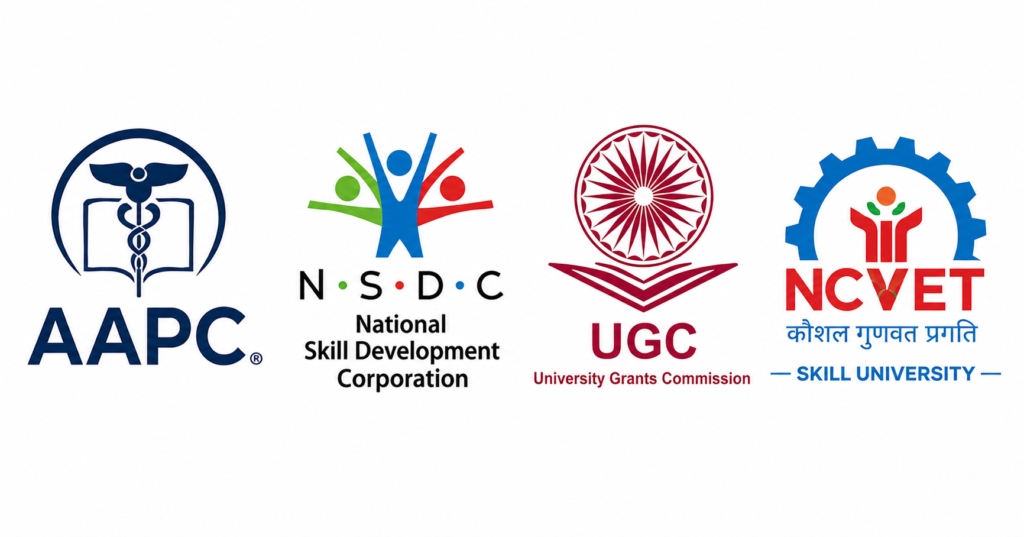
The program is supported by recognized credentials, including:
- NSDC Training Partner
- AAPC Licensed
- UGC Recognized
- NCVET Skill University
Practical coding sessions, real-world case studies, interview preparation, and placement support help learners develop the confidence required to enter the healthcare industry. Instead of focusing only on theoretical concepts, the course emphasizes workplace readiness and professional development.
How to Choose the Best Medical Coding and Billing Course
If you’re comparing different medical coding programs, consider these important factors before making your decision:
- Updated curriculum covering ICD-10-CM, CPT, HCPCS, and medical billing.
- Practical coding exercises using real clinical documentation.
- Experienced trainers with healthcare industry knowledge.
- Flexible Online & Offline classes.
- Recognized certifications.
- Placement assistance and interview preparation.
- Positive student feedback and industry reputation.
- Continuous academic support throughout the course.
Choosing a course based only on fees may not provide the best long-term value. Investing in quality education, practical exposure, and career guidance can significantly improve your employment opportunities after graduation.
Start Your Journey Toward a Healthcare Career
Medical coding and billing continue to be among the most promising non-clinical careers in healthcare. As hospitals, insurance providers, and healthcare organizations expand, the need for professionals who understand coding standards, medical documentation, and billing procedures continues to grow.
A structured training program gives you the knowledge, confidence, and practical skills needed to begin your career with a strong foundation. Whether you are a recent graduate or someone looking to transition into healthcare, choosing the right course can open the door to long-term professional growth.
If you are ready to build a career in healthcare, now is the right time to explore a program that combines practical learning, recognized certifications, flexible learning options, and career support.
Recommended Reads
- The Ultimate Guide to Medical Coding & Billing Certifications
- Medical Coding and Billing Training in Kerala: A Complete Career Guide
- Medical Coding vs Medical Billing: Which Career is Right for You?
- Medical Billing Careers Salary: What You Can Expect in 2026
- Medical Billing and Coding Course: Your Gateway to a Healthcare Career
Frequently Asked Questions
Medical coding and billing courses teach students how to convert patient diagnoses and treatments into standardized medical codes and prepare insurance claims for reimbursement.
Yes. Students can choose between Online & Offline classes based on their learning preferences while following the same industry-focused curriculum.
Look for programs associated with:
- NSDC Training Partner
- AAPC Licensed
- UGC Recognized
- NCVET Skill University
These certifications strengthen the credibility of your training and enhance your professional profile.
Yes. Medical coding offers stable employment opportunities across hospitals, healthcare companies, insurance organizations, medical coding firms, and healthcare outsourcing providers.
Graduates commonly work as Medical Coders, Medical Billing Executives, Coding Auditors, Medical Records Technicians, Claims Processing Associates, Revenue Cycle Executives, and Compliance Officers.
