
What Is Medical Billing? A Complete Guide to the Medical Billing Workflow
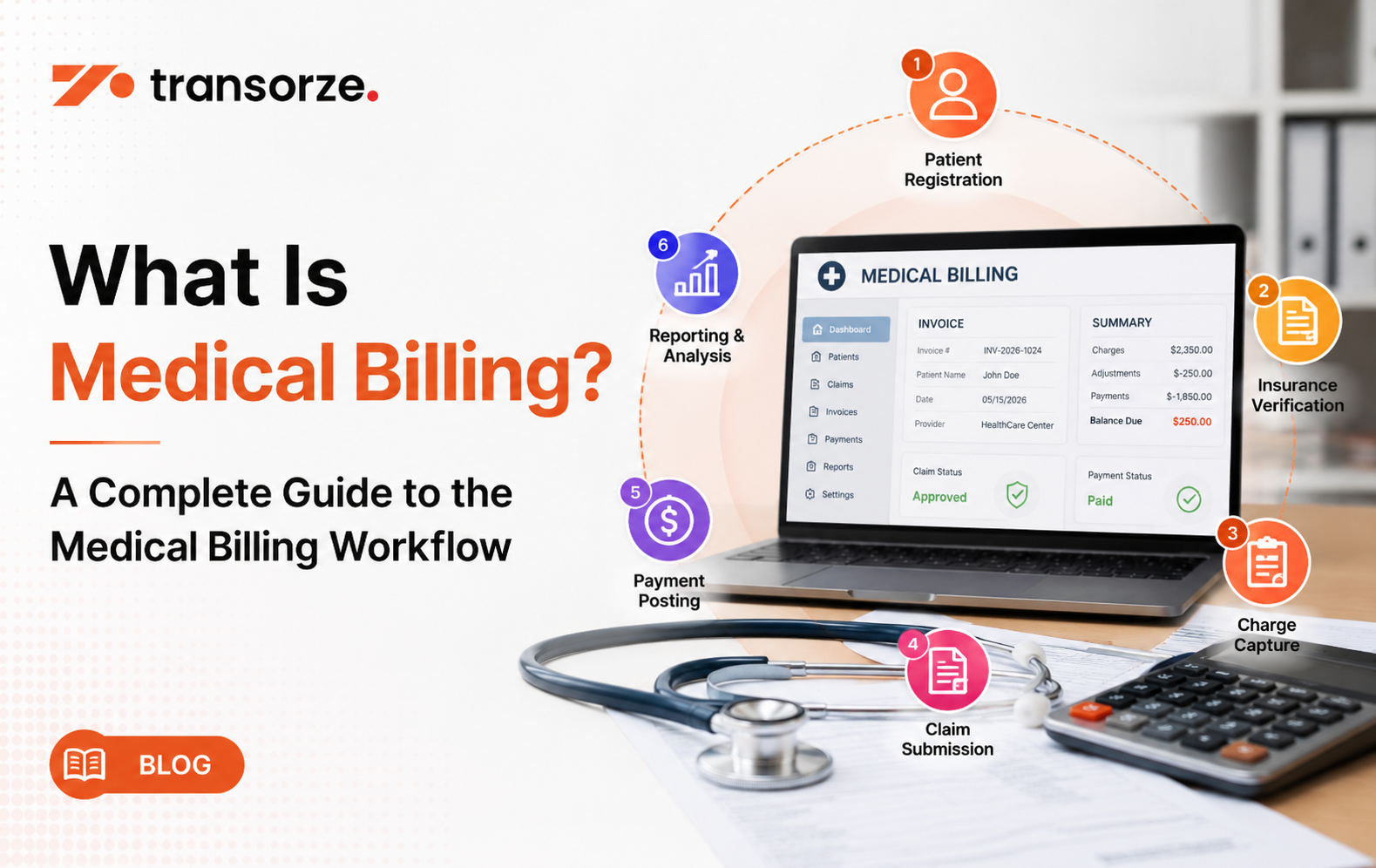
If you’ve ever wondered what actually happens between a doctor’s visit and the moment a hospital or clinic actually gets paid, the answer is medical billing. It’s the quiet engine running behind every healthcare service, and honestly, most patients never think about it because when it works well, they never have to.
But for the practices and billing professionals involved, it’s a different story. One small mistake at any stage of the process can lead to claim denials, delayed payments, and real revenue loss. So let’s break down exactly what medical billing is, how the workflow actually functions step by step, and why getting it right matters so much.
Why Medical Billing Matters
It’s easy to think of billing as “just paperwork,” but it’s really the financial backbone of any healthcare practice. Here’s why it matters so much:
- Ensures steady cash flow – Practices depend on timely reimbursement to cover staff salaries, equipment, and daily operations.
- Reduces claim denials – Careful, accurate billing means fewer rejected or delayed claims.
- Improves patient satisfaction – Clean billing processes mean fewer confusing bills and billing disputes for patients.
- Supports practice growth – Consistent revenue lets healthcare providers reinvest in better care and expansion.
The Medical Billing Workflow: Step by Step
Medical billing isn’t a single action, it’s a chain of steps, and each one depends on the one before it. Here’s how the workflow actually unfolds.
1. Patient Registration
Everything starts with collecting patient demographics, insurance details, and other necessary information. This might seem like a simple front-desk task, but errors here (a misspelled name, an outdated insurance ID, a wrong date of birth) ripple all the way through the billing cycle and are one of the most common root causes of claim denials.
2. Insurance Verification
Before any service is even billed, someone needs to verify insurance eligibility, benefits, and coverage to prevent claim denials. This step confirms the patient’s plan is active, checks what’s actually covered, and flags anything (like a service requiring prior authorization) before it becomes a billing problem later.
3. Medical Coding
This is where diagnoses, procedures, and services get converted into standard codes (ICD-10, CPT, HCPCS). Medical coding and medical billing are closely linked but not the same job. Coding translates the clinical documentation into standardized codes; billing takes those codes and turns them into a claim. Get the coding wrong, and the billing that follows will be wrong too.
4. Claim Submission
Once coding is complete, the practice submits clean claims to insurance payers electronically for processing. “Clean” is the key word here. A clean claim has no errors, missing information, or mismatched codes, and clean claims get processed and paid much faster than ones that need correction.
5. Insurance Processing
At this stage, the insurance company reviews the claim and decides on payment, denial, or a request for more information. This is largely out of the billing team’s hands once submitted, but it’s also where good upfront work (accurate coding, complete documentation) pays off, since it reduces the odds of the claim bouncing back.
6. Payment Posting
Once the insurance company pays, the practice records payments and adjustments in the system and updates patient accounts. This step keeps the financial records accurate and shows exactly what was paid, what was adjusted, and what (if anything) the patient still owes.
7. Denial Management
Not every claim gets approved the first time. When claims are denied, the billing team reviews denied claims, identifies issues, makes corrections, and resubmits for payment. This step is often where the most experienced billers earn their keep, since figuring out why a claim was denied and fixing it quickly directly affects how fast the practice gets paid.
Why a Small Mistake Can Cost So Much
Here’s the part worth repeating: a small mistake at any stage of this workflow can lead to claim denials, delayed payments, and revenue loss. A wrong insurance ID at registration, a missed prior authorization at verification, an incorrect code, an incomplete claim, they all lead to the same outcome: money that should have arrived on time, doesn’t.
That’s really the whole argument for a strong billing process. A strong billing process means faster payments and a healthier practice, plain and simple.
STUDENTS SUCCESS STORIES
Recommended Reads
Frequently Asked Questions
Medical coding converts diagnoses, procedures, and services into standardized codes (ICD-10, CPT, HCPCS), while medical billing uses those codes to create and submit claims to insurance companies for payment. They’re two distinct but closely connected roles in the revenue cycle.
The core steps are patient registration, insurance verification, medical coding, claim submission, insurance processing, payment posting, and denial management. Each step feeds into the next, so an error early on tends to cause problems later.
Claims are commonly denied due to incorrect patient information, coding errors, missing prior authorization, incomplete documentation, or mismatched insurance details. Denial management exists specifically to catch and correct these issues.
Timelines vary by payer and claim complexity, but clean claims (ones without errors) are typically processed and paid faster than claims requiring correction or additional information from the provider.
Yes. Since every healthcare provider that accepts insurance needs billing support, demand for trained medical billers remains steady, and it’s a role that can often be done remotely.
Yes, medical billing can absolutely be learned through structured online training that covers the full workflow, from patient registration through denial management, along with the coding knowledge that supports it.
Learning the Medical Billing Workflow Properly
Reading through the seven steps above gives you the shape of the process, but actually working a claim through registration, verification, coding, submission, and denial management takes hands-on practice with real scenarios, not just theory.
That’s exactly the training approach Transorze takes with its online classes in medical billing and coding, walking learners through the full revenue cycle with practical, real-world claim scenarios so they’re genuinely job-ready, not just familiar with the terminology
