
Certificate Medical Coding: Complete Guide to Building a Successful Healthcare Career in 2026
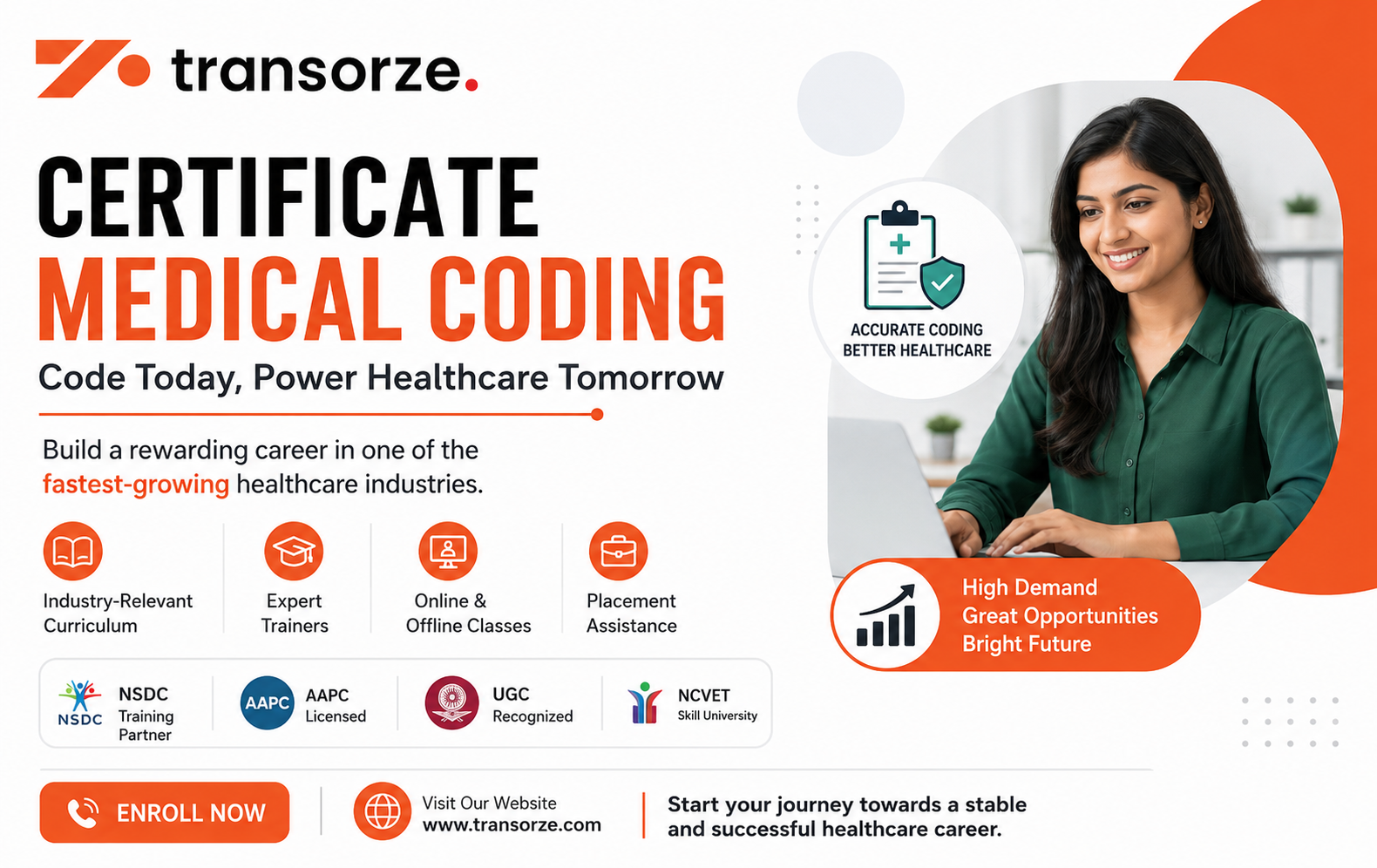
Certificate Medical Coding: Complete Career Guide
The healthcare industry continues to expand across the globe, creating thousands of employment opportunities every year for skilled professionals. Among the most sought-after careers is medical coding, a profession that bridges healthcare and technology by converting medical diagnoses, treatments, and procedures into standardized codes. These codes play a vital role in insurance claims, hospital billing, patient records, and healthcare analytics. As hospitals, insurance companies, and healthcare outsourcing firms continue adopting digital systems, certified medical coders have become indispensable.
A Certificate Medical Coding program equips learners with the technical knowledge required to accurately assign medical codes using internationally accepted coding systems. Whether you are a recent graduate, a life science student, a healthcare professional looking to upskill, or someone planning a career change, earning a recognized certification can significantly improve your employment prospects. Industry demand remains strong because healthcare providers require trained coders to maintain compliance, improve documentation accuracy, and streamline reimbursements. According to industry estimates, healthcare support occupations continue to experience steady employment growth driven by an aging population and increasing healthcare utilization.
What is Certificate Medical Coding?
A Certificate Medical Coding course is a professional training program designed to teach students how to interpret medical documentation and convert diagnoses, procedures, and treatments into standardized alphanumeric codes. These codes are used worldwide by hospitals, clinics, insurance companies, and healthcare organizations for billing, reimbursement, compliance, and patient record management.
Students learn internationally accepted coding systems including ICD-10-CM, CPT, and HCPCS, along with medical terminology, anatomy, physiology, pathology, and healthcare documentation. Beyond memorizing codes, learners develop analytical skills to interpret physician notes accurately while following coding guidelines and payer regulations. This makes certified coders valuable assets in hospitals, revenue cycle management companies, insurance firms, and medical billing organizations.
One of the biggest advantages of this certification is that it opens doors to both domestic and international career opportunities. Many employers prefer candidates with structured training because coding accuracy directly impacts revenue, regulatory compliance, and patient safety.
Why Medical Coding is One of the Fastest Growing Careers
Healthcare is evolving rapidly with digital transformation, electronic health records, telemedicine, and AI-assisted documentation becoming standard practices. Every patient visit generates documentation that must be translated into standardized medical codes. This growing volume of healthcare data has created an increasing demand for trained coding professionals.
India has also become a major hub for healthcare outsourcing and revenue cycle management. International healthcare companies regularly recruit certified coders for remote and office-based positions. Professionals with recognized certifications often enjoy better job stability, competitive salaries, and opportunities to specialize in areas such as inpatient coding, outpatient coding, surgical coding, and auditing.
Unlike many industries affected by automation, medical coding still requires human expertise because coders must understand clinical context, interpret physician documentation, and apply coding guidelines accurately. AI tools are helping improve productivity, but trained professionals remain essential for quality assurance and compliance. This combination of technology and human expertise makes medical coding a future-ready career.
Course Curriculum Covered in a Certificate Medical Coding Program
A professionally designed Certificate Medical Coding course should prepare students for real-world healthcare documentation rather than simply teaching code books. The curriculum begins with the fundamentals of medical terminology, enabling students to understand complex medical words by breaking them into prefixes, suffixes, and root terms. This foundational knowledge makes it easier to interpret physician documentation accurately. Students also gain a strong understanding of human anatomy and physiology, learning how body systems function and how diseases affect them. Without this medical background, assigning the correct diagnosis and procedure codes becomes challenging, making these subjects an essential part of every coding program.
The course then progresses into internationally recognized coding systems such as ICD-10-CM, CPT, and HCPCS Level II. Students learn official coding guidelines, sequencing rules, modifiers, documentation requirements, reimbursement principles, and claim processing workflows. Practical coding exercises using case studies help learners develop confidence in assigning accurate codes across multiple specialties. Many institutes also include training in healthcare compliance, electronic health records (EHR), HIPAA awareness, medical billing fundamentals, and coding software. Mock assessments, coding audits, and exam preparation sessions ensure students are job-ready upon completion.
A comprehensive curriculum generally includes:
| Module | Topics Covered |
|---|---|
| Medical Terminology | Prefixes, suffixes, abbreviations, clinical vocabulary |
| Anatomy & Physiology | Human body systems and organs |
| Pathology | Diseases and disorders |
| ICD-10-CM | Diagnosis coding guidelines |
| CPT | Procedure coding |
| HCPCS Level II | Supplies, equipment, and services |
| Medical Billing | Insurance claims and reimbursement |
| Healthcare Documentation | Clinical records and compliance |
| Practical Coding | Real-world case studies |
| Interview Preparation | Resume, mock interviews, aptitude training |
Online & Offline Classes: Choose the Learning Style That Fits You
One of the biggest advantages of modern medical coding education is the flexibility to learn according to your schedule. Students who prefer classroom interaction can attend offline classes, where experienced trainers provide face-to-face guidance, practical demonstrations, and immediate doubt clarification. Classroom learning also encourages peer interaction, group discussions, and hands-on practice using coding manuals and healthcare documentation. This format is particularly beneficial for students who thrive in structured learning environments and appreciate direct instructor support.
At the same time, online medical coding classes have become increasingly popular among working professionals, graduates, and homemakers who need flexibility. Live online sessions, recorded lectures, digital study materials, coding assignments, and virtual assessments allow learners to build their skills from anywhere without compromising on quality. Interactive learning platforms, instructor-led discussions, and online doubt-clearing sessions make remote education both engaging and effective. Whether choosing online or offline classes, students should ensure the program includes practical coding exercises, placement support, updated curriculum, and experienced faculty.
At Transorze, students can choose Online & Offline classes, allowing them to learn in the way that best matches their personal and professional commitments while receiving industry-focused training designed to meet current employer expectations.
Certifications That Add Value to Your Career
Selecting a training institute with recognized certifications can significantly improve your employability. Recruiters often look for candidates who have completed structured programs that follow industry standards and provide practical coding expertise. Recognized certifications demonstrate that students have received quality training aligned with healthcare industry requirements. They also build confidence among employers, especially in hospitals, healthcare BPOs, insurance companies, and revenue cycle management organizations.
When evaluating a medical coding institute, students should verify institutional recognition, curriculum quality, trainer experience, placement support, and industry affiliations. A strong certification not only validates your skills but also helps you stand out in competitive recruitment processes. Employers appreciate candidates who have completed training from institutions that emphasize both theoretical knowledge and practical application.
Students completing the program receive training backed by recognized credentials including:
These recognitions enhance the credibility of your qualification and support long-term career growth within the healthcare industry.
Career Opportunities After Completing a Certificate Medical Coding Course
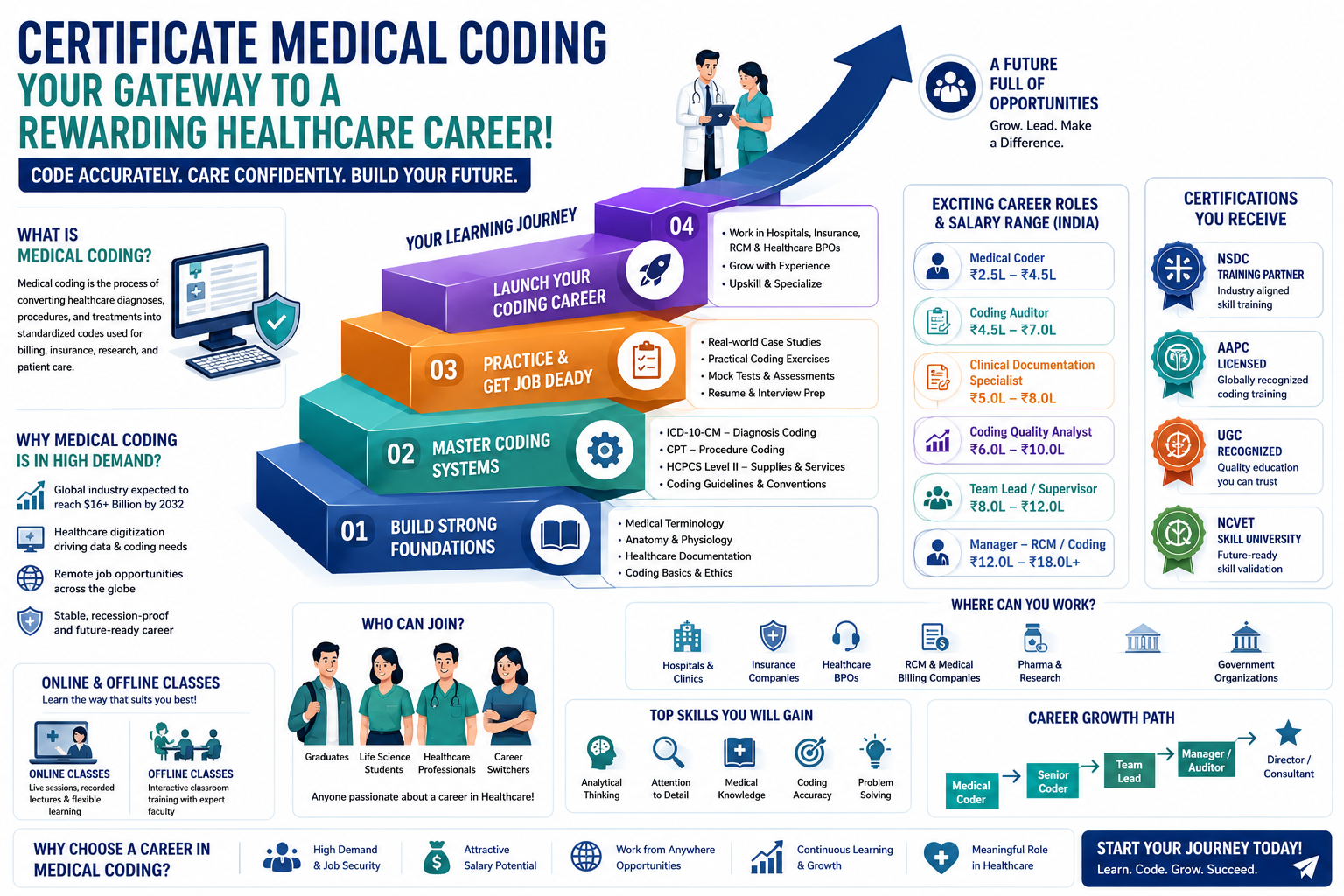
A Certificate Medical Coding qualification opens doors to diverse career opportunities across hospitals, specialty clinics, insurance providers, medical billing companies, healthcare BPOs, pharmaceutical organizations, and revenue cycle management firms. As healthcare organizations continue to digitize patient records and streamline insurance reimbursement processes, the demand for trained coding professionals continues to grow. Graduates are no longer limited to traditional office roles; many organizations now offer hybrid and remote coding positions depending on experience and employer requirements.
With additional experience and advanced certifications, professionals can progress into specialized roles such as inpatient coder, outpatient coder, surgical coder, emergency department coder, quality analyst, coding auditor, documentation specialist, compliance analyst, team leader, trainer, and revenue cycle manager. Continuous learning and specialization further improve career prospects and earning potential.
Popular job roles include:
- Medical Coder
- Certified Professional Coder
- Medical Billing Executive
- Healthcare Documentation Specialist
- Insurance Claims Analyst
- Coding Auditor
- Revenue Cycle Executive
- Quality Analyst
- Coding Trainer
- Healthcare Compliance Executive
These roles offer stable employment, professional growth, and opportunities to work with global healthcare organizations.
Salary Expectations After Completing a Certificate Medical Coding Course
One of the biggest reasons students choose a Certificate Medical Coding training is the excellent career growth and earning potential. As healthcare organizations continue to expand their digital operations, the need for skilled coding professionals has increased across hospitals, insurance companies, medical billing firms, and healthcare outsourcing organizations. Entry-level candidates with strong coding knowledge and practical training can secure rewarding opportunities immediately after completing their certification. As experience grows, professionals can move into specialized coding domains, quality assurance, auditing, compliance, and team management, significantly increasing their salary potential.
Salary depends on several factors, including educational background, coding accuracy, employer, location, certifications, and work experience. Candidates with life science degrees often find it easier to understand medical concepts, but graduates from other disciplines can also build successful careers through proper training. Professionals who continue upgrading their skills by learning advanced coding guidelines, healthcare documentation, and auditing standards generally experience faster career progression. Some experienced coders also transition into remote international projects, healthcare consulting, or coding education, creating additional income opportunities.
The table below provides an estimated salary range for medical coding professionals in India:
| Experience Level | Estimated Annual Salary |
|---|---|
| Fresher | ₹2.5 – ₹4.5 LPA |
| 1–3 Years | ₹4 – ₹6.5 LPA |
| 3–5 Years | ₹6 – ₹9 LPA |
| 5+ Years | ₹9 – ₹15+ LPA |
Salary figures are approximate and may vary depending on employer, city, certifications, and individual performance.
Beyond salary, medical coding offers excellent job stability because healthcare services remain essential regardless of economic conditions. Continuous demand for accurate documentation, insurance processing, and compliance ensures long-term career security. Professionals who consistently improve their coding accuracy and stay updated with industry guidelines often enjoy promotions, higher compensation, and leadership opportunities.
Why Choose Transorze for Your Certificate Medical Coding Course?
Choosing the right medical coding training institute can make a significant difference in your career. A quality medical coding program should do more than teach coding manuals—it should prepare students to meet real industry expectations through practical learning, experienced faculty, interview preparation, and placement support. Students benefit the most from institutes that regularly update their curriculum to reflect the latest coding standards and healthcare industry practices. Practical assignments, mock coding sessions, and real-world case studies help build the confidence needed to succeed in professional environments.
At Transorze, the focus is on creating industry-ready professionals through comprehensive training delivered by experienced trainers. Students receive structured instruction covering medical terminology, anatomy, physiology, ICD-10-CM, CPT, HCPCS, healthcare documentation, and medical billing. The curriculum combines classroom concepts with practical coding exercises to ensure learners understand not only how to assign codes but also why coding accuracy matters in healthcare reimbursement and compliance.
Students can choose between Online & Offline classes, making it convenient for fresh graduates, working professionals, and career changers alike. The institute also provides placement assistance, interview preparation, resume guidance, and soft skills training to help learners transition smoothly into the healthcare industry. With recognized credentials such as NSDC Training Partner, AAPC Licensed, UGC Recognized, and NCVET Skill University, students gain added confidence when applying for medical coding positions across India and internationally.
Whether your goal is to start your first healthcare career, switch industries, or build a long-term profession with global opportunities, enrolling in a well-structured certificate program can provide the knowledge and practical skills needed for success.
STUDENTS SUCCESS STORIES
Conclusion
A Certificate Medical Coding course is an excellent investment for individuals seeking a stable, rewarding, and future-focused career in the healthcare industry. As hospitals, insurance companies, and healthcare technology organizations continue embracing digital transformation, the demand for trained medical coders remains strong. Professionals with the right combination of technical knowledge, practical coding skills, and recognized certifications are well-positioned to secure rewarding employment and advance into specialized healthcare roles.
Success in medical coding requires continuous learning, attention to detail, and a commitment to accuracy. Choosing a training program that combines comprehensive curriculum, experienced faculty, practical exposure, flexible learning options, and placement support gives students a competitive advantage in today’s job market. By earning a recognized certification and consistently upgrading your skills, you can build a career that offers financial stability, professional growth, and opportunities both in India and abroad.
Recommended Reads
- Courses for Medical Coding: Complete Career Guide for Aspiring Healthcare Professionals
- Unlock Your Career: Essential Medical Coding Classes to Enroll
- Medical Coding and Billing Certificate: Your Complete Guide to a Rewarding Healthcare Career
- Online Course Medical Coding: A Complete Guide to Building a Career in Healthcare
Frequently Asked Questions
A Certificate Medical Coding course is a professional training program that teaches students how to convert medical diagnoses, treatments, and procedures into standardized codes using ICD-10-CM, CPT, and HCPCS coding systems for healthcare documentation and insurance reimbursement.
Graduates, final-year students, life science graduates, pharmacy graduates, nursing professionals, allied health professionals, and candidates from other educational backgrounds interested in healthcare careers can enroll, subject to the institute’s admission criteria.
Yes. Many institutes offer Online & Offline classes with live instructor-led sessions, recorded lectures, practical coding exercises, digital study materials, and regular assessments, allowing students to learn from anywhere.
Yes. Medical coding continues to be one of the fastest-growing healthcare professions due to increasing digital healthcare records, insurance processing, healthcare outsourcing, and the growing demand for accurate clinical documentation.
Students receive training associated with recognized credentials including NSDC Training Partner, AAPC Licensed, UGC Recognized, and NCVET Skill University, depending on the program structure and eligibility.
